Karate One Premier League Rome 2026 – History Made in Italy as Champions Rise and New Stories Take Shape
Anders Ingvarsson,
History was always going to be one of the main characters in Rome.
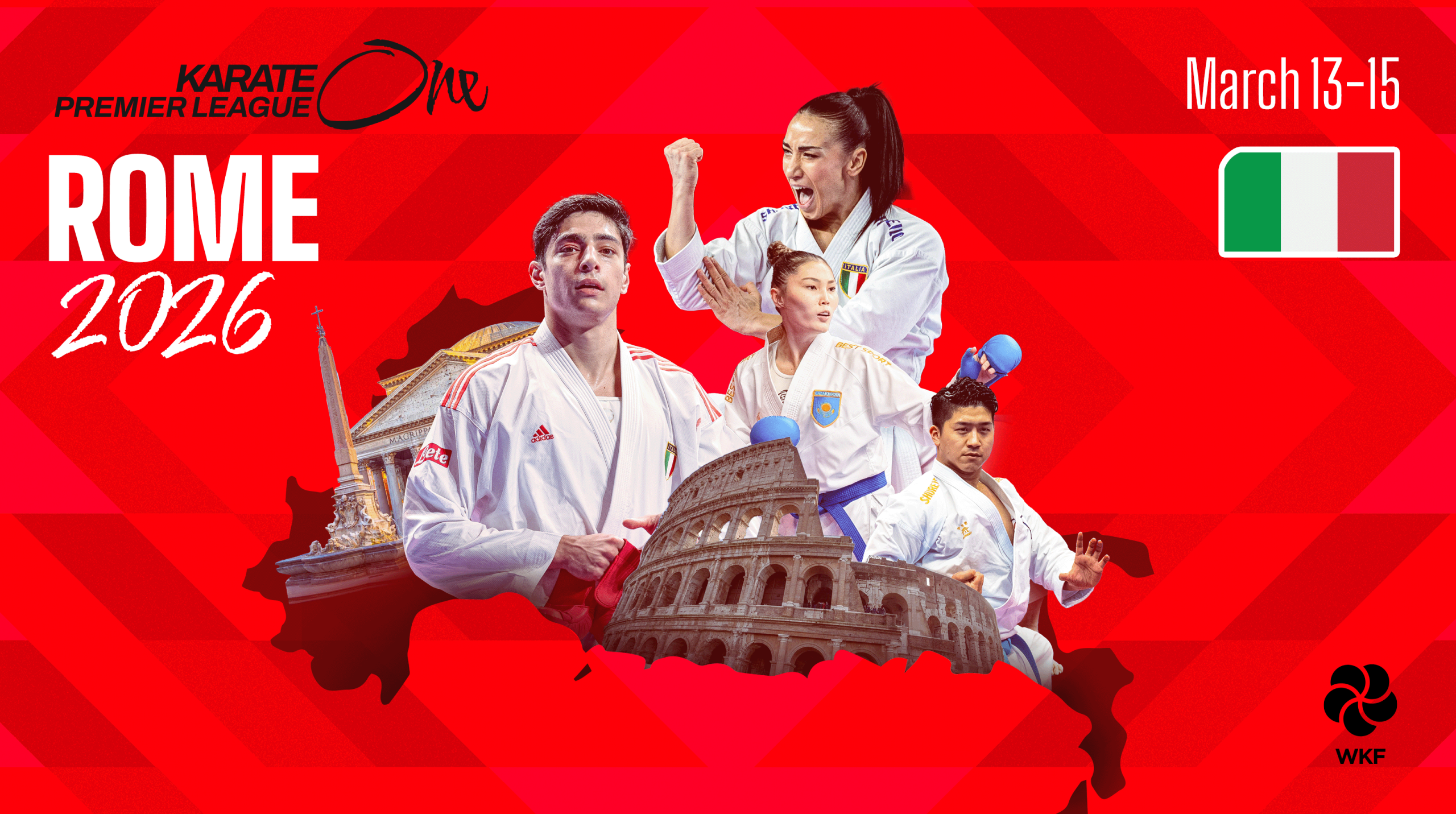
When the Karate One Premier League arrived in the Italian capital from March 13 to 15, 2026, it did so with a sense of occasion that extended beyond the tatami. This was not merely the second stop of the season or another high-level weekend on the World Karate Federation calendar. It was the first time that Italy hosted a Karate One Premier League event, a milestone for one of karate’s true powerhouse nations and a moment that had been building for years within the international movement. WKF’s official preview described the event as a landmark for the sport in Italy, while FIJLKAM framed the Roman stage as both a celebration of elite karate and a statement about the country’s place at the centre of world martial arts organisation.
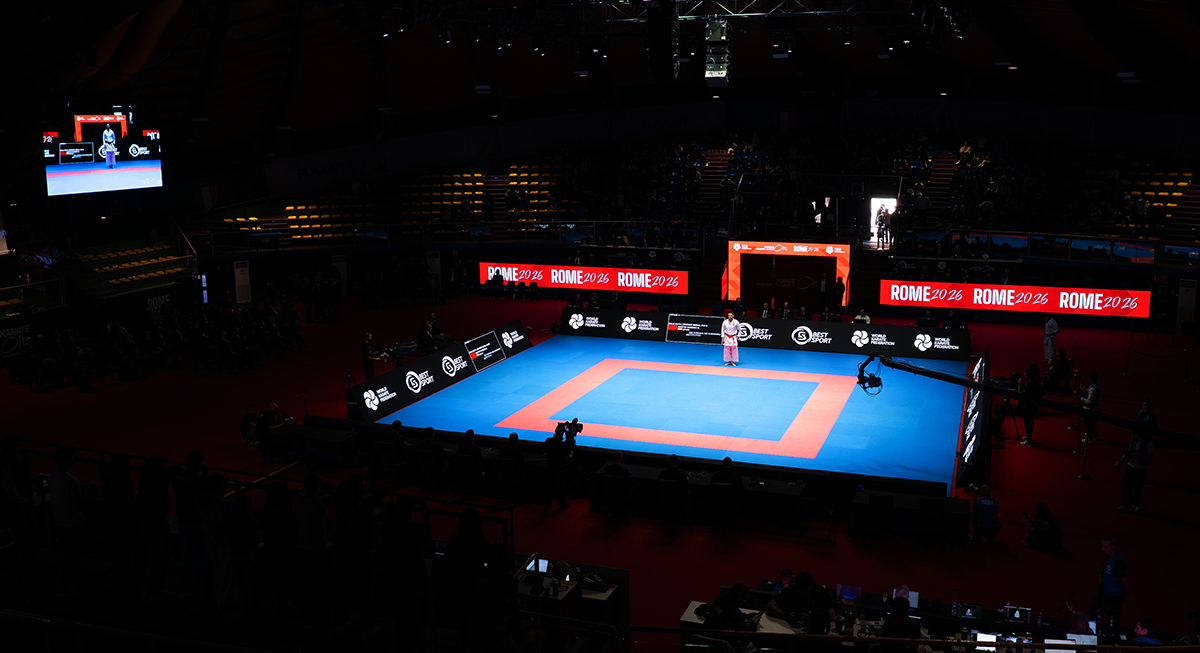
Set at the PalaPellicone in Ostia, the event brought together the world’s leading karateka under the Premier League format, where only the top athletes in the WKF system earn the right to compete. That exclusivity is what gives the circuit its edge. Every round feels like a final rehearsal for a championship podium, and every category is dense with medal contenders. Rome therefore entered the calendar not as an experiment, but as an instant heavyweight among WKF events—backed by an Italian federation with deep institutional roots and the ambition to stage one of the best Premier League editions ever held.
Photo: World Karate Federation (WKF) @worldkaratefederation.
There was also a strong symbolic layer to the occasion. FIJLKAM is one of the historic federations in Italian sport and has grown into one of the most influential multi-discipline martial arts bodies in Europe. Under president Giovanni Morsiani and karate sector president Davide Benetello, the federation has continued to strengthen Italy’s international profile, and the Rome Premier League felt like the clearest proof yet of that direction. The official presentation at the Hall of Honor of the Italian National Olympic Committee underlined exactly that: karate in Italy was not asking to be noticed—it was presenting itself as a major sporting force with institutional, national, and international backing.
The tournament also arrived with broader ambitions than medals alone. FIJLKAM used the event to emphasise sustainability, responsible event management, and karate’s social value. The opening programme and associated federation coverage highlighted the awarding of ISO 20121 certification for sustainable event management, while the build-up also featured the Guardian Girls Karate initiative, linking elite sport with awareness, empowerment, and public engagement. In that sense, Rome was designed not only as a competition, but as a showcase for how modern karate wants to present itself to the world: technically elite, socially aware, and organisationally mature.
A city ready for a karate spectacle
The anticipation around the event was visible long before finals day. Promotional material and social media content leaned heavily into the uniqueness of the Roman stop, presenting it as the “second chapter” of the 2026 season after Istanbul and as a tournament loaded with Grand Winner implications. WKF and affiliated social content gave the build-up a major-event feel, while Italian coverage made it clear that local fans saw this as more than a standard international stop. For Ostia, for FIJLKAM, and for the home athletes, this was a weekend to make a lasting impression.
Photo: World Karate Federation (WKF) @worldkaratefederation.
Italy also had good reason to believe it could be competitive rather than merely ceremonial as host. By the time the first bouts began, expectation already surrounded names such as Matteo Fiore, Viola Lallo, Erminia Perfetto, Luca Maresca, and Alessio Ghinami. Rome was not just bringing the world to Italy; it was offering Italian karate a rare chance to perform at home on one of the sport’s biggest regular stages. That combination—global prestige and local opportunity—helped create an atmosphere that looked and felt different from a routine tour stop.
Day one: first finalists, first tension, first signs of a special weekend
Friday’s action featured Female Kata, Male Kumite -60 kg, Female Kumite -50 kg, Male Kumite -67 kg, Female Kumite -55 kg, and Male Kumite -75 kg. It did not take long for the tournament to find its rhythm. From the first session, Rome produced the kind of close scoring, tactical variation, and emotional swings that define top-level karate when the field is this strong.
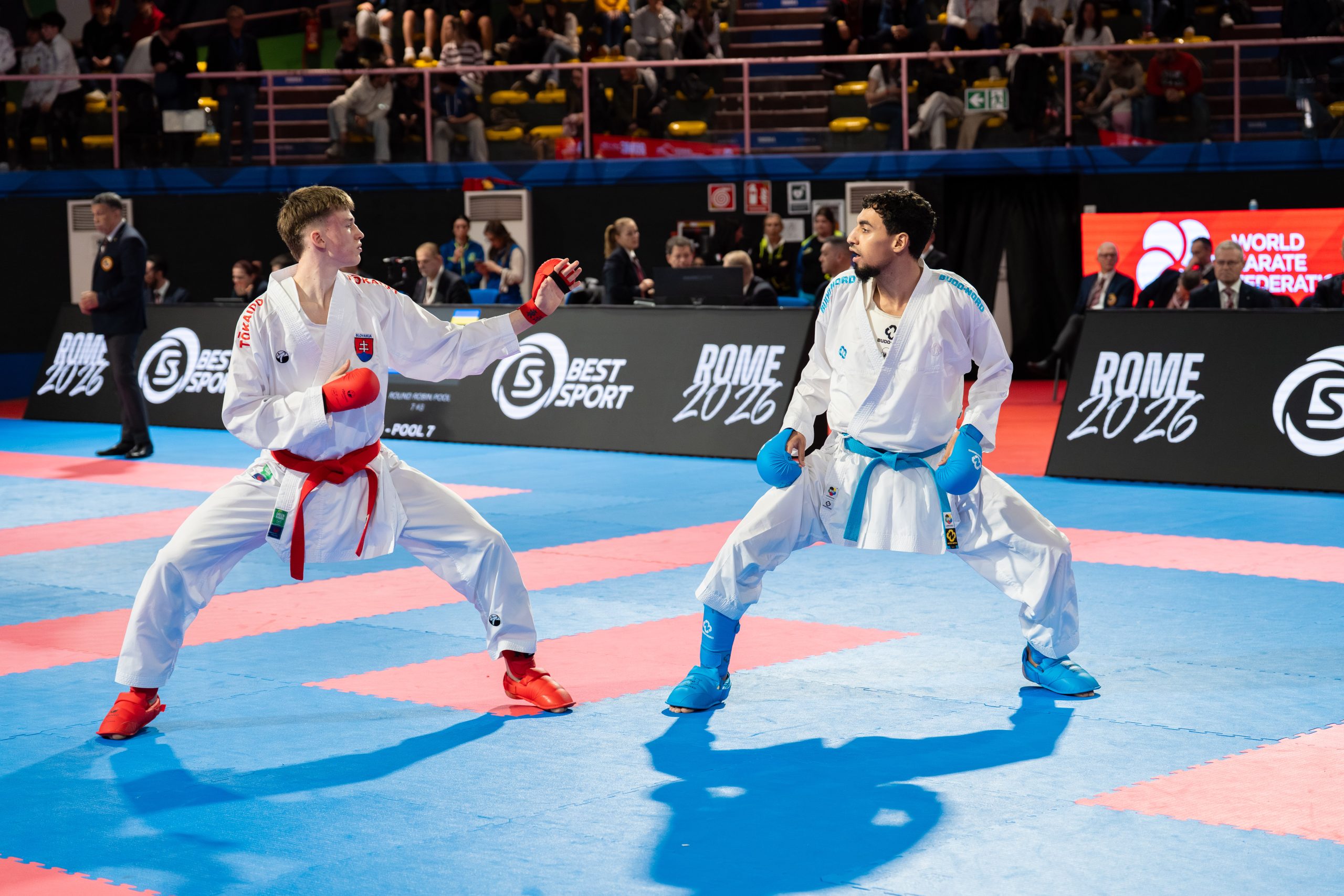
Mehdi Sriti, UFAK. Photo: World Karate Federation (WKF) @worldkaratefederation.
In Female Kata, the bracket quickly moved toward one of the defining rivalries of the current era. Maho Ono of Japan and Grace Lau of Hong Kong, China advanced to set up another major final between two athletes who have repeatedly met at the highest level. It was exactly the sort of matchup the event needed: elegant, intense, familiar, and meaningful. Rome had its first classic final before the opening day was even complete.
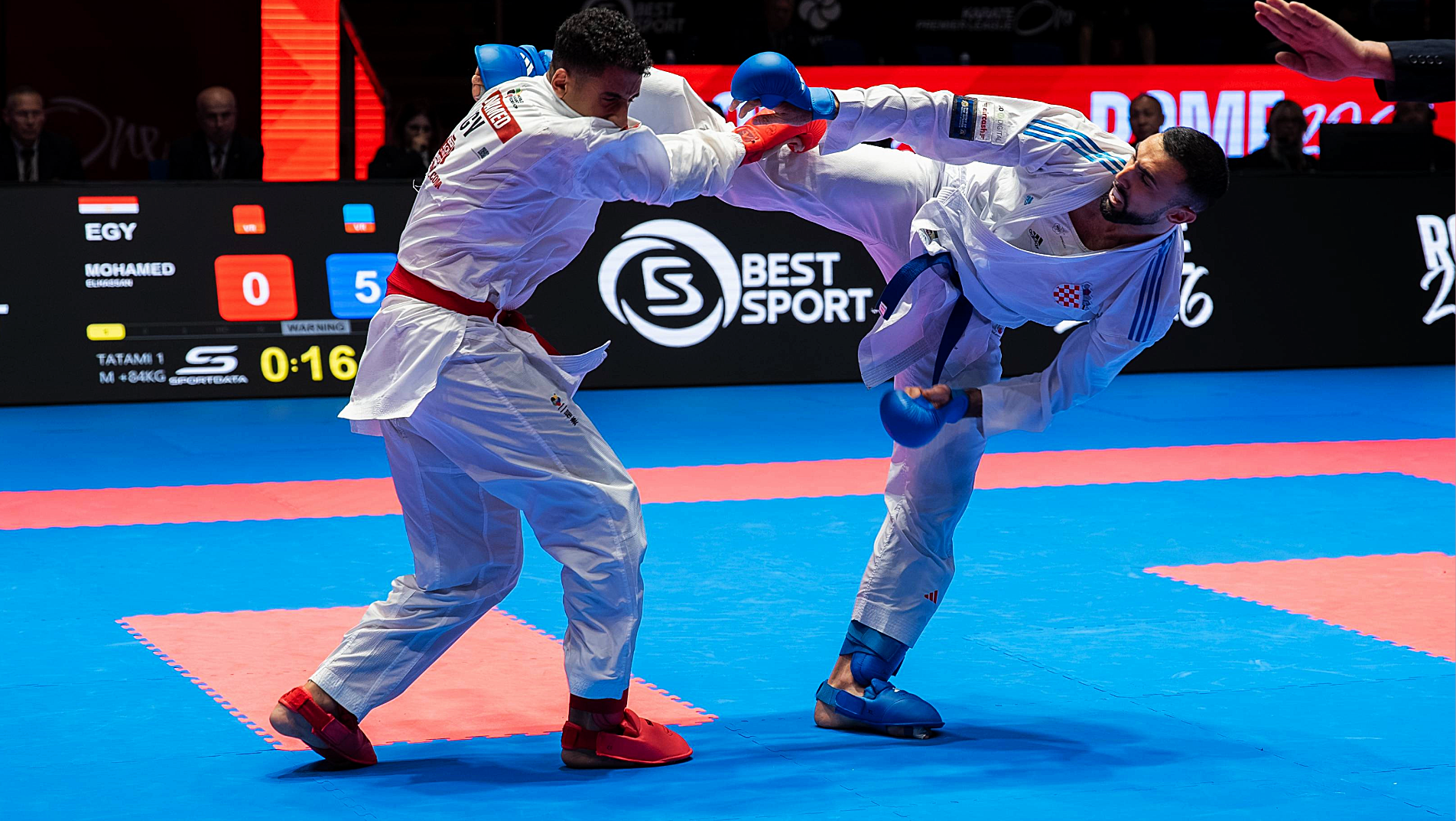
Male Kumite -60 kg gave the audience something different: pure volatility. Akhmed Akhmedov advanced through a dramatic 4-4 result on senshu, while Japan’s Hiromu Hashimoto came through a lively and high-scoring semifinal. One side of the bracket demanded nerve in a dead-even finish, the other demanded forward momentum and scoring confidence. That contrast was part of the beauty of day one in Rome: elite kumite was not unfolding in one fixed rhythm, but in multiple competitive languages.
The Italian supporters, meanwhile, had immediate reasons to invest emotionally. In Female Kumite -50 kg, Erminia Perfetto went deep into the day and kept home hopes alive before falling narrowly short of the final. Ludovica Legittimo also remained in the medal mix. In Female Kumite -55 kg, Viola Lallo thrilled the arena by reaching the gold-medal match, while Luca Maresca pushed into the late stages of Male Kumite -67 kg. FIJLKAM’s own recap underlined the breadth of the host nation’s first-day showing, noting multiple Italians in quarterfinal and medal contention.
That was significant because host pressure can distort performance as easily as it can elevate it. On Friday, Italy mostly looked energised rather than burdened. Lallo’s progress in particular gave the event one of its first emotional anchors. A home finalist in front of a loud Roman crowd changed the atmosphere and ensured that the hosts would remain central to the weekend’s narrative.
Day two: upsets, home hope, and the card for Sunday is complete
Saturday brought the remaining six categories into action: Male Kata, Female Kumite -61 kg, Male Kumite -84 kg, Female Kumite -68 kg, Male Kumite +84 kg, and Female Kumite +68 kg. If day one established the event’s quality, day two gave it unpredictability. Favourites were tested, local stars came under pressure, and the final-day programme began to look exceptional.
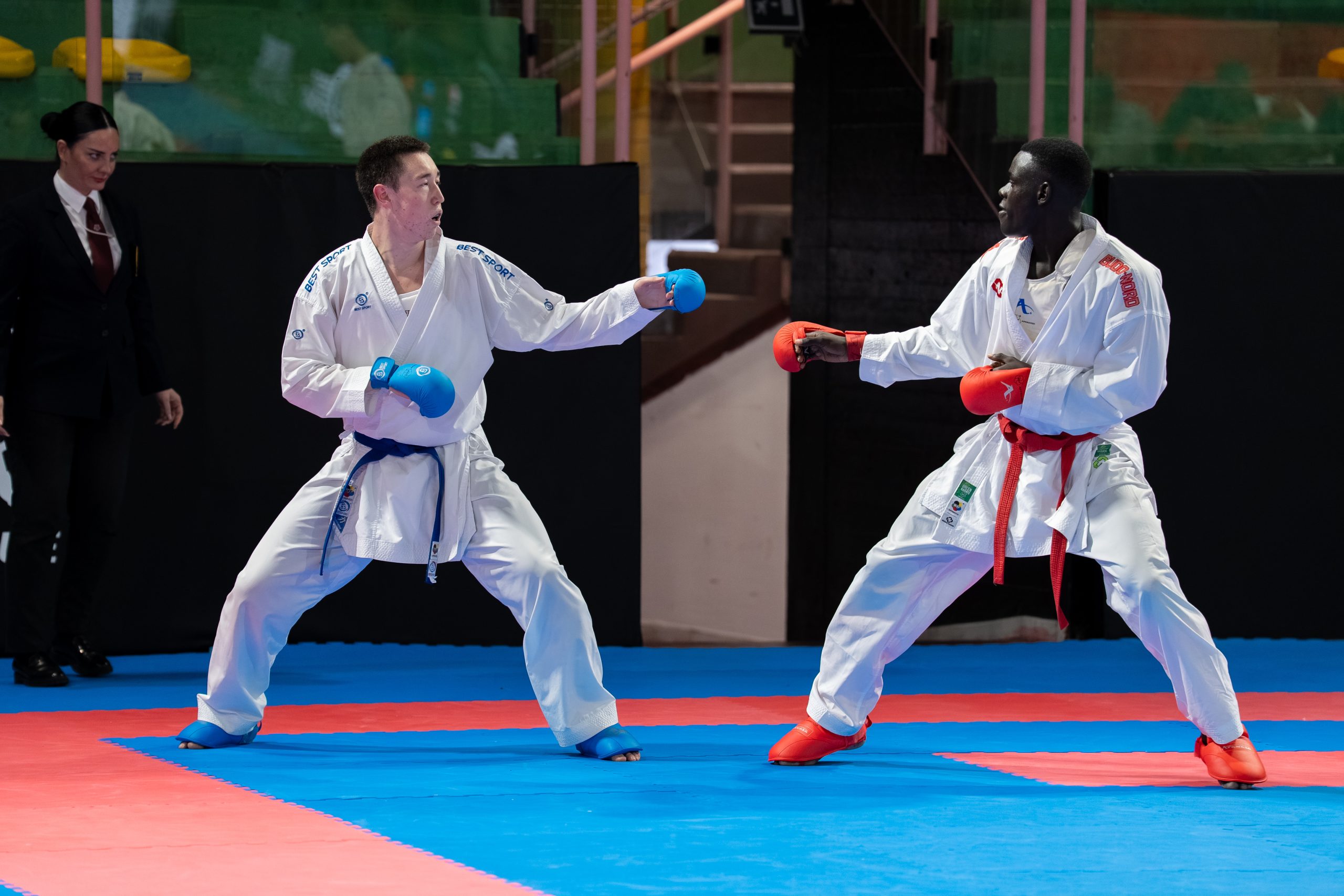
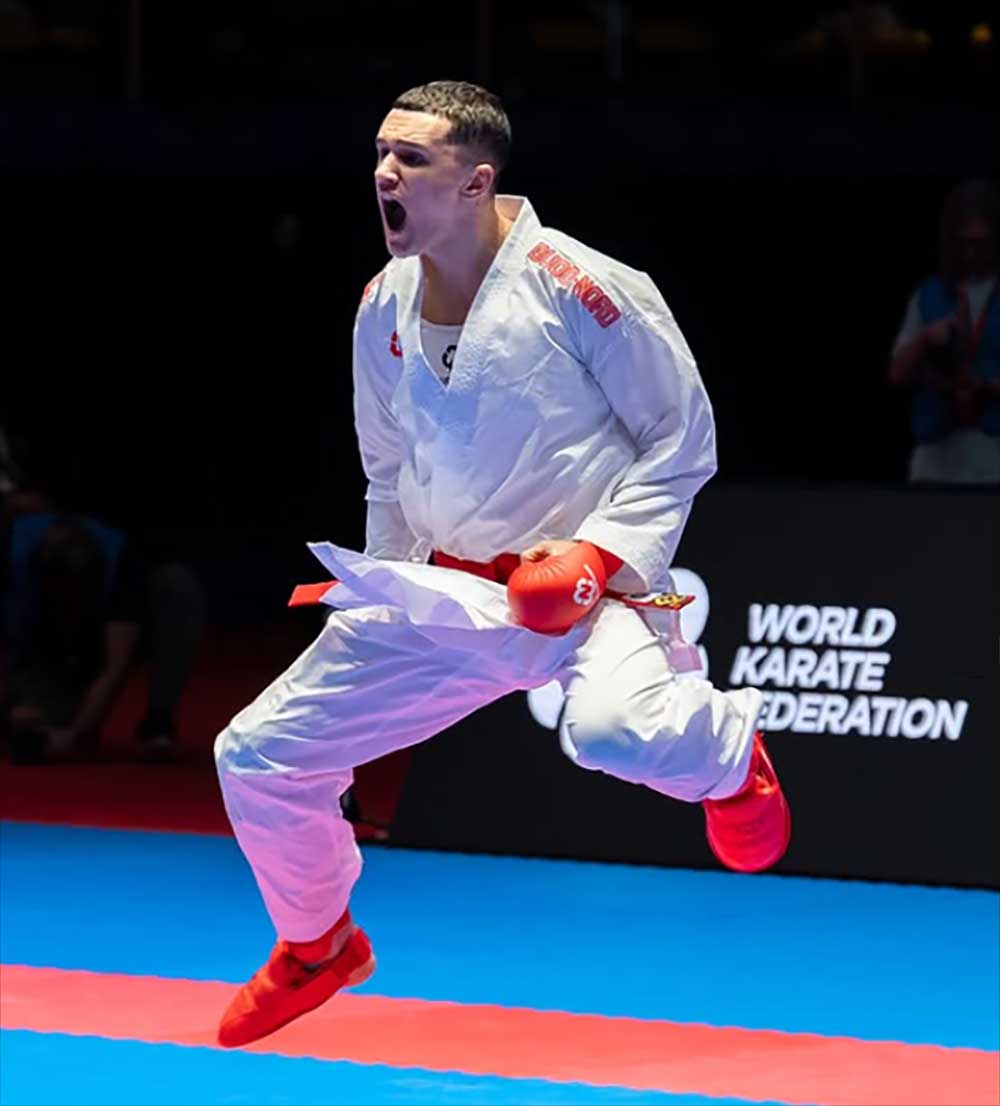
Makhtar Diop, UFAK. Photo: World Karate Federation (WKF) @worldkaratefederation.
One of the day’s biggest stories came in Male Kata, where Ariel Torres Gutierrez of the United States defeated Italy’s Alessio Ghinami in the semifinal. For the home crowd, it was a frustrating result, as Ghinami had carried genuine hopes of reaching the final on home soil. Yet the category also continued to revolve around Kakeru Nishiyama of Japan, who once again advanced with calm authority. Every time Nishiyama reaches another final, the sense grows that his era in Male Kata is no longer just a phase of dominance but a historic reign.
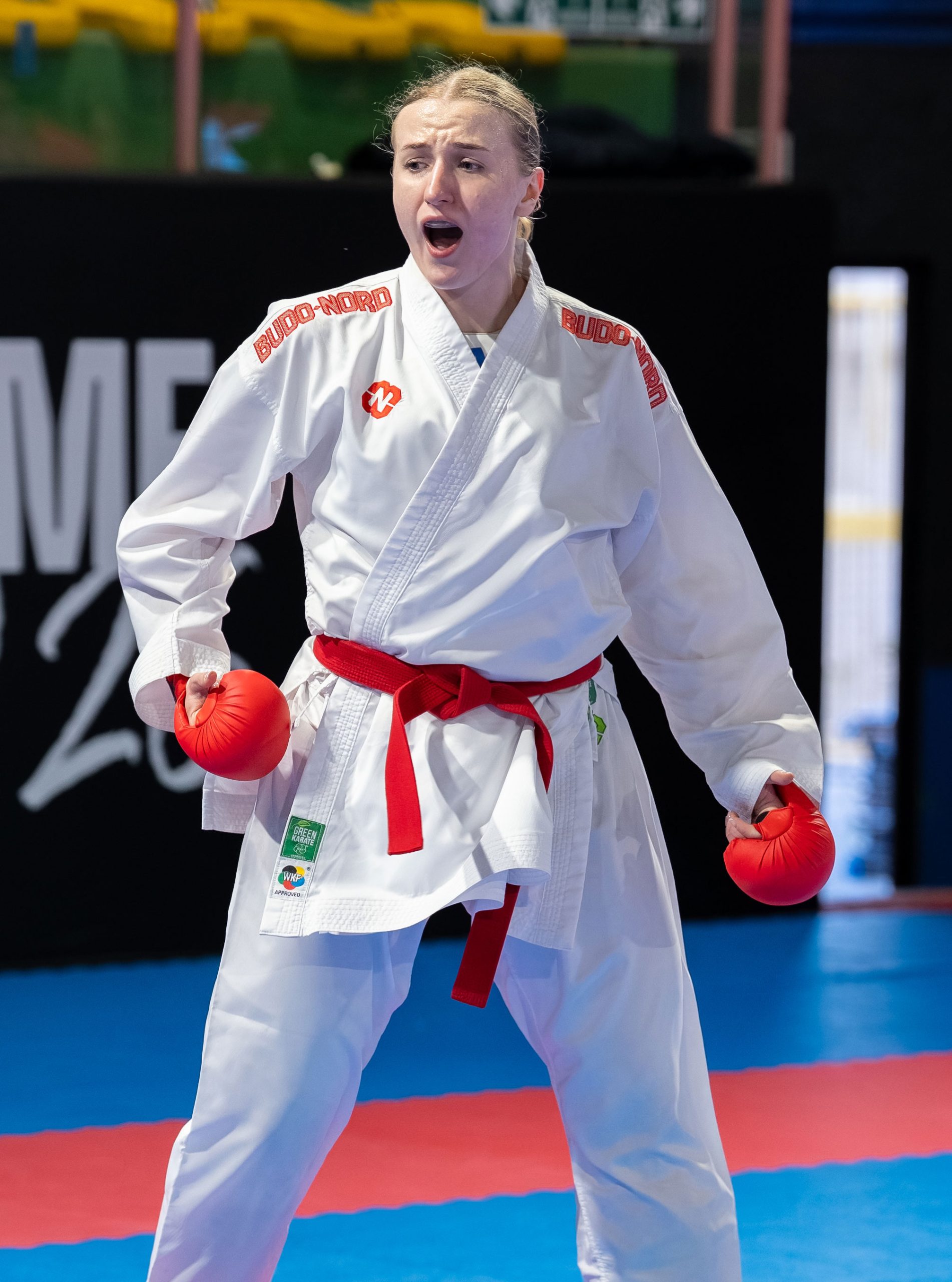
Yulia Rusu, UKR. Photo: World Karate Federation (WKF) @worldkaratefederation.One of the day’s biggest stories came in Male Kata, where Ariel Torres Gutierrez o
In Female Kumite -61 kg, Sarara Shimada and Assel Kanay booked places in a final that looked almost impossible to predict. In Female Kumite -68 kg, Thalya Sombe produced one of the day’s standout results by upsetting Iryna Zaretska before setting up a clash with Elena Quirici. And in the heavier divisions, both Andjelo Kvesic and Sofya Berultseva continued to build momentum in ways that suggested Sunday’s finals would not simply reward reputation, but current form.
For Italy, however, the loudest story of the day was Matteo Fiore. The Italian reached the final in Male Kumite -84 kg and in doing so gave the host nation its best shot at a gold medal on the last day. FIJLKAM’s preview of the finals made clear just how much attention now rested on Fiore, with national coverage pointing to him as the headline home hope in a bracket full of world-class opposition. At the same time, Alessio Ghinami and Matteo Avanzini remained in bronze contention, helping ensure that Italy would enter Sunday with both pressure and possibility.
Finals day: the event becomes unforgettable
By Sunday, the Rome edition had already justified its place on the calendar. But the medal bouts transformed it into something more memorable. The final day did not produce one single overarching storyline. Instead, it offered a series of moments—some expected, some surprising, some emotional—that together gave the event its identity.
Grace Lau opened the major finals stories in style by defeating Maho Ono in Female Kata. It was another authoritative statement from one of the category’s great modern competitors and reinforced the idea that Lau remains one of the most reliable champions in world karate. Her Rome performance was not just about technical sharpness; it was about control, composure, and the ability to rise again in one of the sport’s most demanding rivalries.
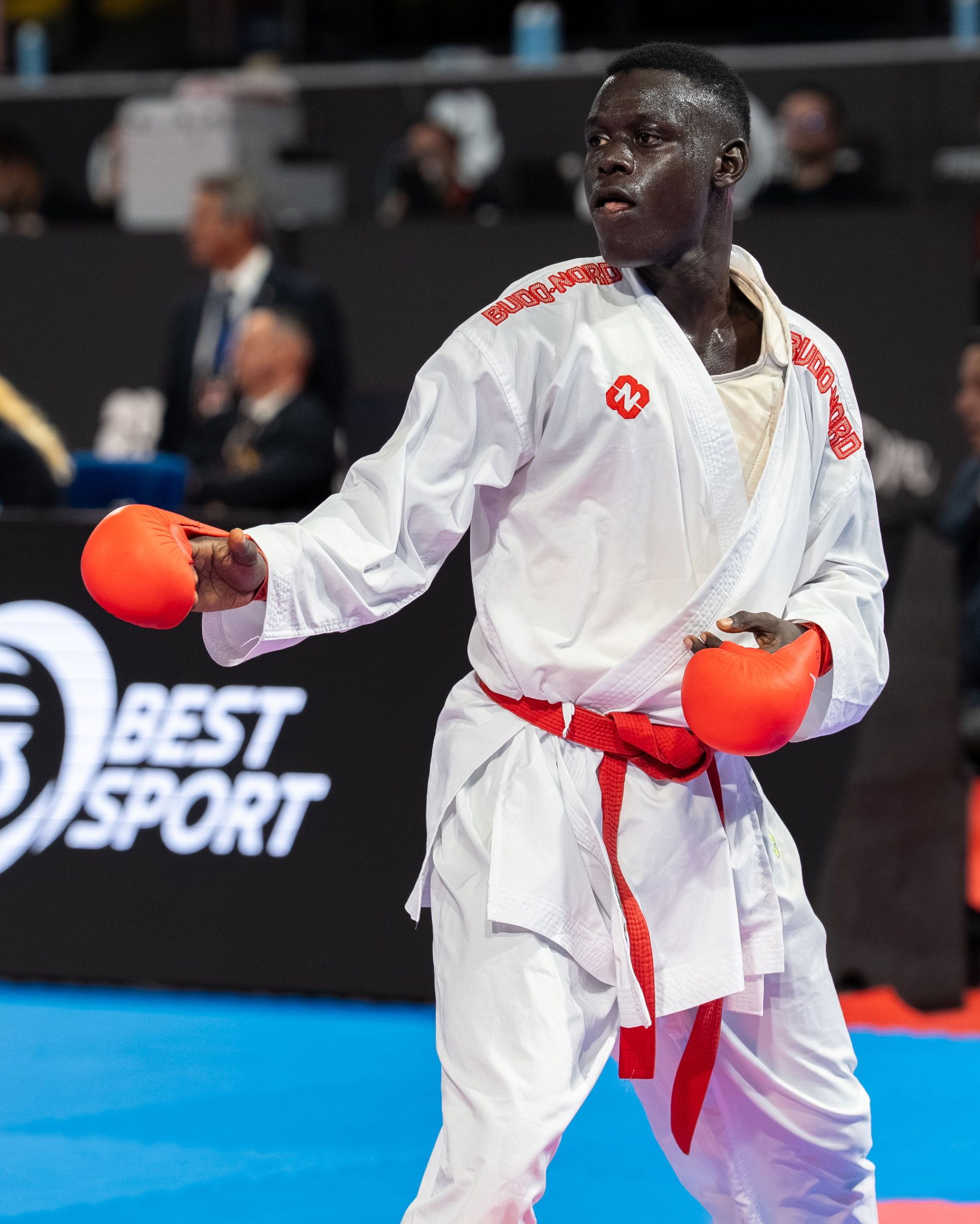
Makhtar-Diop, UFAK. Photo: World Karate Federation (WKF) @worldkaratefederation.
In Male Kumite -60 kg, Akhmed Akhmedov delivered one of the weekend’s breakthrough results by defeating Hiromu Hashimoto to claim gold. This was the sort of win that changes how an athlete is discussed. Premier League titles are not developmental milestones; they are top-level achievements, and Akhmedov’s success in Rome announced him as a serious force in the division rather than a name for the future.
Yorgelis Salazar’s triumph in Female Kumite -50 kg added another emotional layer to the final day. Her victory represented the return of an experienced champion to the top after the difficulties referenced around her recent journey. There was a sense, both in official coverage and in the broader reaction around the event, that this was not simply another title but a meaningful reaffirmation of her level and resilience.
Yugo Kozaki took gold in Male Kumite -67 kg after Adel Omara was unable to compete in the final due to injury. While that left the category without the climactic finish many had hoped for, the result still mattered in the wider season picture. Kozaki remained exactly where elite contenders want to be after two events: near the top of the standings, consistent, and difficult to move aside.
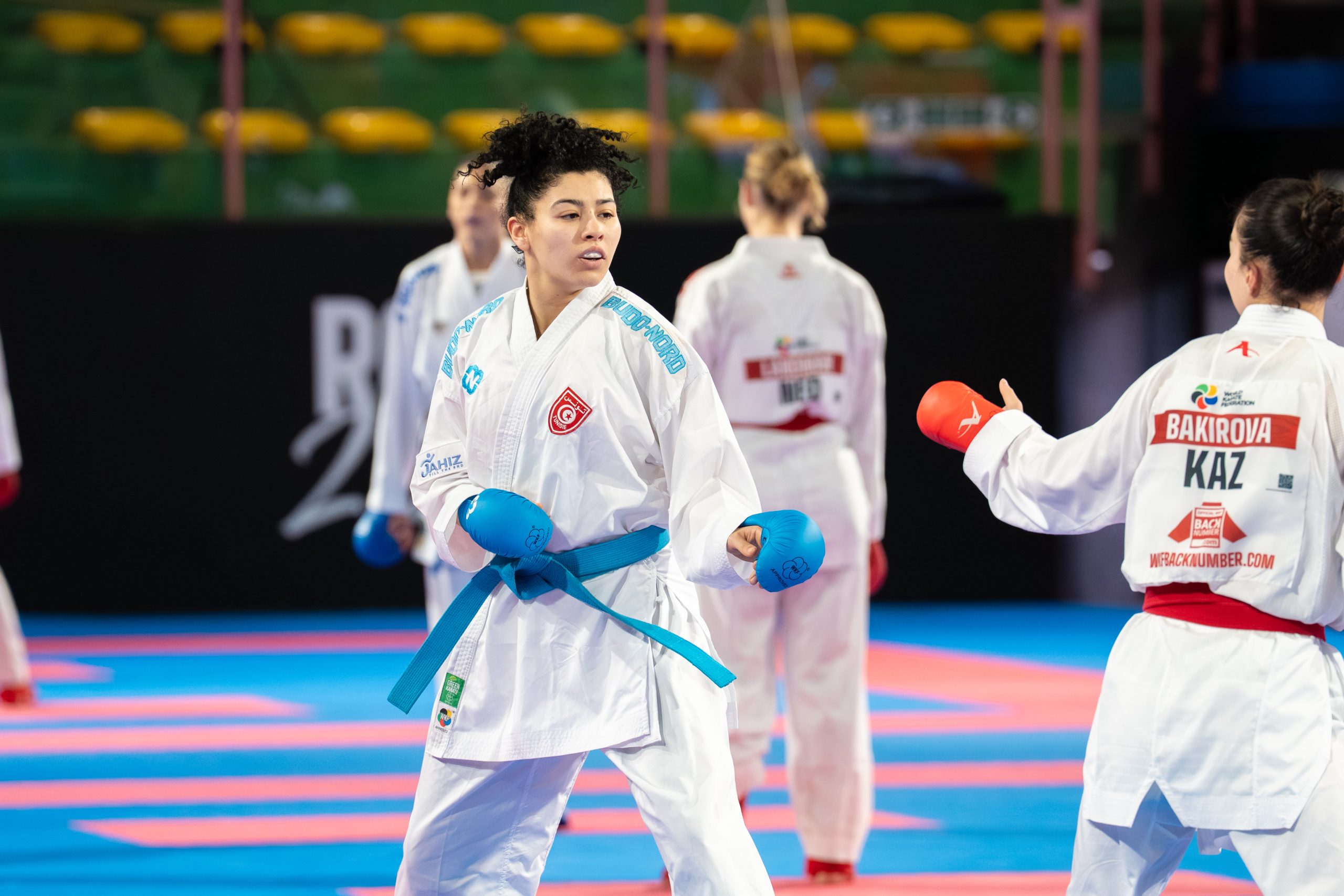
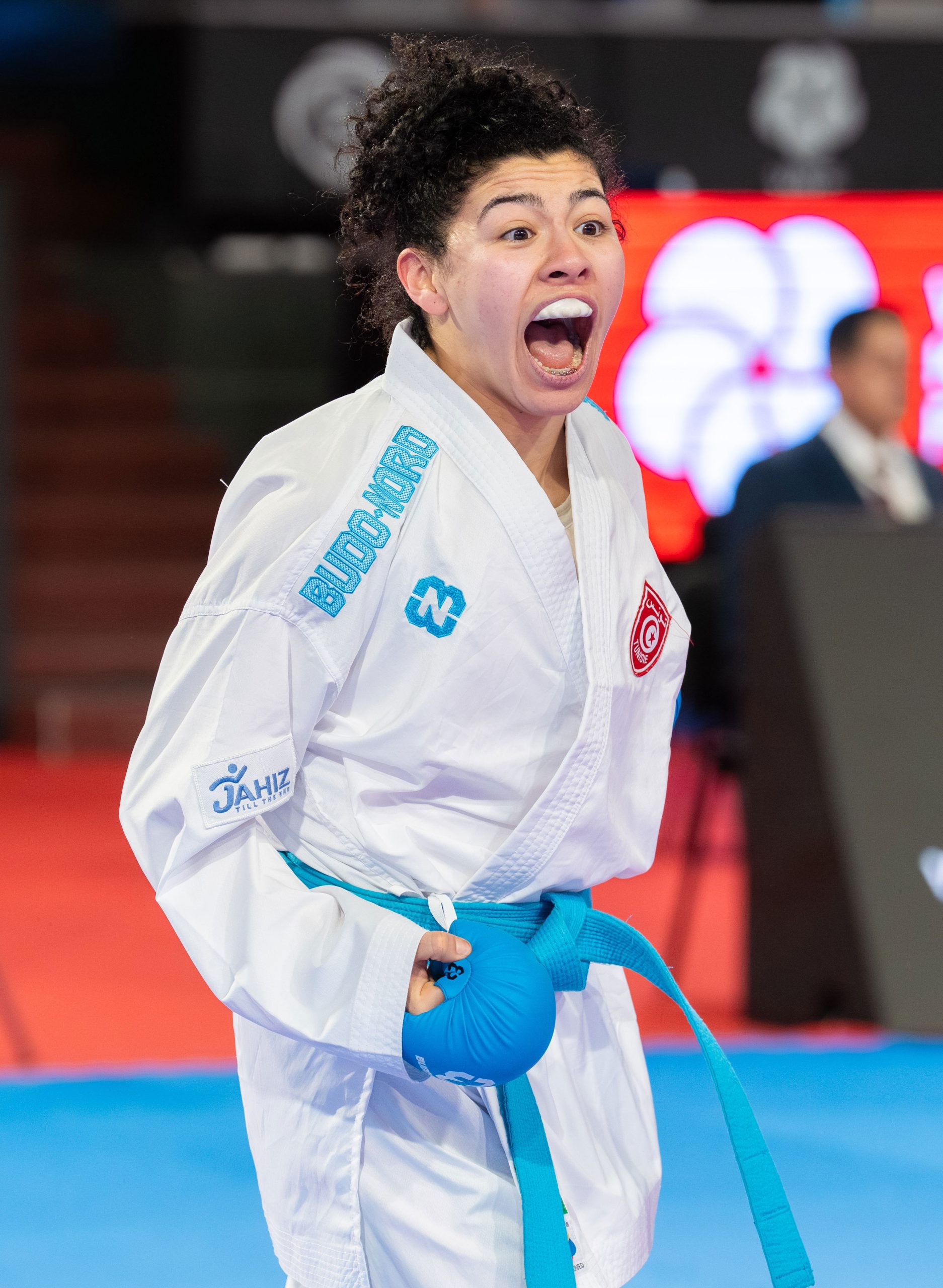
Wafa Mahjoub, TUN. Photo: World Karate Federation (WKF) @worldkaratefederation.
Nejra Sipovic’s gold in Female Kumite -55 kg was one of the event’s most refreshing outcomes. In defeating Italy’s Viola Lallo, she silenced the local dream but elevated her own status enormously. It was the kind of performance that can redefine an athlete’s season, and perhaps even her place in the hierarchy of the weight class. For Lallo, the silver still represented a major home result; for Sipovic, it was a career-shaping moment.
Heorhii Pitsul: composure, timing, and a breakout moment
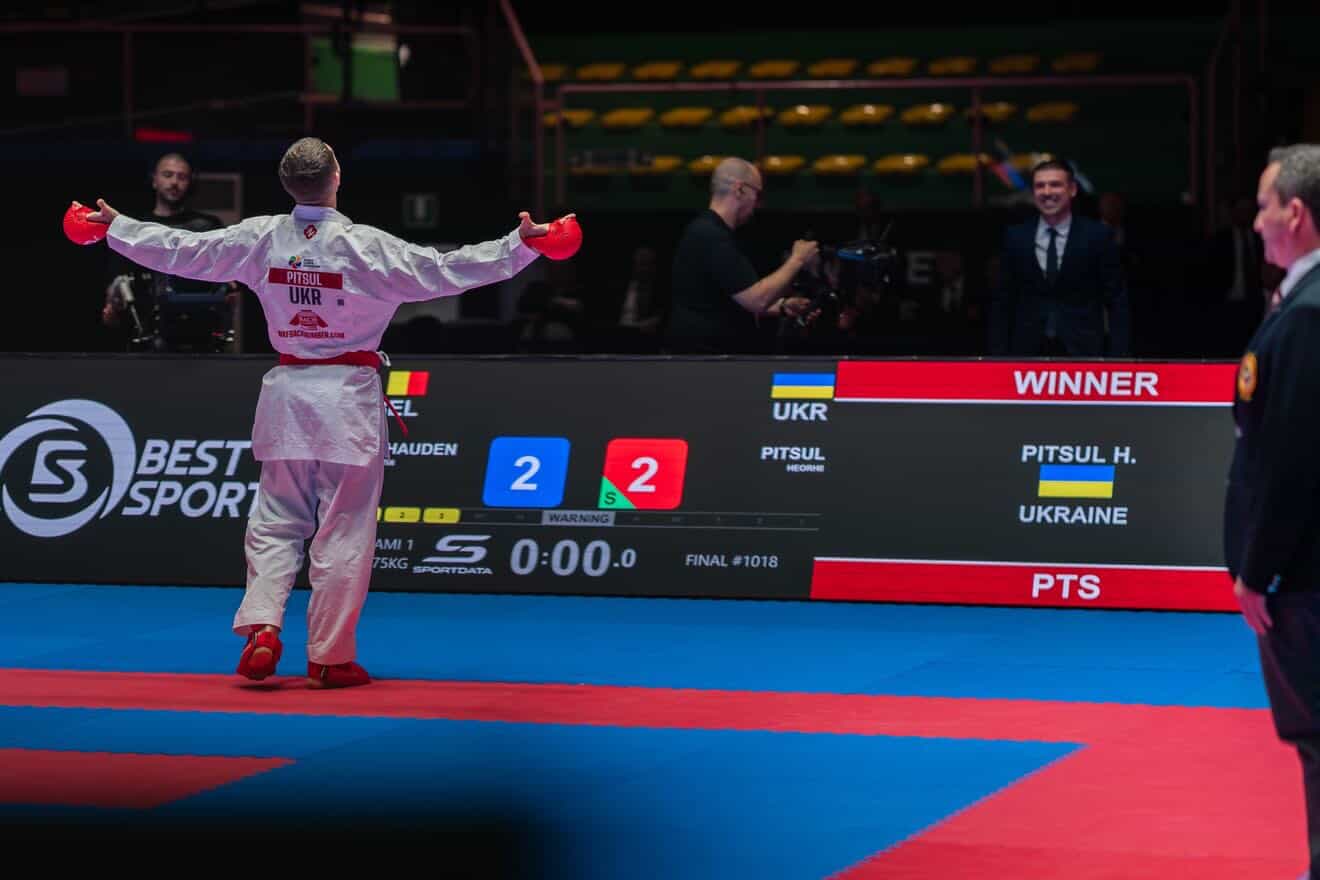
The Men’s -75 kg final was one of the closest matches of the day. Heorhii Pitsul of Ukraine won the Gold medal. Photo: World Karate Federation (WKF) @worldkaratefederation.
The Men’s -75 kg final was one of the closest matches of the day. Heorhii Pitsul of Ukraine and Quentin Mahauden of Belgium ended the bout tied 2-2, but Pitsul claimed gold on senshu, the first unopposed point. It was the sort of final that rewards calmness as much as aggression, and Pitsul handled it with notable maturity. Still only 20 years old, he arrived in Rome with growing international credibility and left with the biggest senior result of his career so far. His Instagram profile presents him as a “2X European Champion” and reflects an athlete built through Series A and Youth League experience, while Ukrainian social coverage around the Rome result celebrated the Premier League gold as a major milestone in his rise. That wider picture makes his Roman title feel even more important: not a lucky run, but the latest step in a carefully built progression.
Pitsul’s victory also fit one of the clearest themes of the tournament: Rome was not only a stage for established champions, but a place where the next wave could announce itself. In a category often decided by tiny margins, his ability to stay composed in the defining exchanges suggested that this may not be his last appearance at the very top.
Nishiyama extends the dynasty, Fiore ignites the arena
If Pitsul represented emergence, Kakeru Nishiyama represented sustained rule. The Japanese star defeated Ariel Torres Gutierrez in the Male Kata final and extended one of the most extraordinary winning runs in contemporary karate. By the time the Rome event ended, his streak had become one of the defining facts of the entire season. Every tournament now feels like a test of whether anyone can interrupt him, and in Rome once again, no one could.
Wafa Mahjoub, TUN. Photo: World Karate Federation (WKF) @worldkaratefederation.
Sarara Shimada then edged Assel Kanay in Female Kumite -61 kg, another category where the difference was minimal and the margins severe. Elena Quirici later overcame Thalya Sombe in Female Kumite -68 kg, proving once more why she remains one of the sport’s most admired tacticians. Andjelo Kvesic took gold in Male Kumite +84 kg, while Sofya Berultseva continued her strong season by winning the Female Kumite +68 kg title and strengthening her momentum after Istanbul.
But the emotional peak of the tournament belonged to Matteo Fiore. In the Male Kumite -84 kg final, the Italian defeated Eduard Gasparian 9-8 in one of the most thrilling bouts of the entire event. Italian reports described a fight of constant exchanges and high pressure, with Fiore finding the decisive scoring action in the final moments after the match had swung back level. It was his first Karate One Premier League gold medal, won at home, in front of a packed arena, in the tournament’s first Italian edition. There are few more perfect sporting scripts than that.
Italy’s reward: medals, atmosphere, and proof of concept
By the close of the event, FIJLKAM celebrated eight medals for the host nation. Fiore’s gold stood above the rest, but the overall Italian performance was every bit as important as the headline win. Viola Lallo, Alessio Ghinami, Erminia Perfetto, Ludovica Legittimo, Luca Maresca, and other members of the home delegation helped ensure that Italy was deeply woven into the sporting story of the weekend. That matters for the future of the event. A successful host city needs organisation, yes, but it also needs home athletes who can make the crowd care. Rome had both.
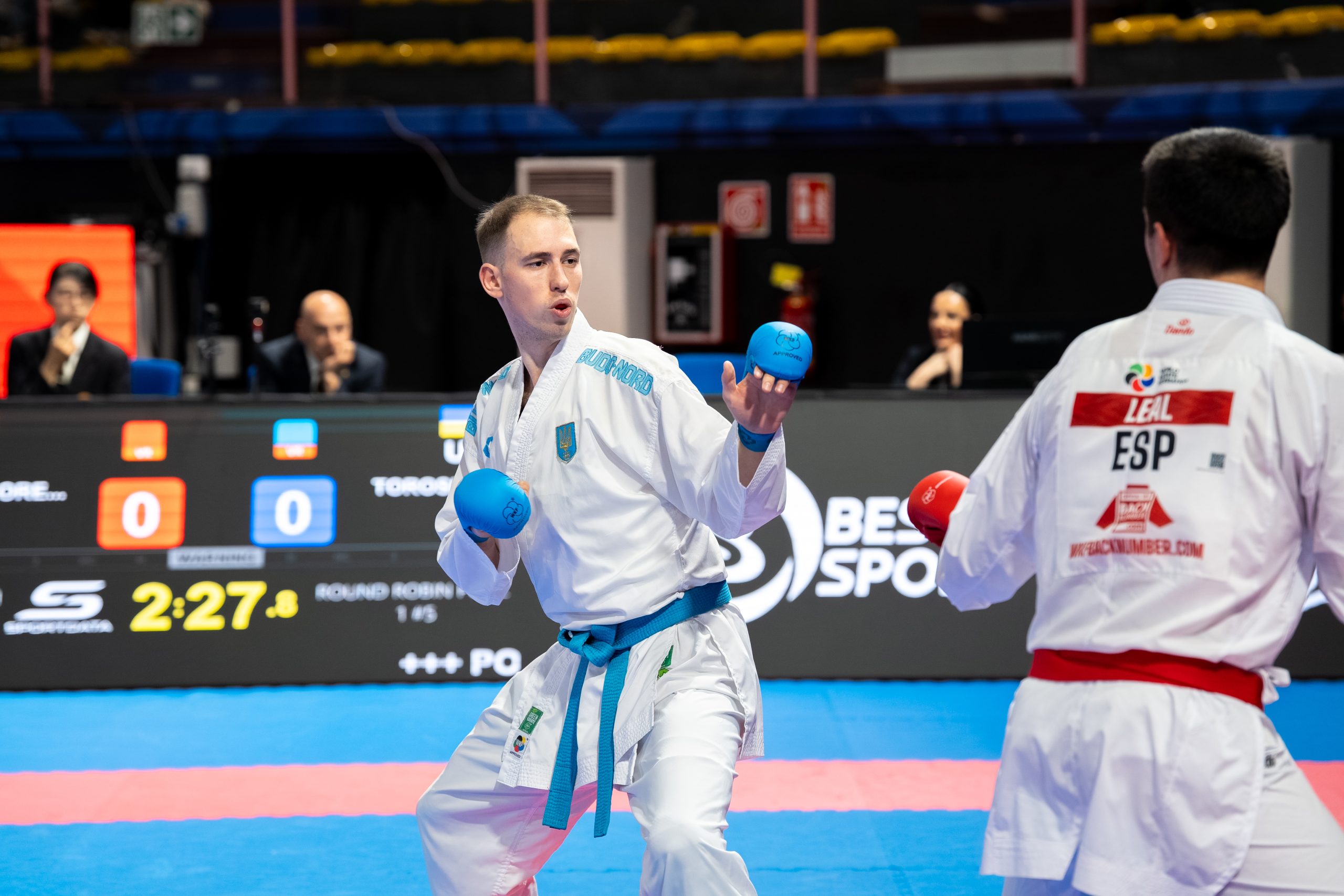
Andrii Toroshanko, UKR. Photo: World Karate Federation (WKF) @worldkaratefederation.
That combination is one major reason why the event already feels bigger than a one-off success. During the opening ceremony, Davide Benetello announced that the Karate One Premier League would return to Rome in 2027. After what unfolded at the PalaPellicone, that decision felt entirely logical. Rome had atmosphere, competitive quality, institutional support, television reach, and a host nation capable of producing memorable moments. It did not merely stage a Premier League. It justified becoming one of the circuit’s reference points.
A tournament that mattered
In the end, Karate One Premier League Rome 2026 succeeded because it operated on several levels at once. It mattered historically because Italy hosted for the first time. It mattered competitively because the field was stacked with the world’s best. It mattered emotionally because the home team gave the arena reasons to believe. And it mattered symbolically because the event showed what modern karate can look like when elite competition, strong governance, sustainability, and public presentation all come together.
For three days in March, Rome was not simply another city on the schedule. It became the stage where dynasties continued, first-time winners emerged, local heroes delivered, and new contenders claimed space in the sport’s highest tier. That is why this first Italian Premier League will be remembered—not only as a historic first, but as an event that instantly felt as though it had always belonged.
Female Kumite -55 kg: Nejra Sipovic (BIH) won gold
Male Kumite -75 kg: Heorhii Pitsul (UKR) won gold
Male Kata: Kakeru Nishiyama (JPN) def. Ariel Torres Gutierrez (USA)
Female Kumite -61 kg: Sarara Shimada (JPN) won gold
Male Kumite -84 kg: Matteo Fiore (ITA) def. Eduard Gasparian
Female Kumite -68 kg: Elena Quirici (SUI) won gold
Male Kumite +84 kg: Andjelo Kvesic (CRO) won gold
Female Kumite +68 kg: Sofya Berultseva (KAZ) won gold.
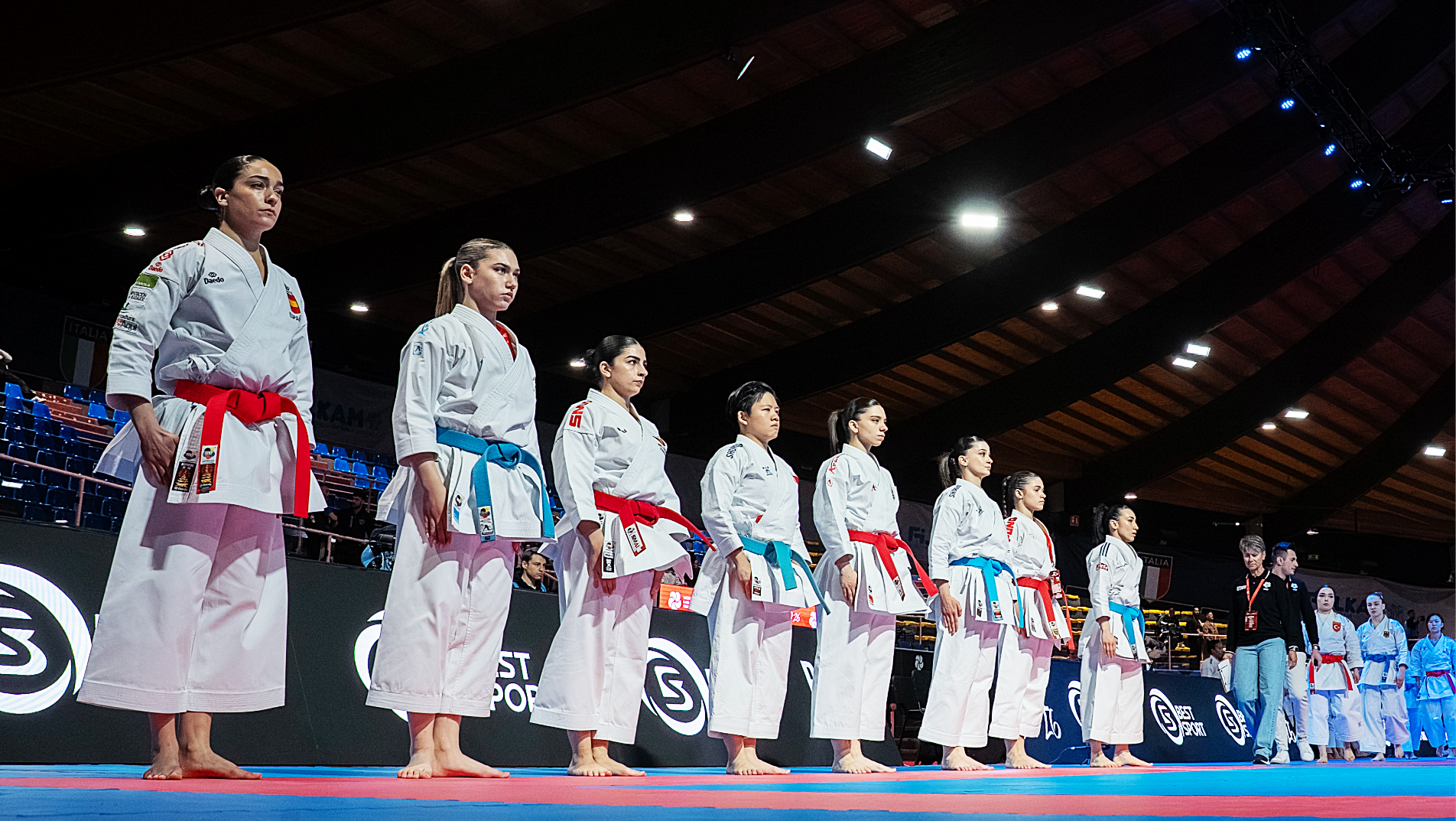
The final day of the 2026 Karate One Premier League was a thrilling celebration of the excellence of Karate events and the excitement of the sport. As the first Karate One Premier League event ever held in Italy, the event delivered top‑level competition, packed arenas and unforgettable performances as new champions were crowned in front of enthusiastic fans in the Italian capital. Grand Winners Mo Sheung Grace Lau, Yugo Kozaki, Kakeru Nishiyama, Elena Quirici were among the standout performances of the day. Photo: World Karate Federation (WKF) @worldkaratefederation.
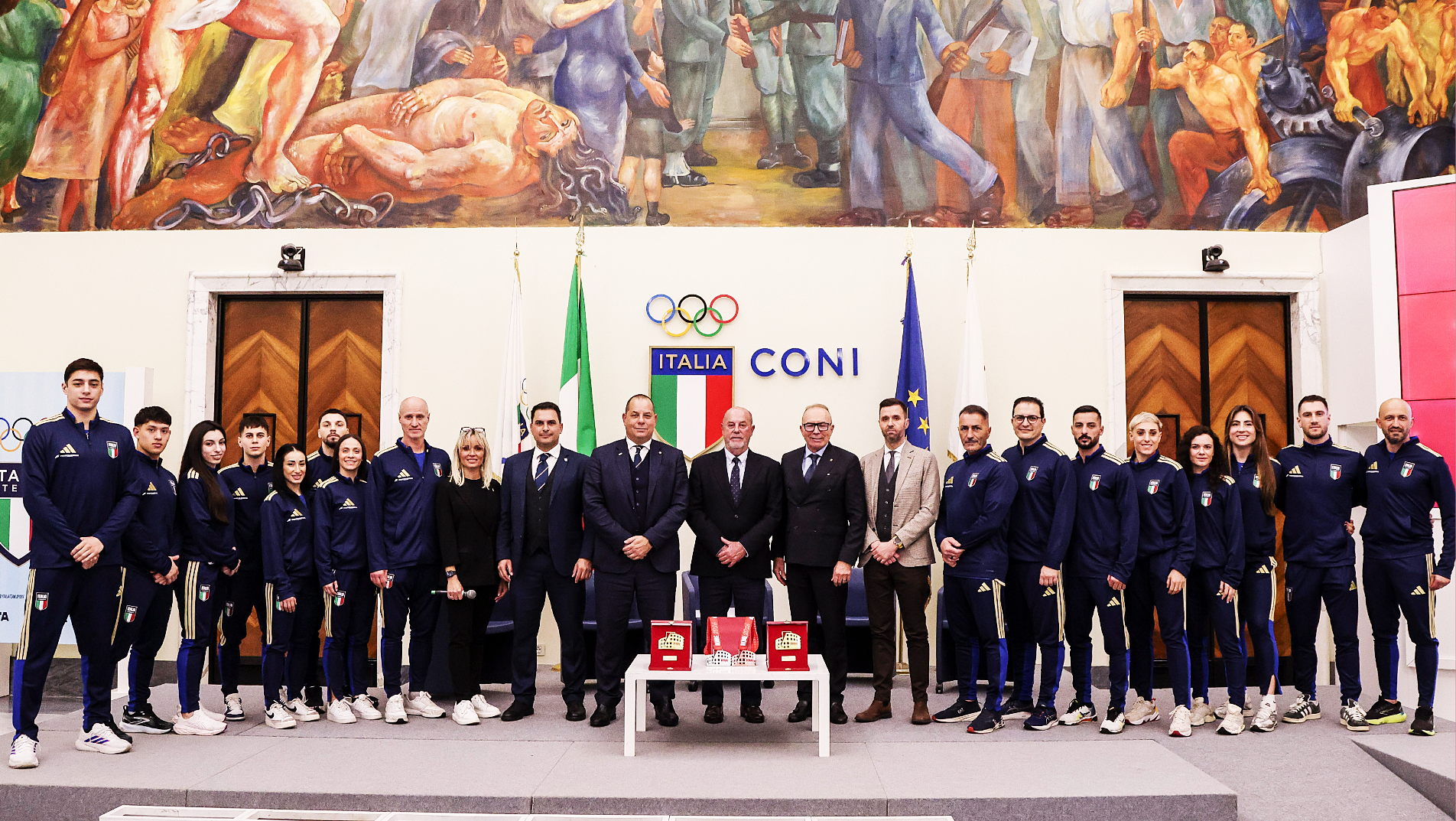
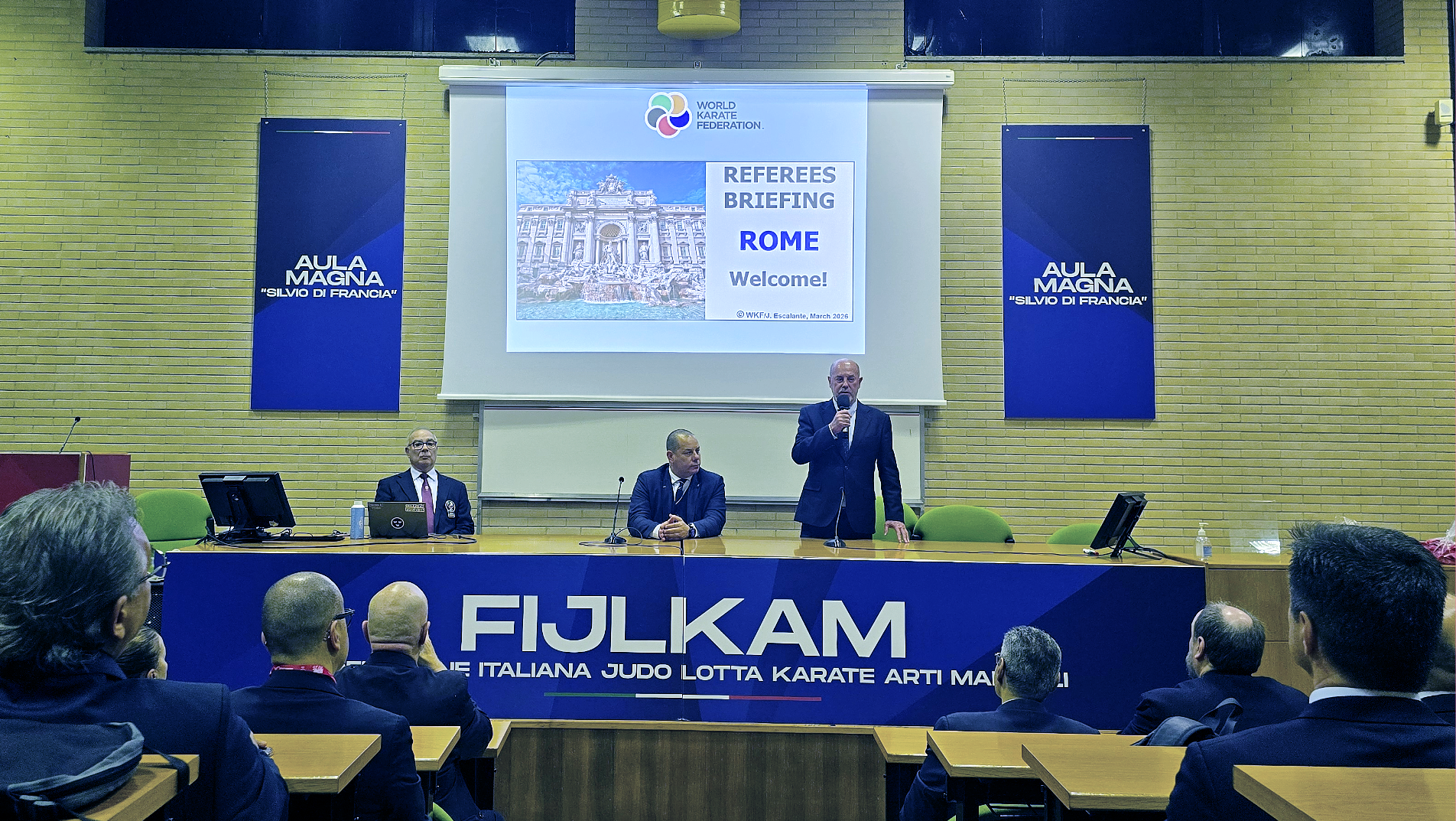
The 2026 Karate One Premier League Rome was officially presented on the eve of the competition during a press conference at the Hall of Honor of the Italian National Olympic Committee inside the historic Foro Italico in Rome. The event marked the formal opening of one of the most anticipated stages of the global karate circuit organized by the World Karate Federation. Photo: World Karate Federation (WKF) @worldkaratefederation.On the eve of the Karate One Premier League in Rome, all judges and referees came together for the Referee Briefing. Led by WKF Referee Commission Chair Javier Escalante, the meeting was headed by WKF President Antonio Espinós and Davide Benetello, president of FIJLKAM’s Karate sector. Photo: World Karate Federation (WKF) @worldkaratefederation.
Websites store cookies to enhance functionality and personalise your experience. You can manage your preferences, but blocking some cookies may impact site performance and services.
Essential cookies enable basic functions and are necessary for the proper function of the website.
Name
Description
Duration
Cookie Preferences
This cookie is used to store the user's cookie consent preferences.
30 days
These cookies are needed for adding comments on this website.
Name
Description
Duration
comment_author
Used to track the user across multiple sessions.
Session
comment_author_email
Used to track the user across multiple sessions.
Session
comment_author_url
Used to track the user across multiple sessions.
Session
Statistics cookies collect information anonymously. This information helps us understand how visitors use our website.
Google Analytics is a powerful tool that tracks and analyzes website traffic for informed marketing decisions.
Contains information related to marketing campaigns of the user. These are shared with Google AdWords / Google Ads when the Google Ads and Google Analytics accounts are linked together.
90 days
__utma
ID used to identify users and sessions
2 years after last activity
__utmt
Used to monitor number of Google Analytics server requests
10 minutes
__utmb
Used to distinguish new sessions and visits. This cookie is set when the GA.js javascript library is loaded and there is no existing __utmb cookie. The cookie is updated every time data is sent to the Google Analytics server.
30 minutes after last activity
__utmc
Used only with old Urchin versions of Google Analytics and not with GA.js. Was used to distinguish between new sessions and visits at the end of a session.
End of session (browser)
__utmz
Contains information about the traffic source or campaign that directed user to the website. The cookie is set when the GA.js javascript is loaded and updated when data is sent to the Google Anaytics server
6 months after last activity
__utmv
Contains custom information set by the web developer via the _setCustomVar method in Google Analytics. This cookie is updated every time new data is sent to the Google Analytics server.
2 years after last activity
__utmx
Used to determine whether a user is included in an A / B or Multivariate test.
18 months
_ga
ID used to identify users
2 years
_gali
Used by Google Analytics to determine which links on a page are being clicked
30 seconds
_ga_
ID used to identify users
2 years
_gid
ID used to identify users for 24 hours after last activity
24 hours
_gat
Used to monitor number of Google Analytics server requests when using Google Tag Manager



Comment