
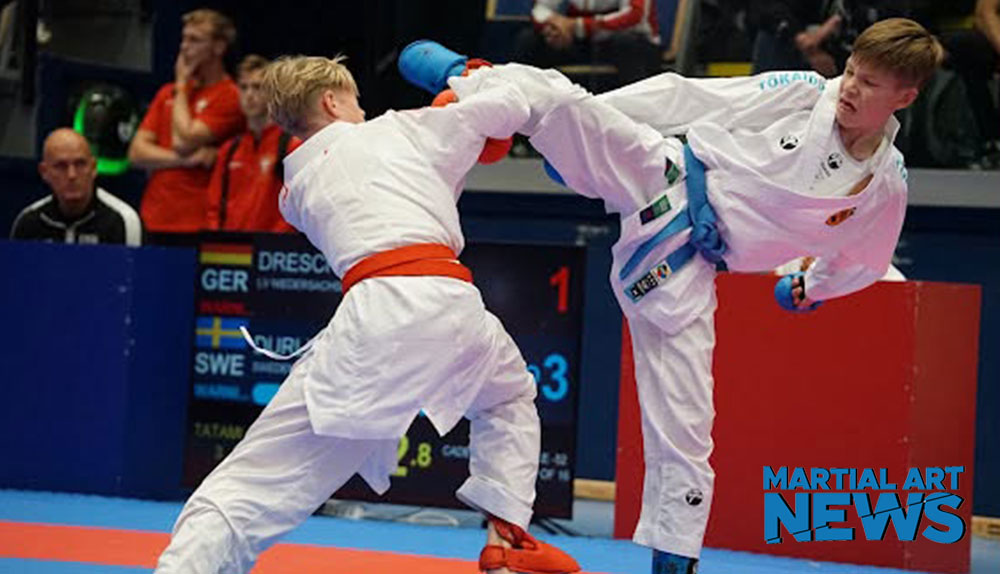

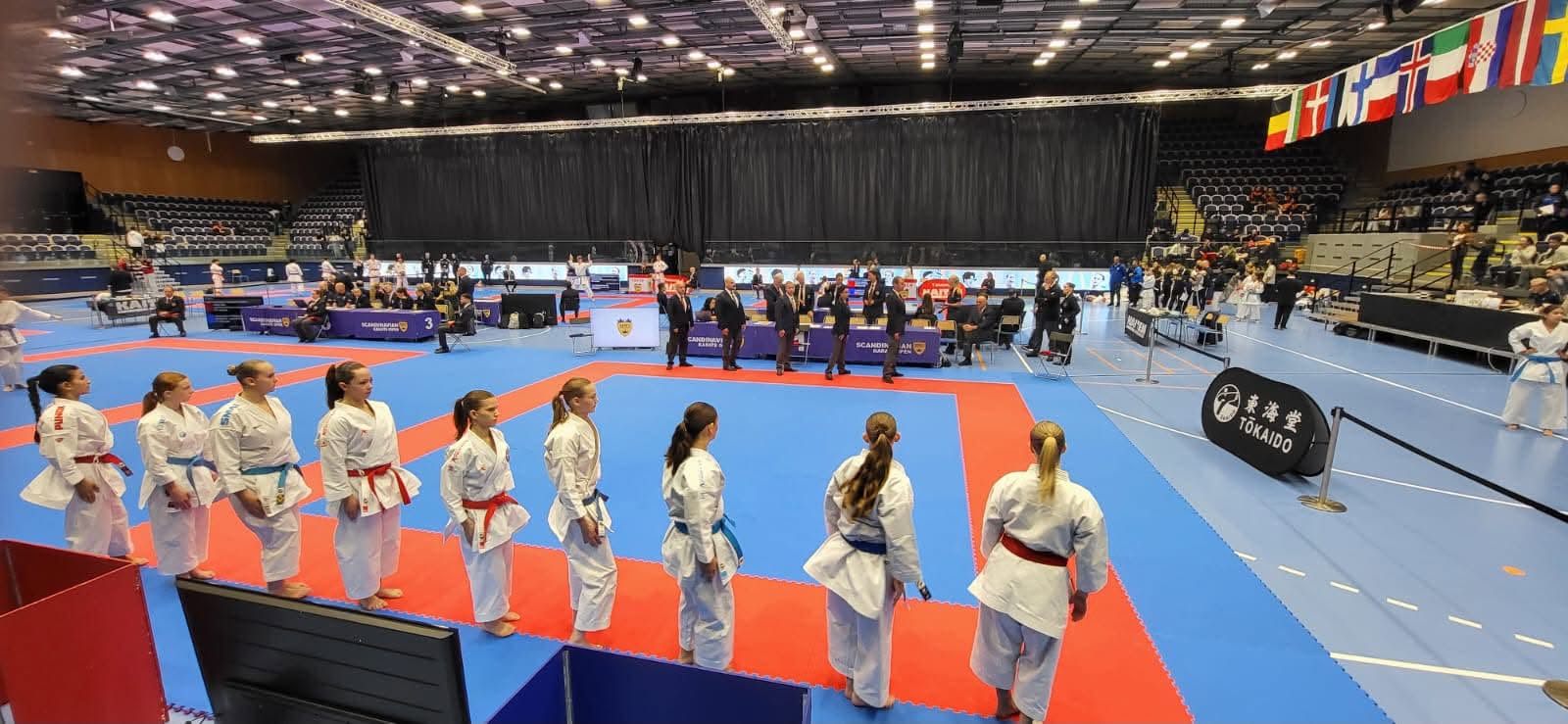
More than 500 competitors from 16 nations gathered at Baltiska Hallen in Malmö on 19–20 September for the inaugural Scandinavian Open. With athletes ranging from U14 prospects to senior internationals and Para-Karate competitors, the Swedish Karate Federation’s new event immediately established itself as an ambitious addition to the Nordic competition calendar.
The first edition of the Scandinavian Open brought international karate to Malmö over two intensive days on 19 and 20 September 2026. Staged at Baltiska Hallen and organised by the Swedish Karate Federation, the tournament attracted more than 500 competitors representing 16 countries, creating a field that stretched well beyond Scandinavia.
For the Swedish federation, the weekend was about more than adding another tournament to an already busy calendar. Scandinavian Open was conceived as a new international meeting point where Swedish and Nordic athletes could gain high-quality competition experience without always travelling deep into continental Europe.
That ambition was clear from the beginning. In the official competition material, Swedish Karate Federation president Sadik Sadik described the inaugural event as an important milestone and expressed the hope that Scandinavian Open could become the beginning of a lasting tradition for future generations. The federation had formally approved the project in late 2025, placing the event in Malmö and assembling an experienced international organisation around it.
Two days later, after hundreds of kata performances and kumite bouts, the concept had received its first real test.
An international tournament built in Sweden
Scandinavian Open differs from many established Swedish competitions in one important respect: it is a federation-driven international event rather than a tournament built around one individual club.
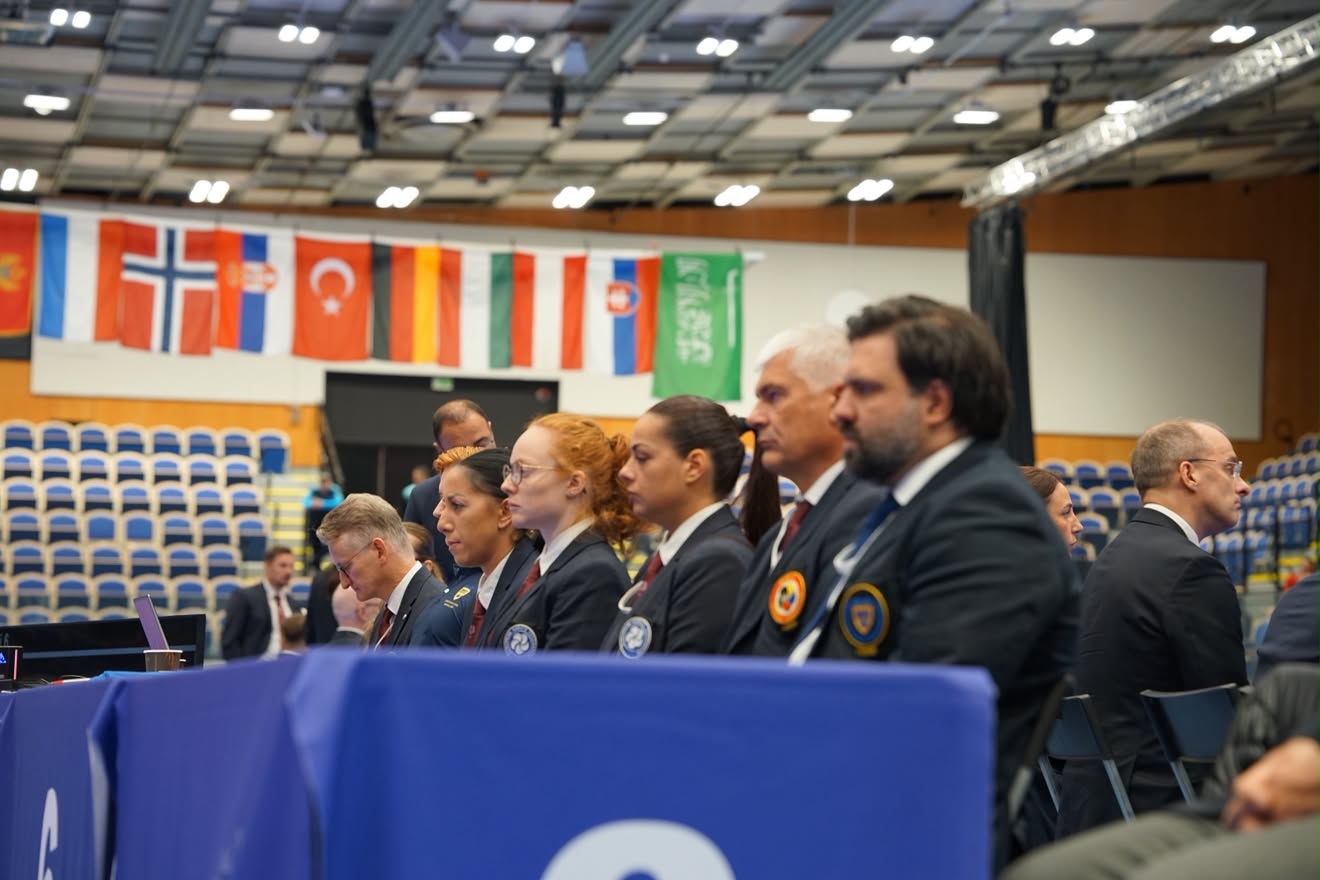
The project was placed under the leadership of Dejan Brajic, who has decades of karate event experience and has been involved with Swedish Karate Open since 2010, together with experienced international event manager Tervel Zwjatkow. Javier Escalante, chairman of the World Karate Federation Referee Commission, was named chief referee, while Andreas Fritsch was responsible for Sportdata and served as chairman of the Swedish federation’s organising committee.
That structure said something about the level the organisers were aiming for from the outset. Rather than starting as a small regional event and gradually expanding, Scandinavian Open was launched with international ambitions built into its organisation.
The choice of Malmö was equally significant.
Baltiska Hallen offered 3,600 spectator seats together with dedicated warm-up and catering areas. Malmö’s location also gives the tournament an obvious geographical advantage. Copenhagen Airport is connected with Malmö by direct trains, while Denmark is effectively within commuting distance across the Öresund Bridge. The official event information estimated the rail journey from Copenhagen Airport to Malmö Central at around 25 minutes.
For Danish clubs in particular, Malmö can therefore function almost like a domestic competition destination. That was visible both in the entry list and on the podium.
Senior experience meets the next generation
The competition programme was deliberately divided between the older and younger age categories.
Saturday opened with Junior, U21, Senior and Para-Karate competition, while Sunday was devoted to U14 and Cadet athletes. Kata and kumite were contested under WKF rules, with five-judge tablet scoring in kata. Kumite used the joystick system on Saturday, while the younger Sunday categories followed the Youth League flag system. Mandatory weight controls applied throughout the age divisions.
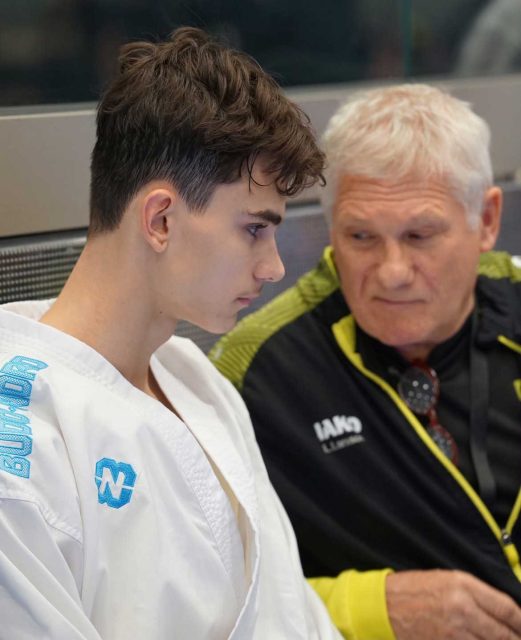
That format created two distinct competition days.
Saturday offered the more mature tactical contests, with senior competitors sharing the arena with juniors and U21 athletes who are already approaching international elite level. Sunday shifted attention towards the generation that could be representing the Nordic countries at European and world level in the years ahead.
That combination is important for an event trying to become more than another open tournament. Young competitors were not competing in isolation at a junior-only event; they were part of the same weekend as senior athletes, international referees and national-team-level coaches.
Local anticipation had been building before the first bow. Malmö-based Limhamns Shotokan Karateklubb was among the Swedish clubs preparing athletes for the event. In an interview with regional sports outlet Skånesport, competitor Fredrika Petit spoke about seeing the tournament as an opportunity to challenge herself and continue developing, while coach Shahnawaz Jinnah stressed performance, confidence, discipline and the ability to perform under pressure rather than focusing solely on medals.
That development perspective would become one of the weekend’s recurring themes.
Sweden on the podium as medals travel across Europe
The breadth of the international field was reflected in the results. Podium positions were shared by athletes from Sweden, Denmark, Germany, France, Turkey, Montenegro, Estonia and other participating nations, underlining that the first Scandinavian Open was far from a purely domestic competition.
One of Sunday’s notable Swedish results came in Cadet Female Kata. Turkey’s Yüsra Bozbey, representing Diamond Team, claimed gold ahead of Denmark’s Merle Clara Minor Larsen of Sydkystens Karate Klub. Sweden secured a podium place through Charisma Brolin of Karlstad Karateförening, who took bronze alongside Montenegro’s Lara Savovic.
Karlstad also featured prominently during Saturday’s U21 competition.
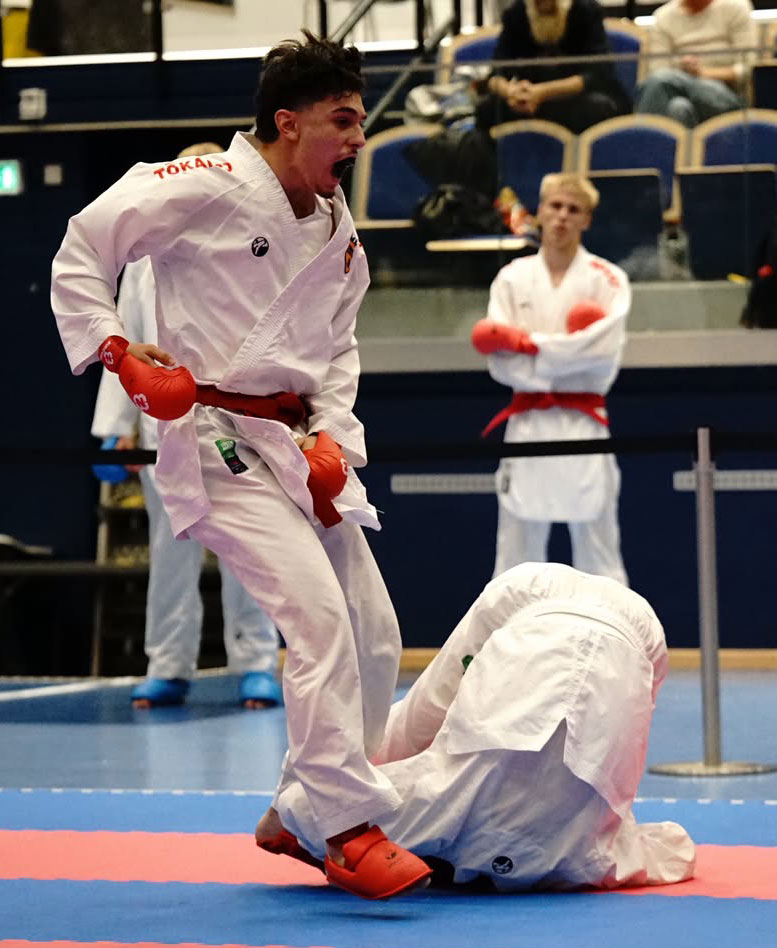
In U21 Male Kumite -75 kg, German Karate Federation athlete Luca Thierbach won the category. Sweden’s Nikola Durdevic, representing Karlstad Karateförening, finished with silver, while Christian-Emil Bjerre of Denmark’s Egedal Karate Klub and French national-team athlete Hairiss Hierso shared the bronze medals.
Those results illustrated precisely the type of international encounters Scandinavian Open was designed to create: Swedish club athletes competing directly against German, French, Danish and other European opposition on home soil.
Estonia was represented on the senior podium through Li Lirisman of BUDO, who won bronze in Senior Female Kumite -55 kg. Club teammate Kirill Fomin narrowly missed the medals with fifth place in U21 Male Kumite +84 kg. BUDO’s post-event report also included a photo gallery from the Malmö competition.
Danish clubs had their own reasons to celebrate. Allerød Karate Dojo reported a kumite gold for Viggo Emil, while Lea secured bronze in U21 kumite. The club’s social-media feed quickly filled with congratulations from Denmark after the results in Malmö.
Montenegrin karate also left its mark. Karate Klub Bar reported Benjamin Aljošević taking silver in U21 kata, while senior individual kata brought further bronze-medal success for the club, including Jovana Milić. The club’s reporting from Malmö reflected the increasingly international character of the event, with athletes from the Balkans adding another dimension to a field already stretching across northern and western Europe.
The significance of these individual results goes beyond the medals themselves. A new event needs competitive credibility if it is going to convince strong clubs and national-team programmes to return. The variety of countries appearing among the medallists gave the inaugural edition precisely that kind of foundation.
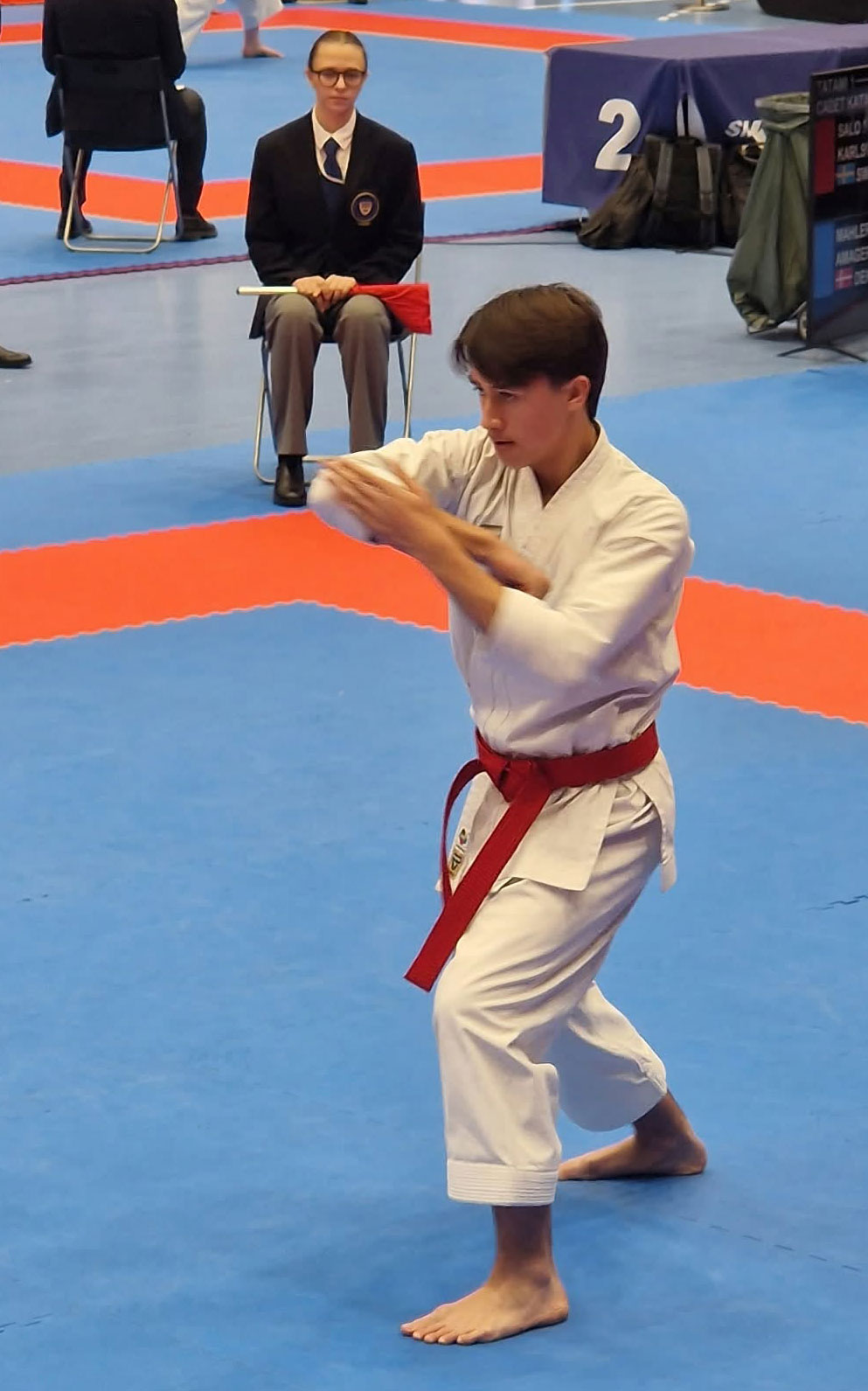
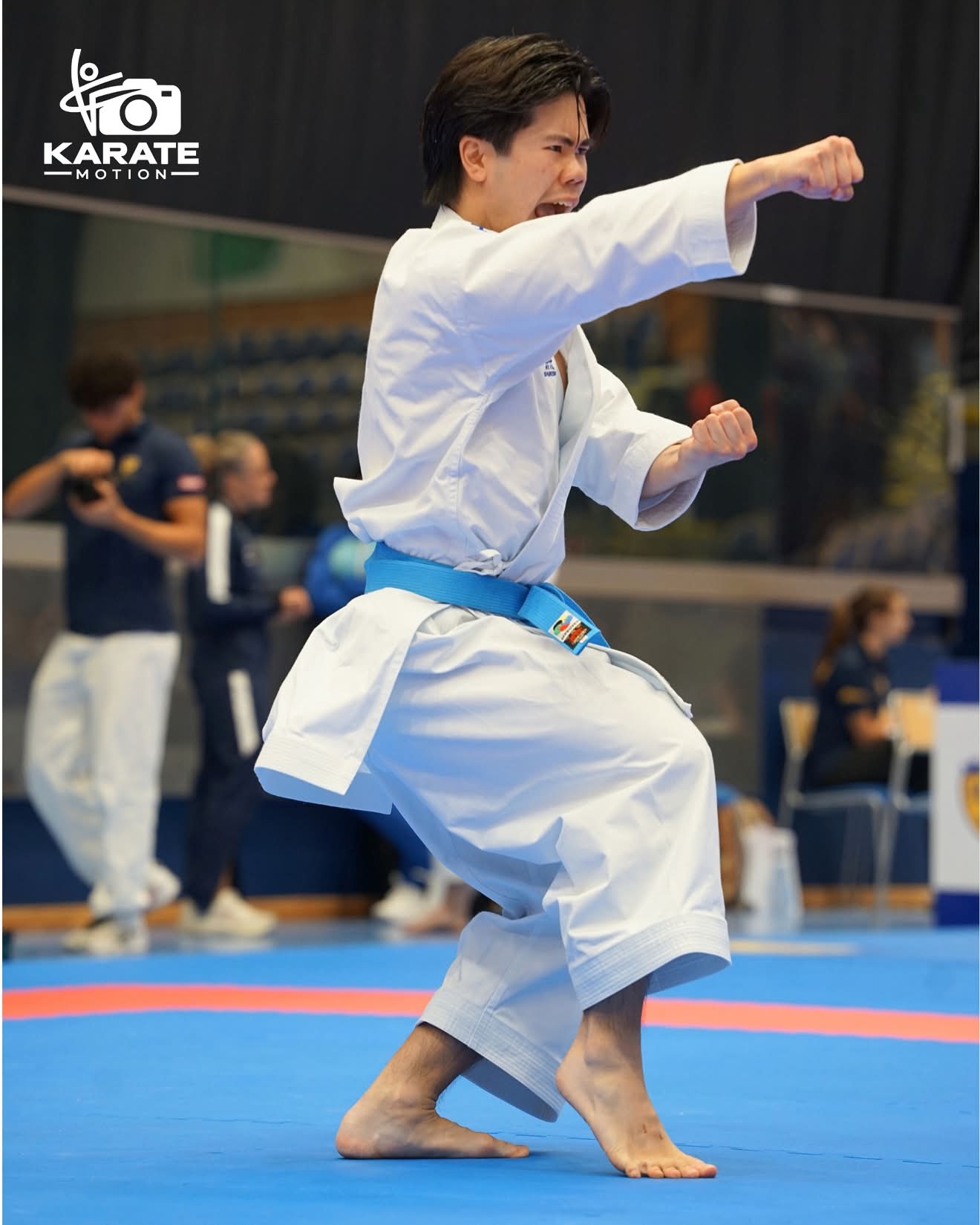
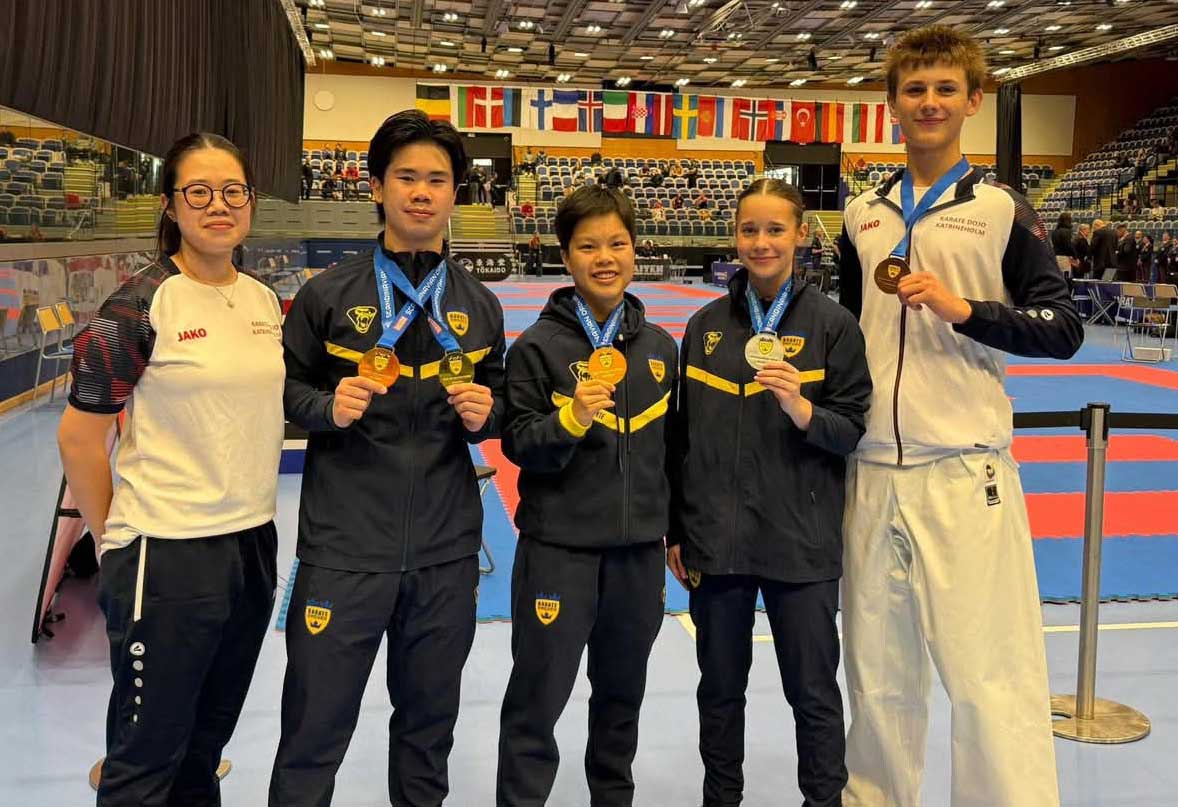
Kata also produced several strong performances from the Swedish contingent, with Anthony Wu responsible for one of the standout achievements of the entire weekend. Wu completed an impressive double by winning both the U21 and Senior categories, demonstrating the consistency and technical quality required to succeed across two highly competitive divisions at the same event. Taking gold at both levels made his performance one of the clearest Swedish highlights of the inaugural Scandinavian Open.
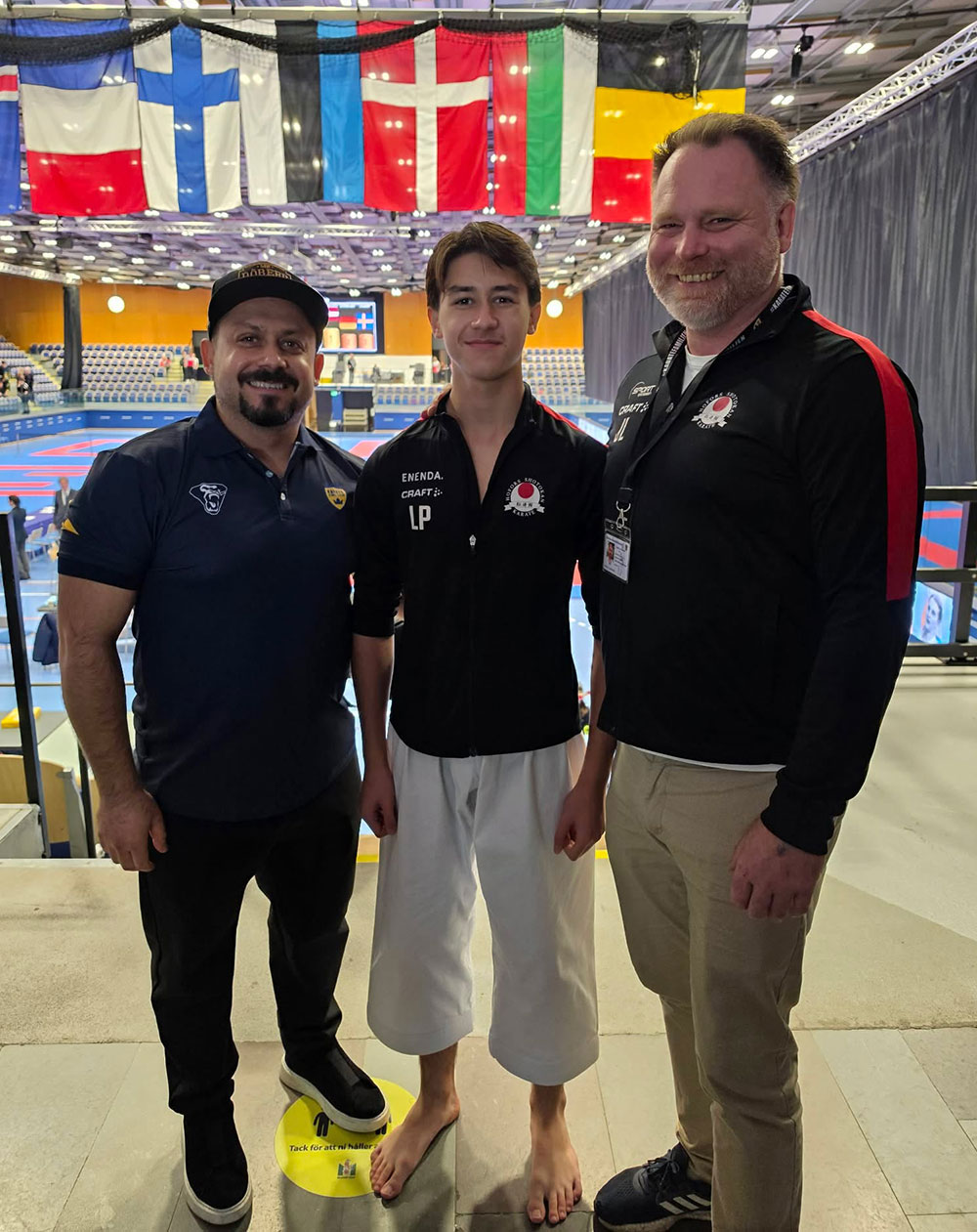
There were encouraging signs further down the age groups as well. In Cadet Male Kata, 14-year-old Leon Paris of Hofors Shotokan Karate finished fifth in what was his first-ever official competition. Making a competitive debut at an international tournament is a demanding introduction to the sport, particularly in a field containing athletes from several European countries, yet Paris advanced deep enough into the category to finish just outside the medals. While senior victories naturally attract much of the attention, performances such as this are equally relevant when assessing the long-term development of Swedish kata. Scandinavian Open offered younger athletes the opportunity to test themselves against unfamiliar international opposition at an early stage of their competitive careers.
More than medals for Nordic national-team prospects
Perhaps the strongest indication of Scandinavian Open’s potential importance came from Denmark and Norway.
For Danish kumite athletes, the Malmö tournament was identified by several clubs as a selection event connected with the Danish Kumite Talent Centre and national-team structure. Danish club information described Scandinavian Open as an international competition under WKF rules and explicitly linked performances there to talent and national-team selection.
Norway went even further.
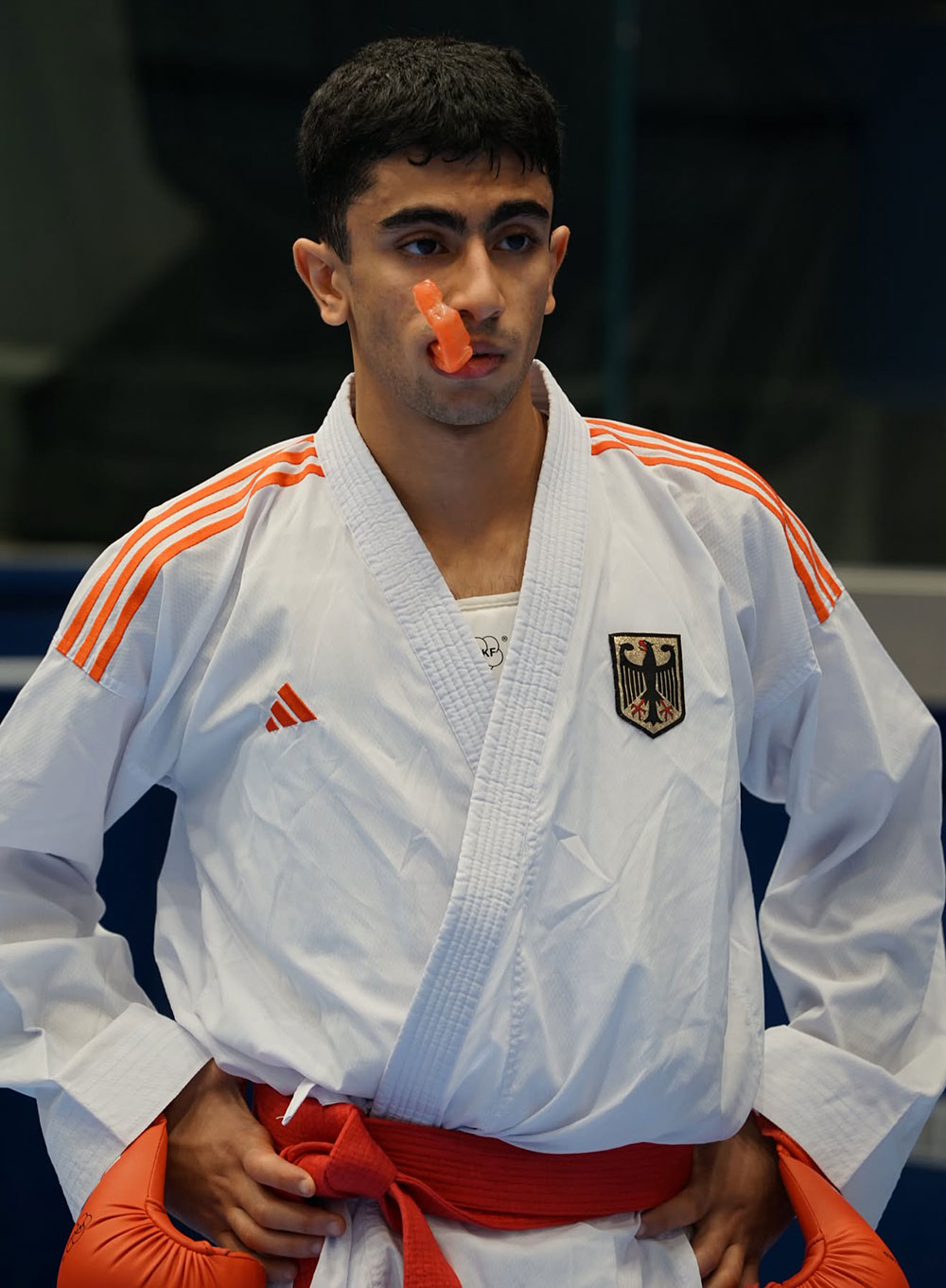
The Norwegian Karate Federation selected Scandinavian Open as one of its designated autumn 2026 selection competitions for athletes aiming to represent Norway at the European Championships for Cadets, Juniors and U21. Performances at selected tournaments contribute points based on results, victories and other sporting criteria that form part of the federation’s overall selection assessment.
That status considerably raises the sporting value of the Malmö event.
A tournament becomes more consequential when a quarter-final, semifinal or medal match can influence an athlete’s route towards an international championship. Scandinavian Open was therefore not simply another opportunity to collect trophies. For some competitors, Malmö was part of the selection process for future European-level representation.
It also strengthens the event’s claim to the word “Scandinavian”. Danish athletes could cross the bridge into Sweden, Norwegian national-team prospects had concrete reasons to attend, and Swedish athletes gained international opposition on home ground.
If those links deepen in future editions, Malmö could become a natural September checkpoint for Nordic karate.
Malmö offers Sweden a strategic international venue
Southern Sweden already has a significant karate infrastructure, and Skåne has repeatedly hosted major martial arts events. Scandinavian Open adds something different by combining an international federation-backed competition with Malmö’s geographical relationship to continental Europe.
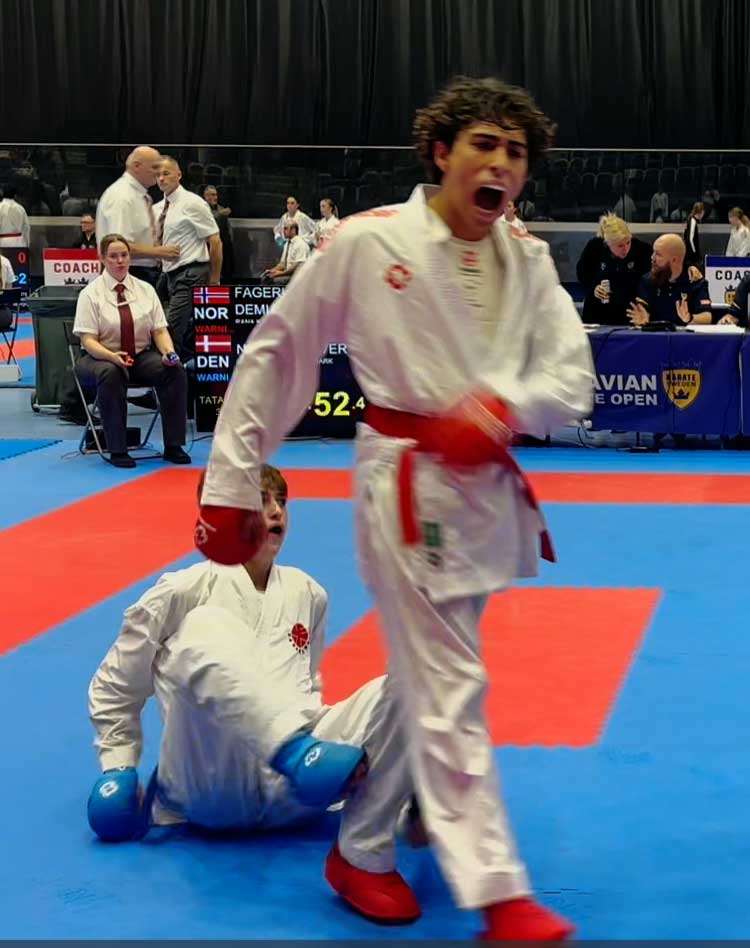
Pre-event reporting highlighted competitors coming from countries including Germany, Turkey, Saudi Arabia and France, illustrating how far beyond the Nordic region organisers were looking when building the tournament.
That accessibility matters in a crowded European competition calendar.
International teams constantly weigh sporting quality against travel costs, flight connections and logistics. Malmö has an unusual advantage: teams can fly into Denmark’s largest airport and be in another country’s city centre less than half an hour after boarding a train.
For Swedish athletes, the equation works in reverse. Instead of paying for flights, hotels and several days abroad to find international opposition, Scandinavian Open provides the possibility of competing against foreign national-team and elite club athletes within Sweden.
For younger competitors in particular, that can be valuable. International experience does not begin only at European Championships or Karate1 events. It is built through repeated exposure to unfamiliar styles, different tactical approaches, international refereeing and the pressure that comes from facing athletes whose strengths are not already known from the domestic circuit.
Para-Karate also had a natural place within the Scandinavian Open programme, adding another dimension to a weekend designed to represent the wider spectrum of modern competitive karate. Para competition has long been an established part of international karate and provides athletes with different disabilities the opportunity to compete in a structured high-level environment under recognised competition formats.
Its inclusion in Malmö was significant not because Para-Karate stood apart from the rest of the tournament, but because it did not. Para athletes shared the same event, venue and overall competition setting as competitors in the other categories. That integration reflects how international karate has developed, with Para-Karate increasingly treated as an integral part of major championships rather than as a separate addition to the programme.
For a newly launched tournament seeking to establish an international identity, that breadth matters. Scandinavian Open was not built exclusively around senior elite kumite or the largest youth categories. By bringing together kata, kumite, several age divisions and Para-Karate during the same weekend, the organisers were able to present a broader picture of the sport and of the athletes who make up today’s karate community.
Building an event takes more than one successful weekend
Launching a tournament is one challenge. Turning it into a permanent fixture is another.
Europe already has a dense calendar of established opens, national championships, Karate1 tournaments and selection competitions competing for the attention of clubs and national teams. Scandinavian Open will therefore have to build its identity over several editions.
The first weekend in Malmö nevertheless provided several ingredients an emerging competition needs: a substantial entry, a genuinely international field, an experienced organising structure, relevant age categories, senior and Para-Karate competition, and tangible importance for national-team selection in neighbouring Nordic countries.
The Swedish Karate Federation’s decision to take direct responsibility for the competition could also prove important. Board documents show that Scandinavian Open was planned as a strategic federation project rather than emerging by accident from the normal club calendar. The federation approved both the sporting concept and financial framework before the inaugural edition.
After the event, federation president Sadik Sadik described the first edition as completed and publicly thanked those involved in making the tournament possible — a fitting closing point for a project that had required cooperation between officials, volunteers, referees, coaches, athletes and organisers.
The next question is what follows.
A promising first chapter for Scandinavian Open
No inaugural tournament can establish a tradition in two days. Traditions are built when athletes return, when clubs put the date into next year’s calendar and when the competitive level makes travelling worthwhile.
But Scandinavian Open 2026 gave the Swedish Karate Federation something concrete to build on.
More than 500 athletes from 16 countries came to Malmö. Swedish competitors gained international matches at home. Danish and Norwegian athletes arrived with national-team ambitions. European medals were divided between competitors from several nations, and younger athletes shared the event with senior and Para-Karate competitors.
Most importantly, the tournament demonstrated that Malmö can serve not merely as the host city for another Swedish karate event, but as a meeting point between Scandinavia and the wider European karate community.
For a first edition, that may be the most important result of all.
Photo cover: Nick Dur @nicklas_durling, United Sportcenter.
Svenska karateförbundet Facebook
Scandinavian Open 2026: pronks ja väärikas… – BUDO uudised
Stor karatetävling i Malmö – Limhamns Shotokan Karateklubb är med – Skånesport
Scandinavian Karate Open 2026 Malmö | Emilio Merayo
Elit Karate Cup 2026 slog deltagarrekord på Lidingö
Visa detta inlägg på Instagram
Visa detta inlägg på Instagram
Visa detta inlägg på Instagram
Visa detta inlägg på Instagram
Visa detta inlägg på Instagram
Visa detta inlägg på Instagram
Visa detta inlägg på Instagram
Visa detta inlägg på Instagram
Visa detta inlägg på Instagram
Visa detta inlägg på Instagram
Visa detta inlägg på Instagram
Visa detta inlägg på Instagram
Visa detta inlägg på Instagram
Visa detta inlägg på Instagram
Visa detta inlägg på Instagram
Visa detta inlägg på Instagram
Visa detta inlägg på Instagram
Visa detta inlägg på Instagram
Visa detta inlägg på Instagram
Visa detta inlägg på Instagram
Visa detta inlägg på Instagram