
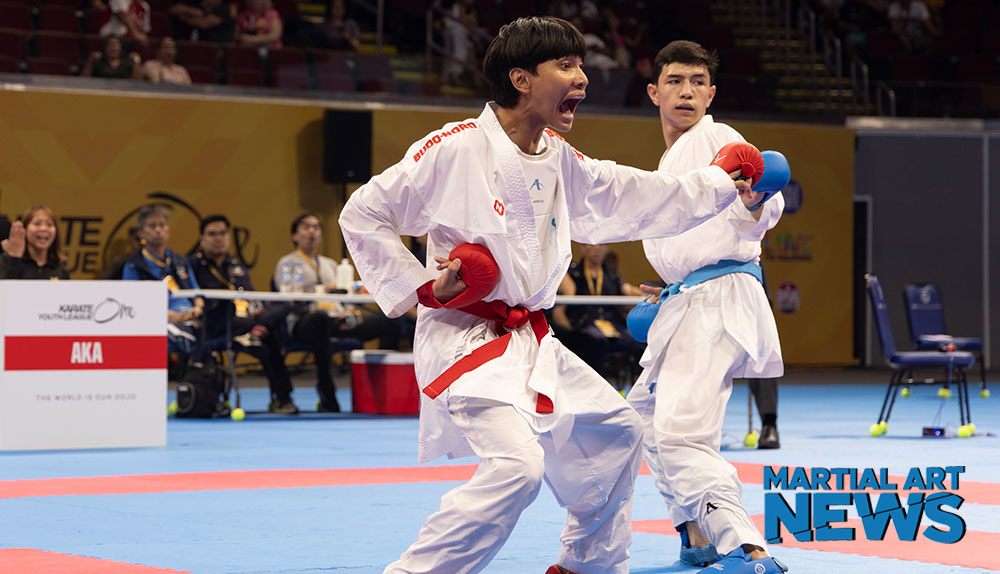

The 2026 Karate One Youth League Manila became far more than the third stop of the season. Held from May 14 to 17 at the SM Mall of Asia Arena in Pasay City, the event marked the first time a Karate One competition was staged in the Philippines, bringing together one of the year’s largest gatherings of young karate athletes and giving Southeast Asia a new place in the World Karate Federation’s global youth calendar.
For four days, Manila became a meeting point for the next generation of international karate. Young athletes travelled from across Asia, Europe, Africa, the Americas and Oceania to compete in kata and kumite, in age divisions stretching from U14 to junior categories. The event followed the first two Youth League stops of the 2026 season in Fujairah, UAE, and Harare, Zimbabwe, and served as the final major test before the series moves on to Poreč in Croatia, Guadalajara in Mexico and Venice in Italy.
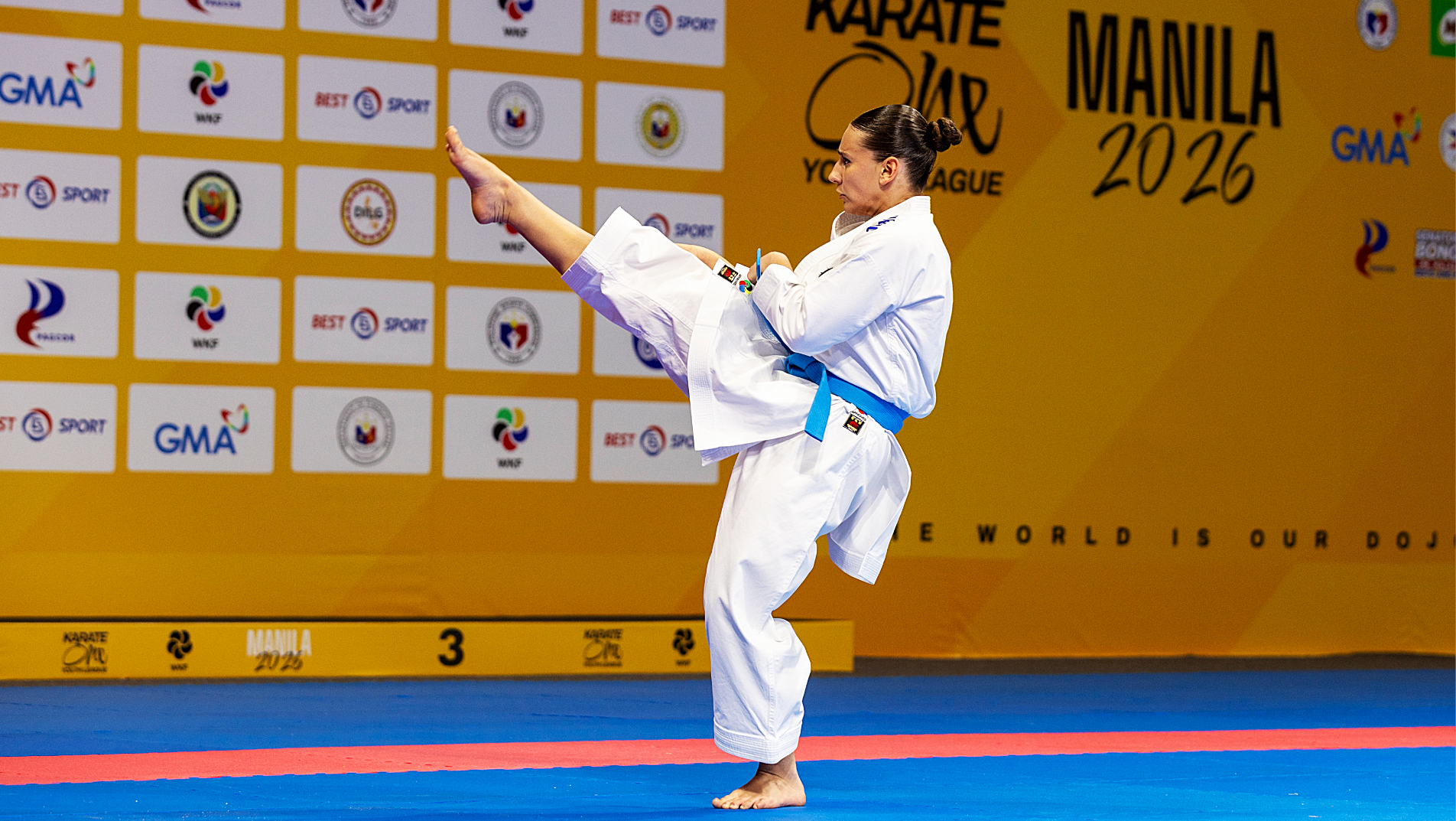
The scale alone showed why the Karate One Youth League has become one of the most important development platforms in modern karate. More than 700 athletes from 58 countries were listed by WKF before competition, while local reports around the event described the Manila leg as drawing close to or over 1,000 young karatekas when broader delegation numbers and local participation were included. The Philippines entered the event with the largest delegation, around 201 athletes, while Australia, Malaysia, Saudi Arabia, New Zealand, Kazakhstan, the United States and Uzbekistan were among the countries with strong travelling teams.
A Landmark Moment for Philippine Karate
The Philippines has previously hosted major continental and regional karate events, including Asian-level championships, but the arrival of a Karate One event represented a new milestone. Under the Karate One umbrella, the Youth League sits alongside the Premier League and Series A as part of WKF’s international competition structure. Its purpose is not only to crown champions, but also to give young athletes early experience of travelling, weighing in, handling pressure, competing across different judging panels and meeting opponents from vastly different karate cultures.
For the host nation, that made Manila 2026 both a sporting event and a statement of ambition. Karate Pilipinas Sports Federation president Richard Lim described the hosting as a major boost for local tourism and an opportunity for young Filipino karatekas to test themselves against world-class opposition without first having to travel overseas. He also pointed to the wider effect of visiting athletes, coaches, officials and families arriving in Manila during the four-day tournament.
The event was also positioned as part of a broader sports tourism push. With the Mall of Asia Arena as the venue, Manila offered an international stage that could handle both the competition demands and the visibility attached to a WKF-sanctioned tournament. Daily tickets were made free at the arena ticket office, opening the doors for local supporters, families and young martial artists who wanted to watch the competition live.
Before the event, local attention focused on several leading Filipino prospects. Sebastian Neil Mañalac, Zian Alexander Sing and Aeleyah Magrata were presented as key medal hopes for the host country. Mañalac entered with strong credentials from national championships, Batang Pinoy success and previous Asian-level medals, while Sing brought recent international and domestic victories into the Manila event.
The Youth League as a Global Pathway
The Karate One Youth League is designed for athletes aged 12 to 19 and gives them experience in an environment similar to senior WKF competition. It is not simply a large junior tournament. It is a structured pathway where young karatekas learn to compete under international conditions, against unfamiliar opponents, in venues where everything from warm-up routines to tactical discipline matters.
That role was clearly visible in Manila. The 2026 season had already shown remarkable diversity before the Philippines stop. In Fujairah, Egypt dominated the medal table with 10 gold medals. In Harare, South Africa led the standings with three golds. Across the first two tournaments, 23 different countries had already taken gold. Manila continued that pattern, with champions from a wide range of nations and continents.
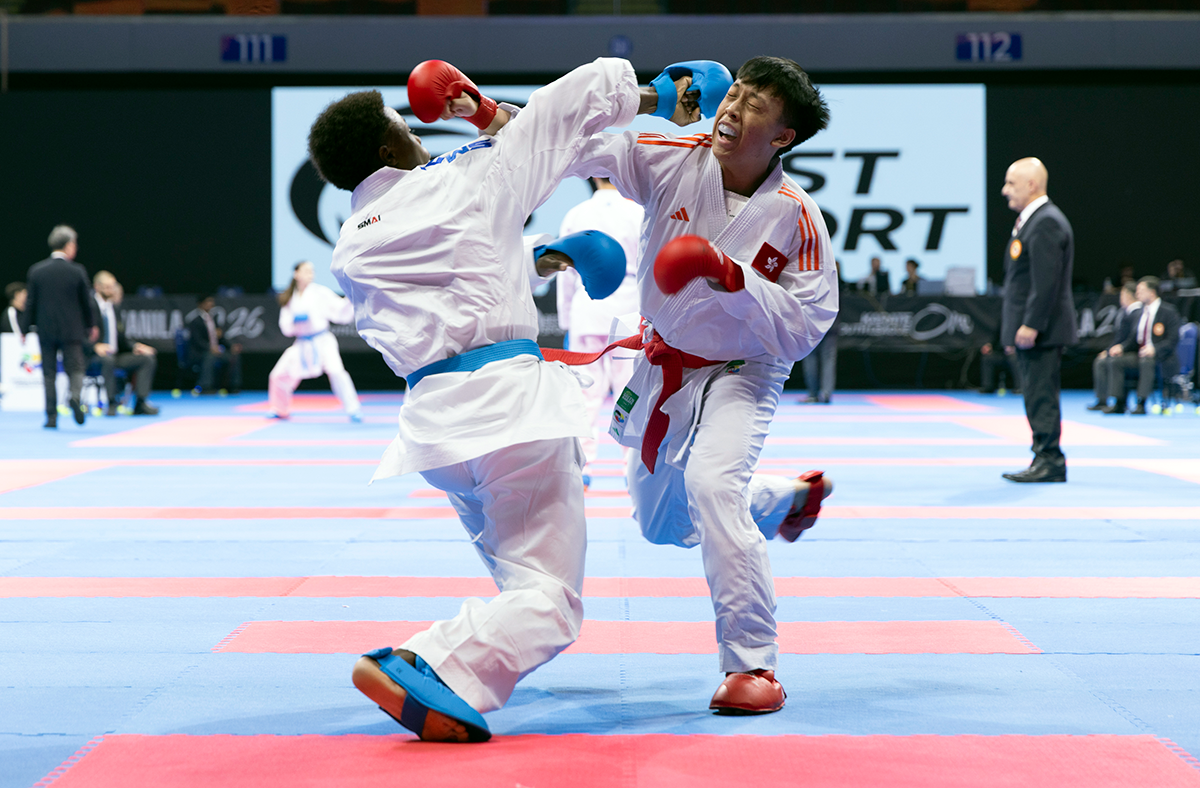
This is what gives the Youth League its growing importance. It allows smaller and emerging karate nations to win on the same stage as traditional powerhouses. It also exposes strong national programmes to new opposition. For athletes in the U14, cadet and junior divisions, the ability to compete in Manila was not only about medals. It was about learning how to perform in the same global ecosystem that later feeds into U21, senior Series A, Premier League and continental championships.
The Kampsportnews coverage of previous Youth League events has often highlighted this wider purpose: youth karate is not only measured in medals, but in education, refereeing standards, cultural exchange and long-term development. That same theme was evident in Manila, where the event combined elite competition with an important organisational step for the region.
Refereeing Standards in Focus
Ahead of the tournament, the WKF referee briefing underlined another important side of the event. High refereeing standards are essential in youth karate, where young competitors are still developing their understanding of distance, timing, control and tactical decision-making. A strong and consistent judging structure helps athletes trust the competition environment and gives coaches clear feedback on what is rewarded internationally.
The Manila briefing was led by WKF President Antonio Espinós together with Karate Philippines Sports Federation president Richard Lim. Referee Supervisor Ma Junting, a member of the WKF Referee Commission, managed the procedures. The focus was on continued improvement in judge performance, standardisation across regions and support for officials who may not always have the opportunity to travel to other major WKF events.
That point mattered in Manila. By bringing the Youth League to the Philippines for the first time, WKF did not only bring athletes to Southeast Asia. It also brought referees, administrators and technical officials into an event where regional development could be strengthened. Espinós emphasised that the universality of karate would be visible not only through the list of competitors, but also through the referees present at the tournament.
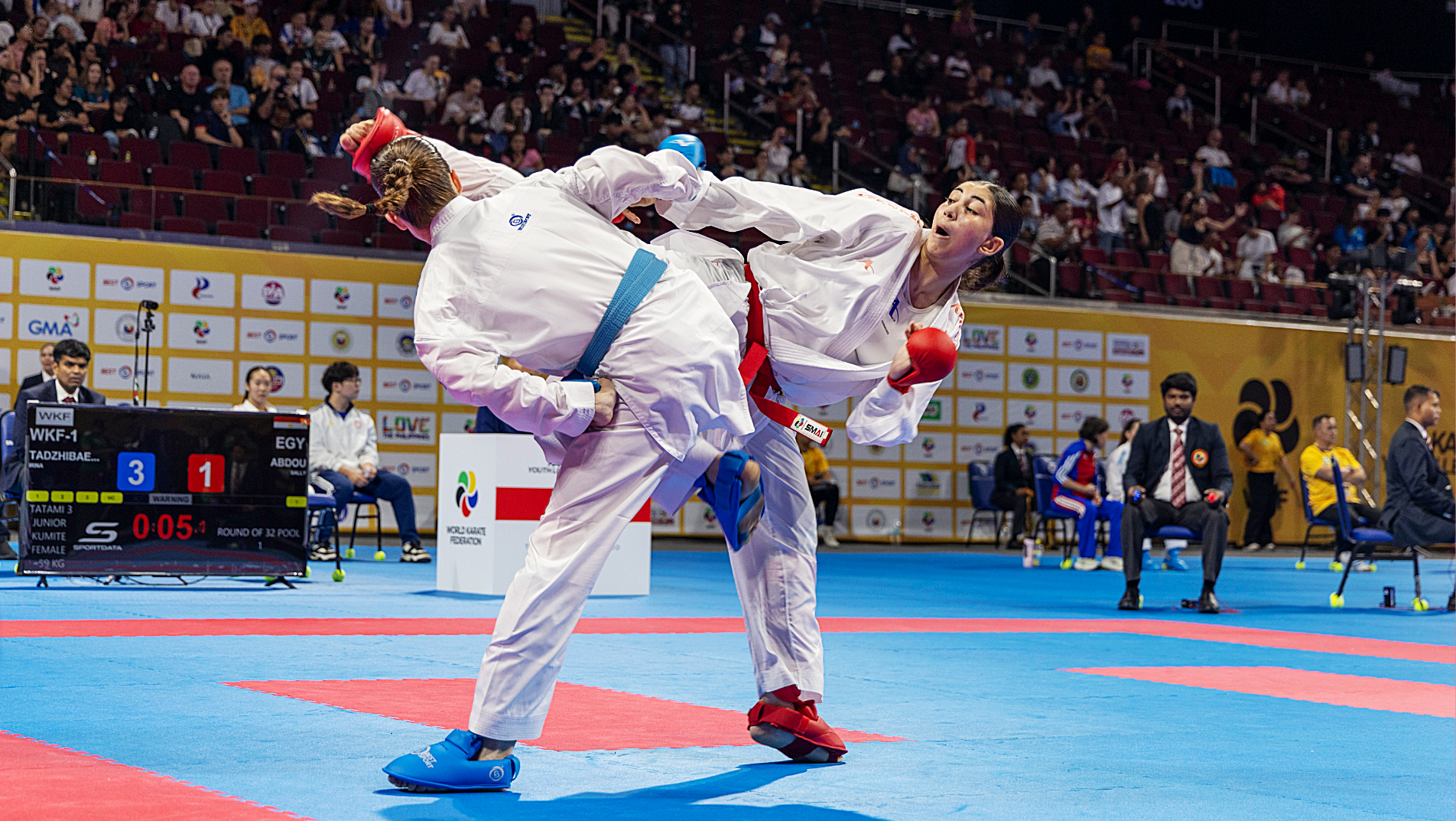
Opening Day – Future Stars Set the Tone
The opening day of the Karate One Youth League Manila 2026 immediately showed the depth of the competition. With categories spread across kata and kumite, the first finals gave the tournament its early rhythm and confirmed that no single country would dominate easily.
The first day also established the tone that would continue throughout the event: close finals, athletes from many different nations reaching the podium, and a strong emphasis on composure under pressure. In youth karate, especially in the younger categories, the difference between a medal and an early exit can be a single exchange, a single flag in kata, or one moment of tactical patience in kumite. Manila delivered that level of fine margin from the start.
The home crowd had plenty to follow as Filipino athletes began their campaign in front of family, coaches and local supporters. But the event was also a test of the Philippines’ ability to host and manage a tournament with global attention. From the opening day, the arena atmosphere reflected the importance of the occasion.
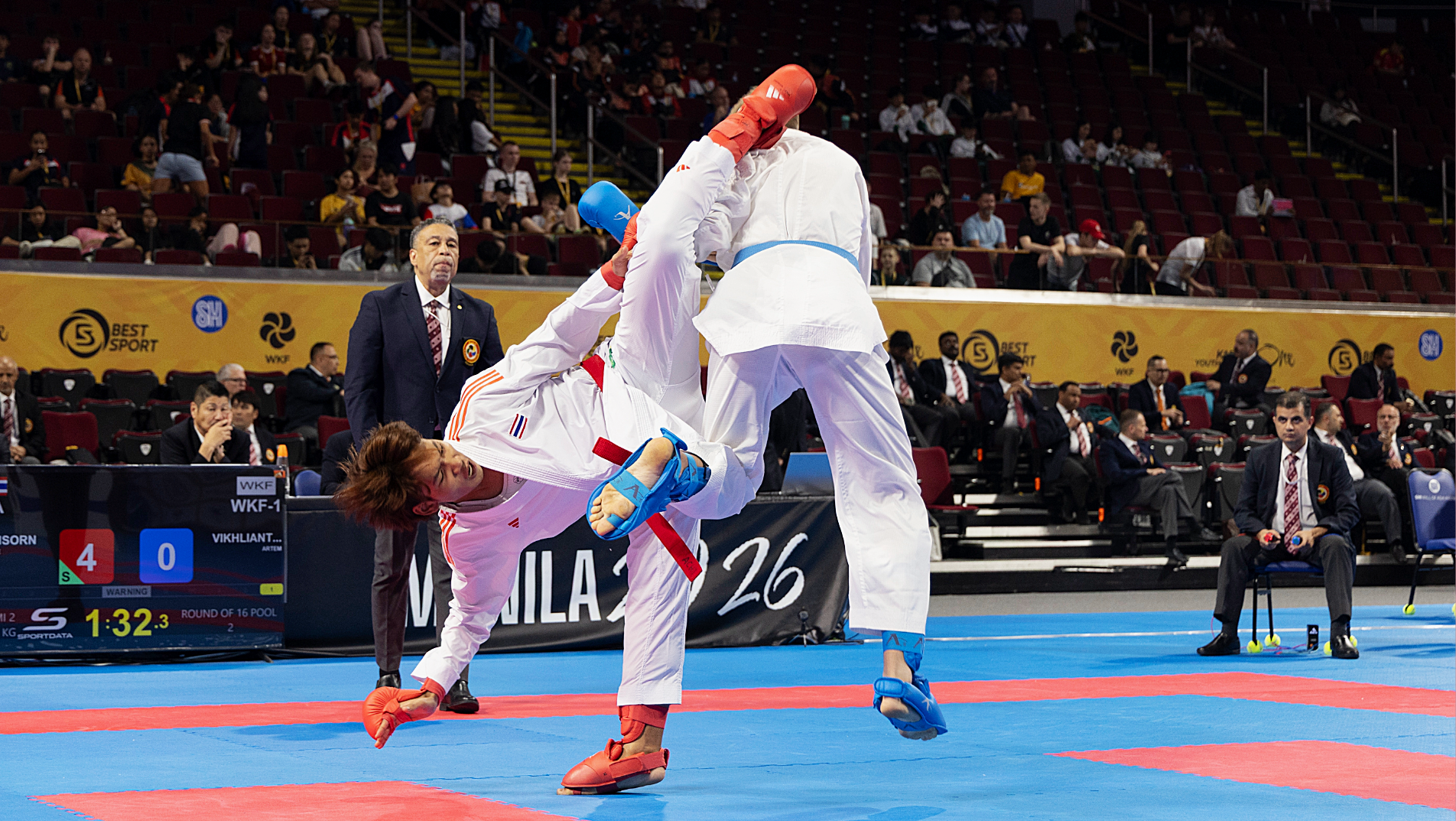
Day Two – Seven Countries Take Gold
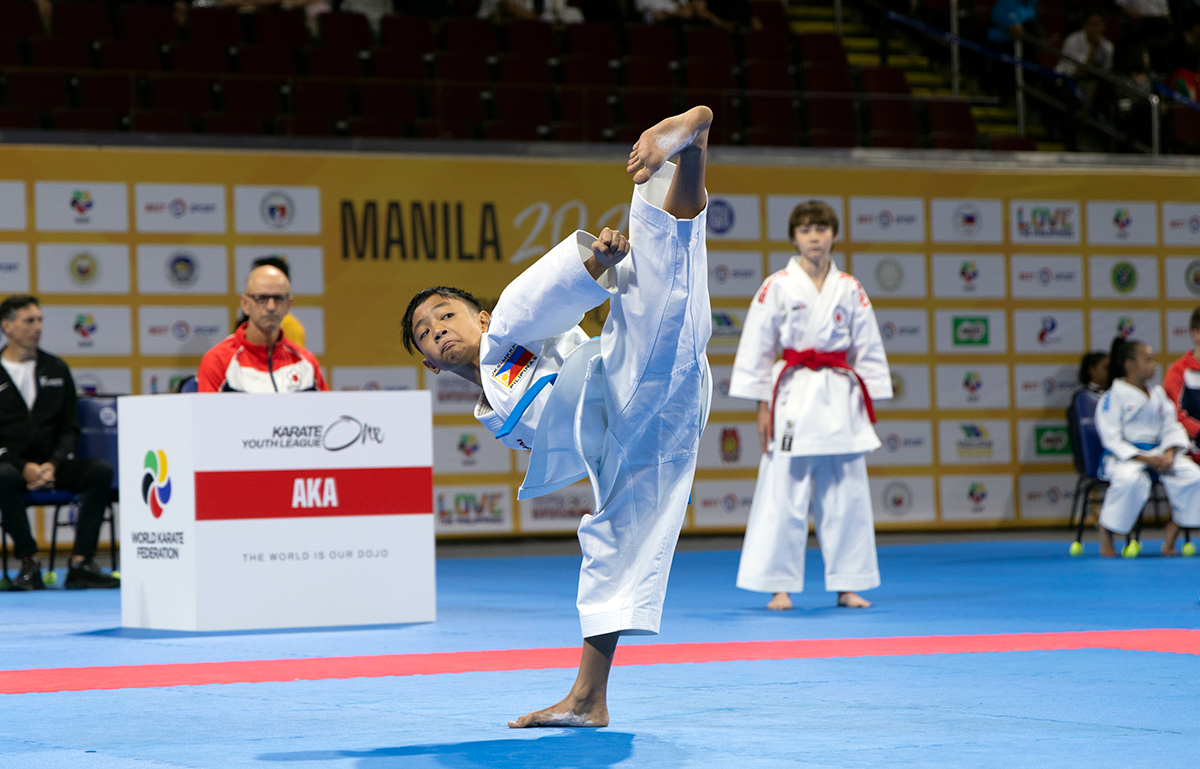
The second day was one of the clearest examples of the tournament’s international balance. Seven gold medals went to seven different countries, underlining the universality that WKF had spoken about before the event.
In Cadet Kata Female, Germany’s Mariel Goethe claimed gold after defeating Natalie Goodwin of the United States 4-1 in the final. Goethe’s performance was marked by precision and confidence, and her victory gave Germany one of the standout kata results of the day.
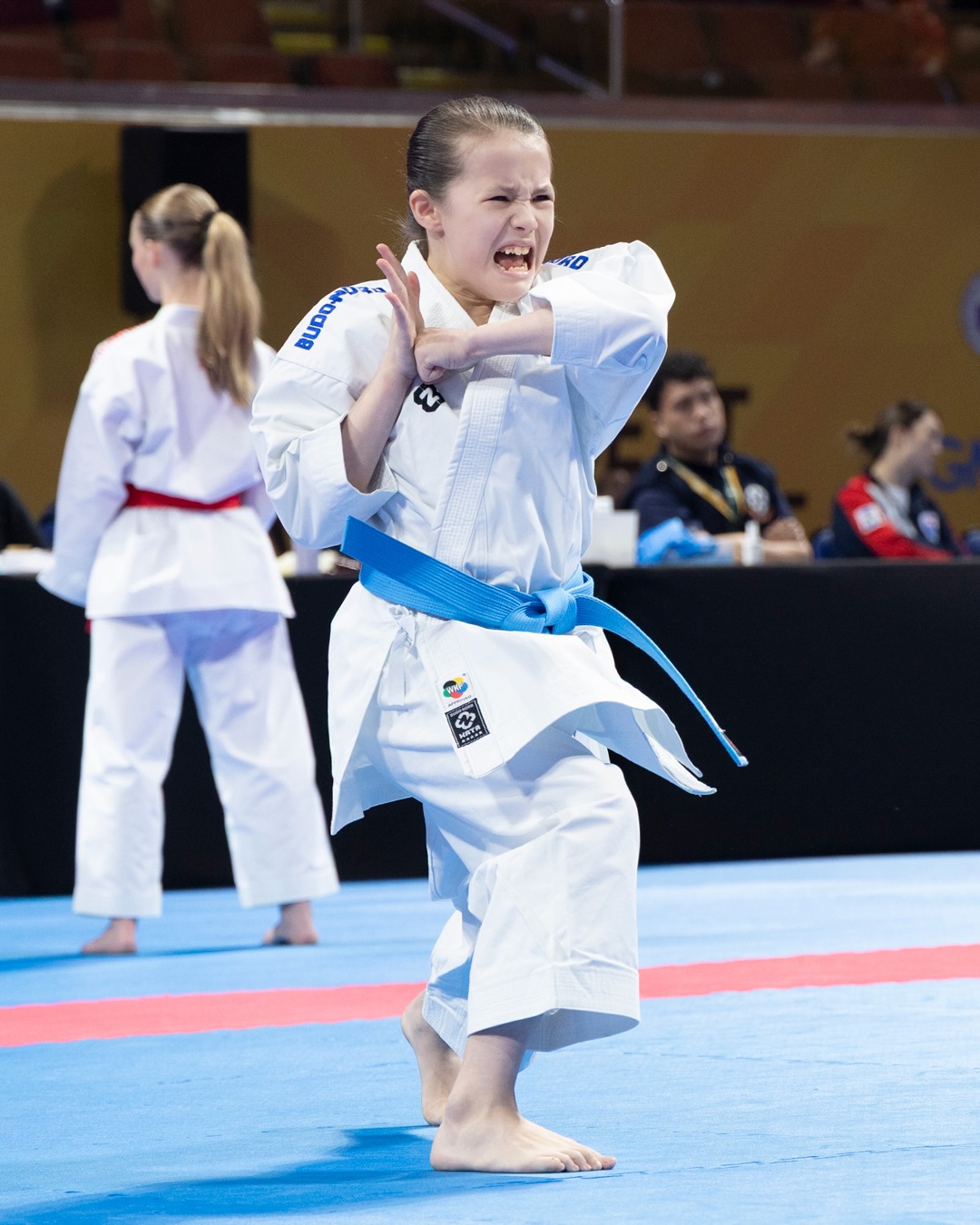
Malaysia celebrated in Cadet Kata Male through Rayyan Shah Zulfaaqqar Abdul, who edged Jeffrey Olaes of the United States in a tight 3-2 final. It was one of the most evenly balanced kata contests of the day, with both athletes delivering strong performances before the judges awarded the narrow win to Malaysia.
In Junior Kumite Male -55kg, Turkmenistan’s Rayan Gurbanmyradov produced one of the most commanding finals, defeating Romania’s Matei Savulescu 6-1. Gurbanmyradov controlled distance early, kept the pace in his favour and combined sharp attacks with disciplined defence.
Ukraine’s Maksym Viechkanov won Junior Kumite Male -61kg after a 5-1 victory over Thailand’s Thanakorn Taolek. The Ukrainian athlete delivered a calm tactical performance, showing the ability to manage pressure while building and protecting his lead.
Macau also entered the gold medal list through Cheok In Ho in Junior Kumite Female -48kg. Ho defeated Valeria Kulmanakova of WKF-1 by 2-0 in a tactical final where patience and timing proved decisive.
In Junior Kumite Female -53kg, Veronika Gashnikova of WKF-1 claimed gold after a scoreless final against Portugal’s Gabriela Varanda. With the bout ending 0-0, the result was decided by hantei, showing how close and tactical youth finals can become at this level.
Denmark produced one of the day’s most dominant gold-medal performances. Hannah Bath Soendergaard defeated Croatia’s Paulina Magdalenic 7-0 in Junior Kumite Female -59kg, using speed, accuracy and strong control to win convincingly. For Denmark, it was a statement result and one of the most impressive finals of the Manila event.
Day Three – Nine Categories, Eight Nations
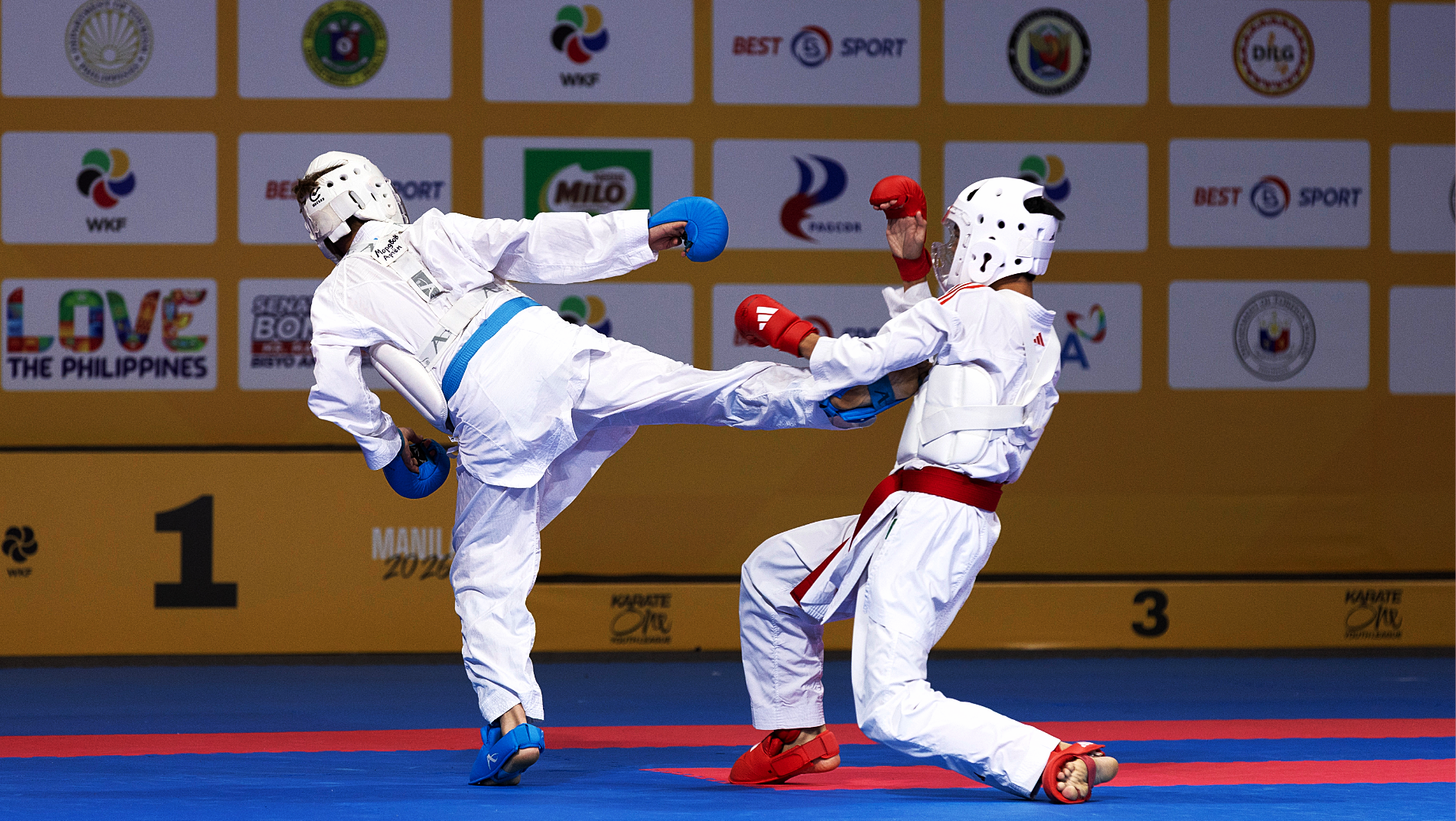
The third day continued the pattern of global spread. Champions from eight different countries won gold across nine categories, with junior and cadet kumite divisions delivering some of the tournament’s most intense bouts.
Saudi Arabia enjoyed a strong day. Ibrahim Alkhathiri won Junior Kumite Male -68kg after a 2-1 final against Kazakhstan’s Almat Nurseiit. It was a close contest, decided by control in the key moments. Later, Marzouq Abdulkhayr added another Saudi gold in Cadet Kumite Male -70kg, defeating Egor Grishkin of WKF-1 by 3-1.
Uzbekistan also reached the top of the podium through Sardor Bakhromov, who won Junior Kumite Male -76kg after a narrow 2-1 final against Egypt’s Baher Abdelsamie. Both athletes showed strong tactical awareness, but Bakhromov found the decisive score.
Benin celebrated one of the most memorable victories of the day when Ihsane Adjanonhoun defeated Saudi Arabia’s Osama Hawsawi 6-4 in Junior Kumite Male +76kg. The final was open, attacking and entertaining, with both athletes willing to engage. Adjanonhoun finished stronger and secured an important gold for Benin.
Palestine’s Mariam Bsharat won Junior Kumite Female -66kg with a composed 3-0 victory over Croatia’s Laura Strahija. Bsharat took control early and defended her advantage with discipline.
In Junior Kumite Female +66kg, Safiia Nezametdinova of WKF-1 defeated Slovenia’s Živa Kristančič 5-0. Her sharp attacking work and defensive control made her one of the most convincing winners of the day.
Georgia’s Omar Gogrichiani took Cadet Kumite Male +70kg after a 0-0 final against Thailand’s Patthapee Promsorn. With no score on the board, hantei decided the title in favour of Gogrichiani.
Slovakia’s Linda Klempová produced the most dominant result of day three, winning Cadet Kumite Female -61kg with a 10-0 final against Spain’s Paula Gines Chavarry. It was a powerful display of attacking accuracy and confidence.
The day closed with the Netherlands celebrating gold through Ise Van Bommel in Cadet Kumite Female +61kg. Van Bommel defeated Croatia’s Petra Babić 3-2 in a close final, holding her advantage under pressure to finish on top.
Final Day – The Philippines Finds Its Golden Moment
The final day belonged, in many ways, to the host nation. The U14 categories brought the Manila crowd fully into the story as Filipino athletes delivered the country’s breakthrough moments of the tournament.
Japan’s Kyoka Okamoto opened the U14 finals with gold in Kata Female, defeating Alexa Rae Vallesteros of the Philippines 5-0. Although Vallesteros missed gold, her silver medal gave the hosts an important podium result in kata.
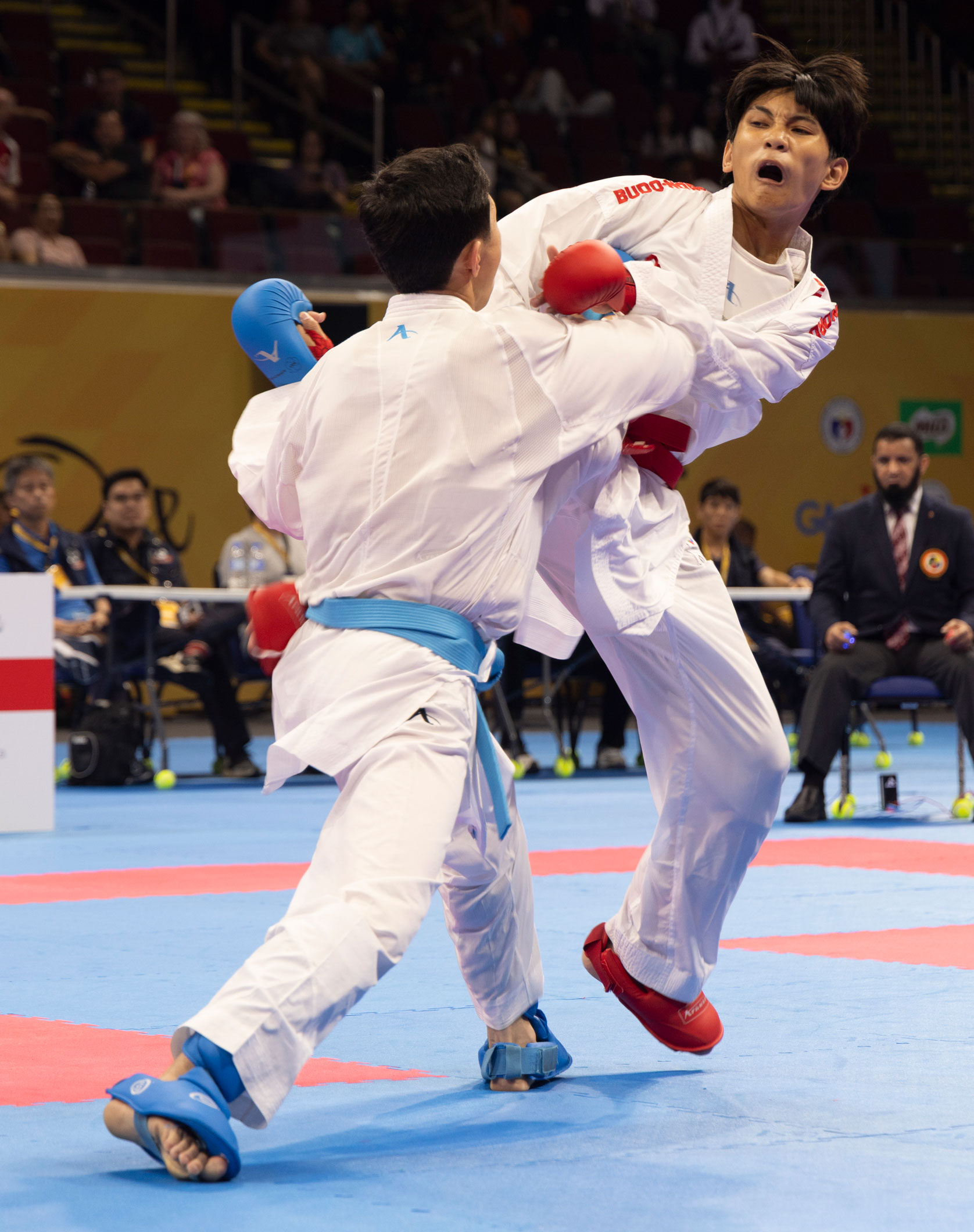
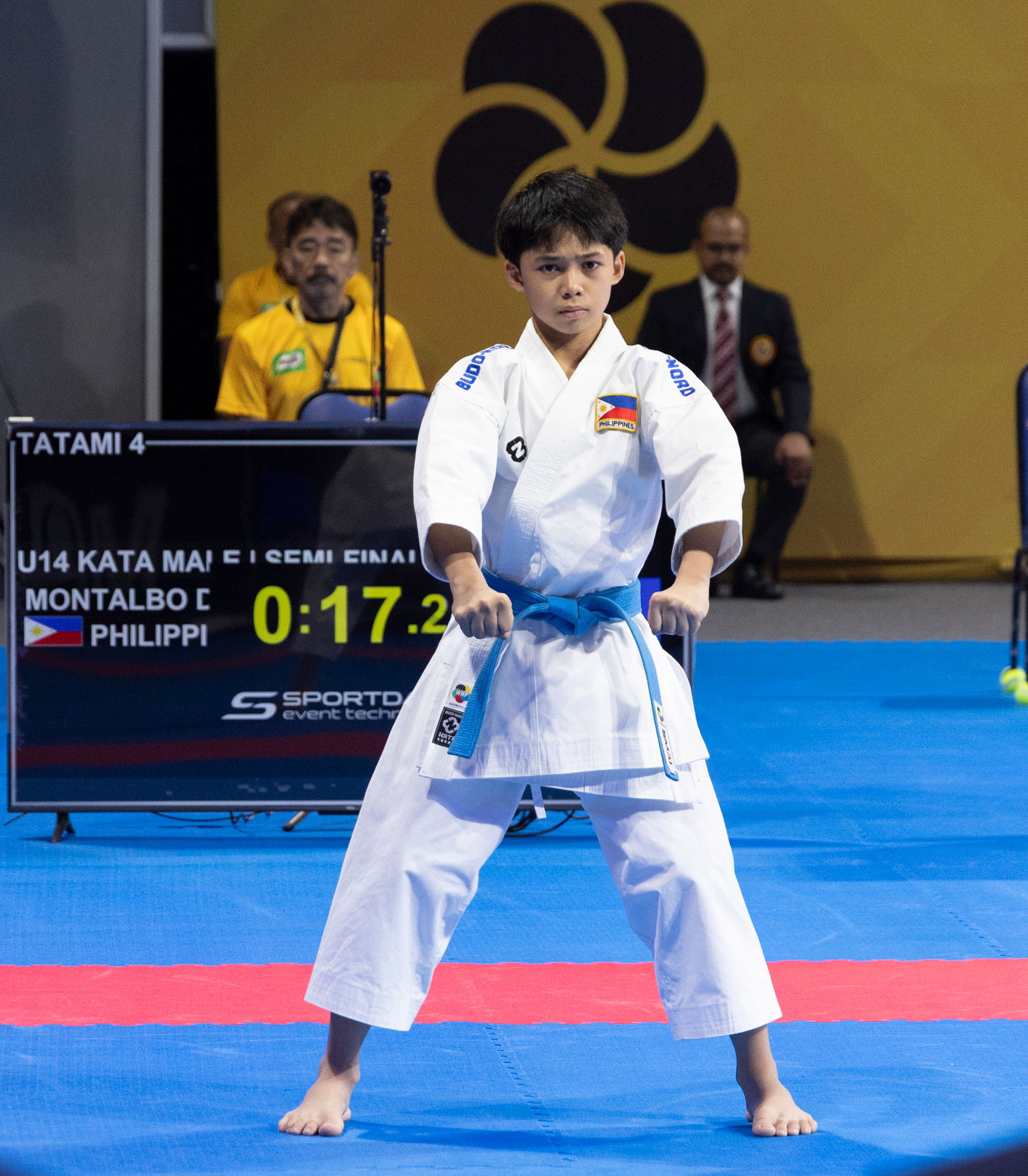
Saudi Arabia’s Moayad Alqahtani won U14 Kata Male after a close 3-2 final against Dean Caleb Montalbo of the Philippines. Montalbo’s silver added another medal for the host country and confirmed the strength of the local U14 kata group.
In U14 Kumite Female -42kg, Varvara Chumachenko of WKF-1 defeated Saudi Arabia’s Ritan Mobarki 6-1, delivering an effective attacking display.
Then came the first Filipino gold. Kathleya Ealaine Bustamante won U14 Kumite Female -47kg after defeating Australia’s Ana Jovic 6-2. Competing in front of a home crowd, Bustamante built her lead and handled the pressure of the final with maturity. Local media described the victory as the Philippines’ first gold of the tournament and a breakthrough moment for the host nation.
Romania’s Miruna Coman followed with gold in U14 Kumite Female -52kg, defeating Vasilisa Akimova of WKF-1 by 3-0. Croatia’s Tesa Balog then won U14 Kumite Female +52kg after a 6-3 final against Kazakhstan’s Aiaru Kalysbek.
Saudi Arabia added another gold through Moneer Alshamrani in U14 Kumite Male +55kg. Alshamrani defeated Indonesia’s Akhtar Arsad Wibawa 9-1 in one of the strongest performances of the closing day.
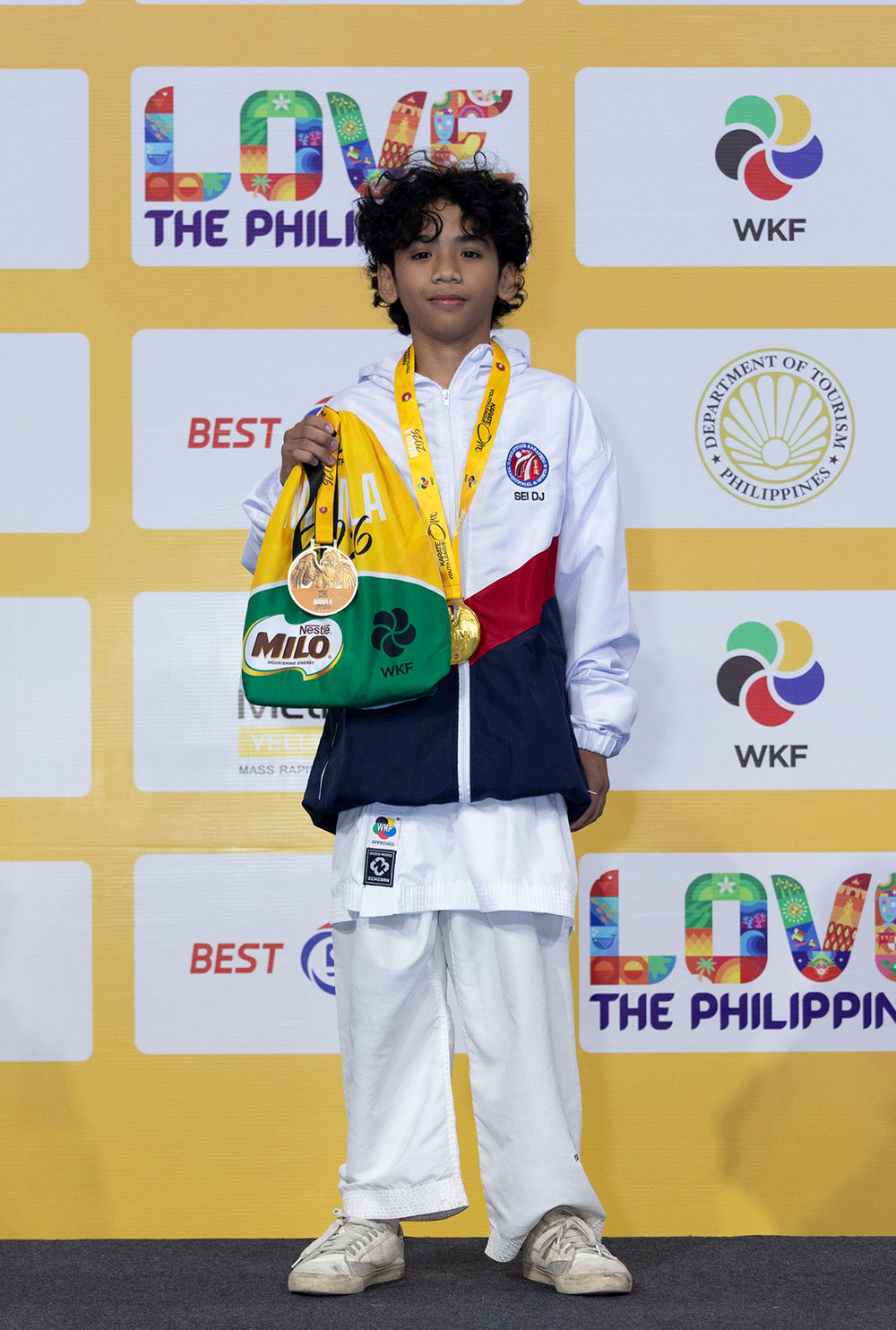
The second Filipino gold came from Franzcis Erl Jud Abundo in U14 Kumite Male -40kg. Abundo dominated Brunei’s Wan Azlee Khairi Bin Wan Zuraimi 7-0, giving the home crowd another celebration and completing one of the most significant days in recent Philippine youth karate. Sports Bytes Philippines reported that Abundo’s victory came on the eve of his 13th birthday and followed an impressive semifinal win over top-seeded Nikita Komarov.
The remaining U14 titles went to Artem Krokhta of WKF-1 in Male -45kg, Danil Khvan of Kyrgyzstan in Male -50kg, and Ilia Lomaev of WKF-1 in Male -55kg.
Six Medals for the Host Nation
The Philippines finished the tournament with two gold medals, two silvers and two bronzes. The golds came from Kathleya Ealaine Bustamante and Franzcis Erl Jud Abundo. The silvers were won by Alexa Rae Vallesteros and Dean Caleb Montalbo in the U14 kata divisions. Ashana Geanne Sabote and Kaylani Vergara added bronze medals through repechage victories.
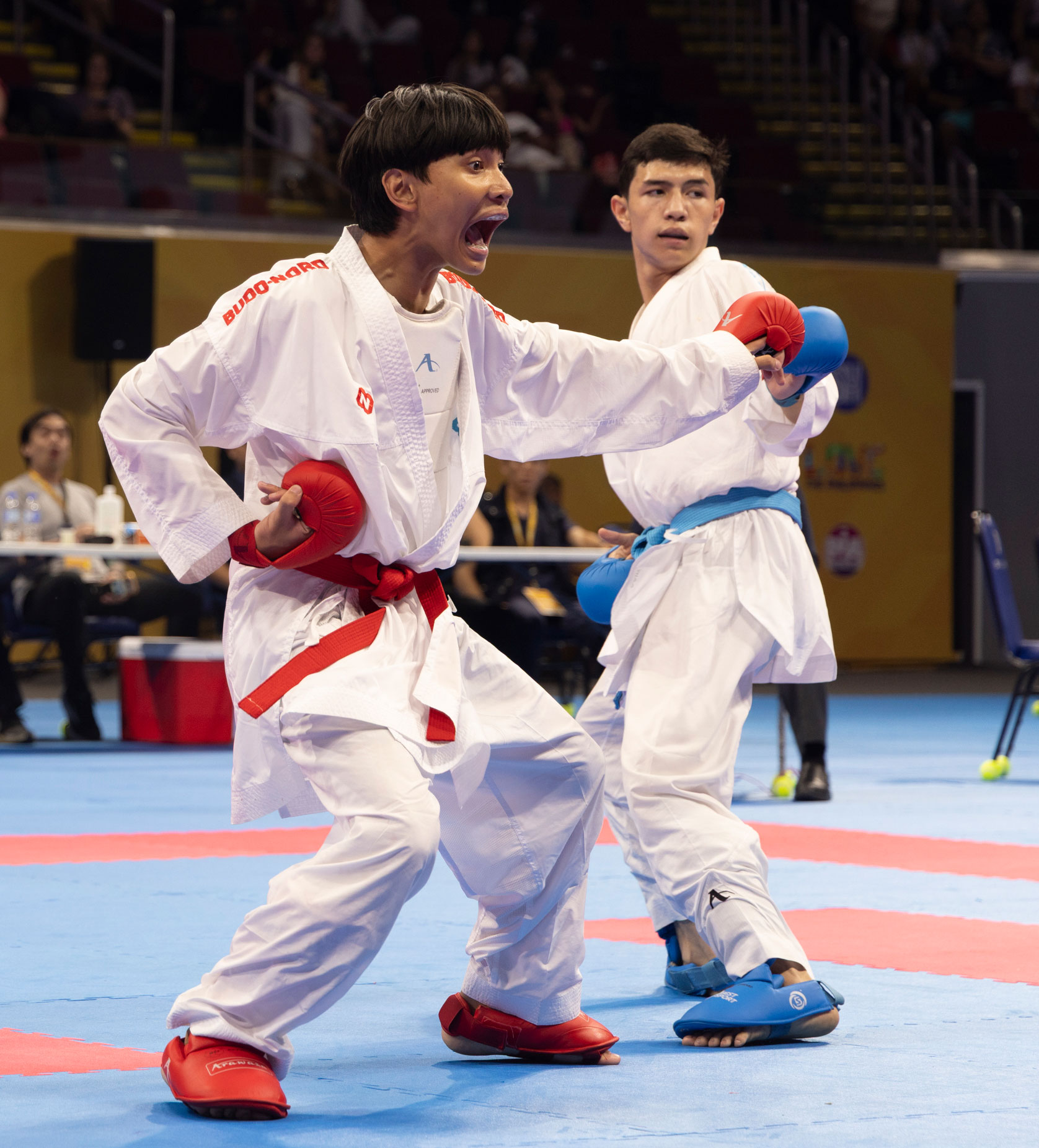
For a host nation staging its first Karate One event, that medal return was highly significant. The Philippines did not only organise the tournament; it also produced athletes capable of reaching the podium under international pressure.
The result should be understood in a wider context. Several Filipino athletes had difficult days earlier in the tournament, with podium chances slipping away in bronze medal matches. Local reports noted that Ysabella Arwen Varias and Carl Caruana fell short of medals on day three, showing the demanding level of the field.
That made the final-day success even more important. The young host athletes responded when the last categories were decided, turning home advantage into medals and giving Philippine karate a result that can inspire future competitors.
A Tournament of Many Nations
What stood out most in Manila was not only the success of the Philippines, but the spread of gold medals across the event. Germany, Malaysia, Turkmenistan, Ukraine, Macau, Denmark, Saudi Arabia, Uzbekistan, Benin, Palestine, Georgia, Slovakia, the Netherlands, Japan, Romania, Croatia, Kyrgyzstan and several WKF-1 athletes all reached the top of the podium during the reported final days.
This breadth is one of the defining features of youth karate today. Countries without the same senior-level visibility can still produce outstanding cadet and junior athletes. At the same time, established karate nations are constantly challenged by emerging programmes with strong youth development.
For coaches, the lesson from Manila was clear: youth karate is becoming deeper, faster and more international. The technical level in kata continues to rise, with small details often deciding finals. In kumite, young athletes are increasingly tactically mature, able to manage leads, force hantei decisions, and use both explosive attacks and controlled defensive movement.
Looking Ahead to Poreč
After Manila, the Karate One Youth League moves to Poreč, Croatia, from July 2 to 5. Poreč has become one of the most established youth karate destinations on the WKF calendar and has previously hosted very large Youth League fields. Kampsportnews has highlighted Poreč as one of the major youth karate gatherings, with thousands of athletes and a strong international atmosphere.
That makes Manila an important bridge in the 2026 season. Fujairah opened the campaign with scale and tradition. Harare added another major step for the African karate scene. Manila gave Southeast Asia its historic first Karate One event in the Philippines. Poreč will now carry the momentum into the European summer.
For the medalists in Manila, the next challenge will be consistency. A Youth League gold or medal can be a breakthrough, but the real value lies in how athletes and coaches use the experience. Some will travel to more WKF events this season. Others will return to national championships, school competitions, regional tournaments or continental events with new confidence.
More Than Medals
Karate One Youth League Manila 2026 will be remembered for the medals, the flags and the finals. But its deeper importance lies in what it represented.
It was the first Karate One event in the Philippines. It brought hundreds of young athletes from 58 countries to Manila. It gave Filipino karatekas a rare chance to compete at home against elite international opposition. It strengthened refereeing development in the region. It showed the value of sports tourism. And it continued the Youth League’s mission of building the future of karate one generation at a time.
For the Philippines, the final day offered the perfect ending: two young champions, two gold medals, and a crowd able to celebrate local success on a global stage. For international karate, Manila confirmed that the Youth League is no longer just a supporting series. It is one of the sport’s most important arenas for talent, education and international growth.
The future stars of karate came to Manila in May 2026. Many left with medals. Even more left with experience. And for the Philippines, the event marked the beginning of a new chapter in its role as a host and competitor in world karate.
Phl karatekas bag two gold medals
Pinoy bets fall short of Karate Youth League medals
The Poliarrecife Karate Club shines in the Philippines and Tenerife
Karate One Youth League Manila: Countdown Begins for Third Event of the Season – WKF
All You Need to Know About Karate One Youth League Manila – WKF
Future Stars Shine on Opening Day of Karate OneYouth League Manila 2026 – WKF
Importance of High Refereeing Standards marked at Briefing of Karate One Youth League Manila – WKF
Eight Nations Celebrate Gold on Day Three of Karate One Youth League Manila 2026 – WKF
Philippines Shine with Two Gold Medals on Final Day of Karate One Youth League Manila – WKF
Varias, Caruana fall short of medals in Karate One Youth League
Kaylani Vergara cops bronze in Karate One Youth League 2026 | The Manila Times
Karate One-Youth League! Ysabella Varias, Carl Caruana bigo sa tanso
Karate One Youth League Fujairah WKF 2026 Highlights
Visa detta inlägg på Instagram
Visa detta inlägg på Instagram
Comment