

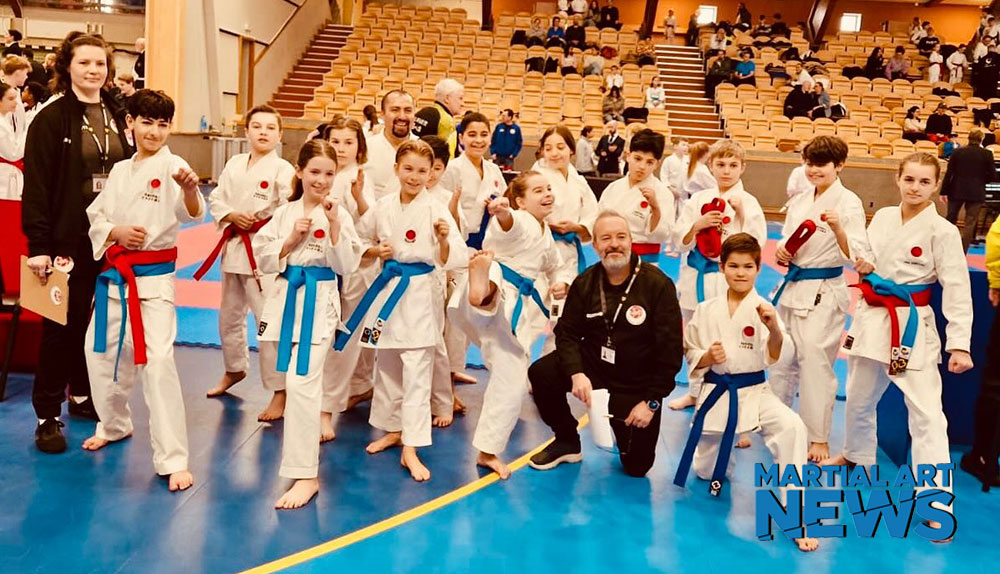

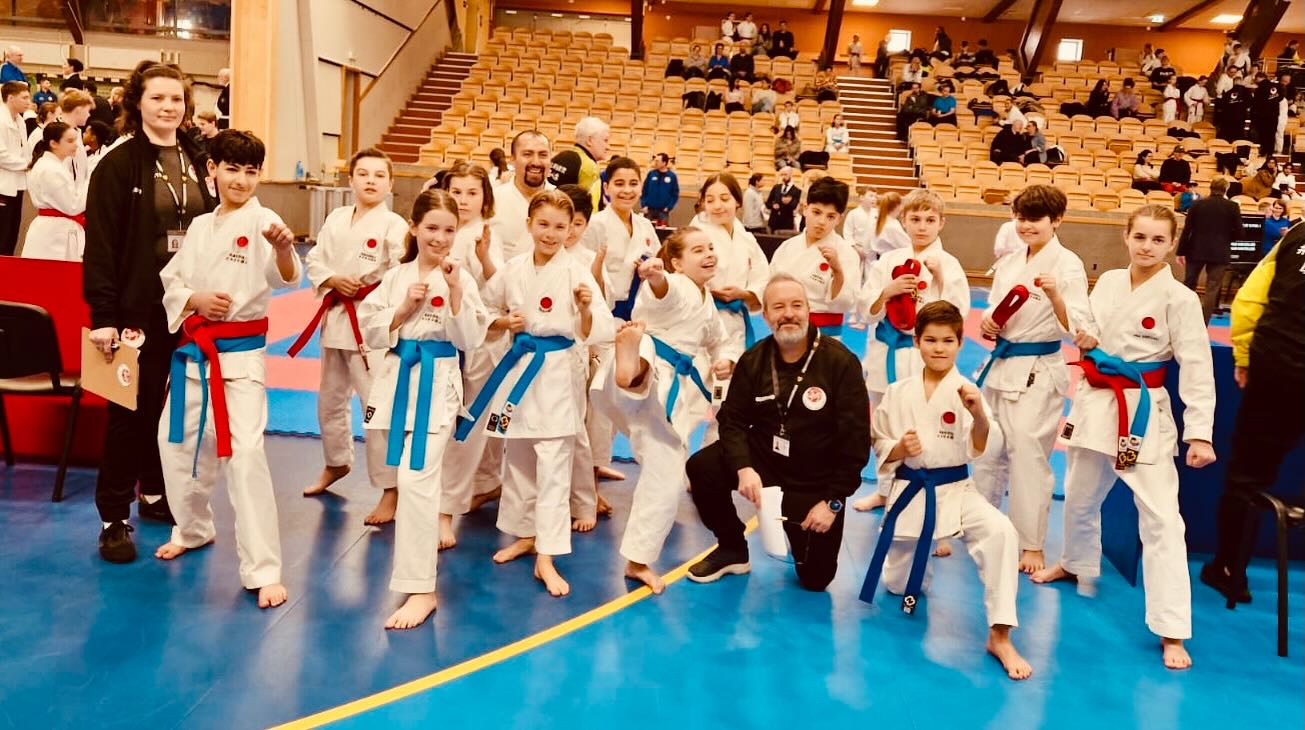
On March 29, 2026, Eriksdalshallen in Stockholm once again became one of the most important kata venues in Northern Europe as Swedish Kata Trophy returned for its latest edition. The event, listed in the official Swedish Karate Federation calendar and on Sportdata for that date in Stockholm, continues to stand out as a specialist tournament built entirely around kata rather than being one part of a broader mixed-format weekend. Organiser information describes it as Northern Europe’s biggest kata competition, and the event’s own channels describe it as Scandinavia’s largest kata tournament. The competition traces its roots back to 1986, which means this year’s edition carried the weight of a 40-year legacy.
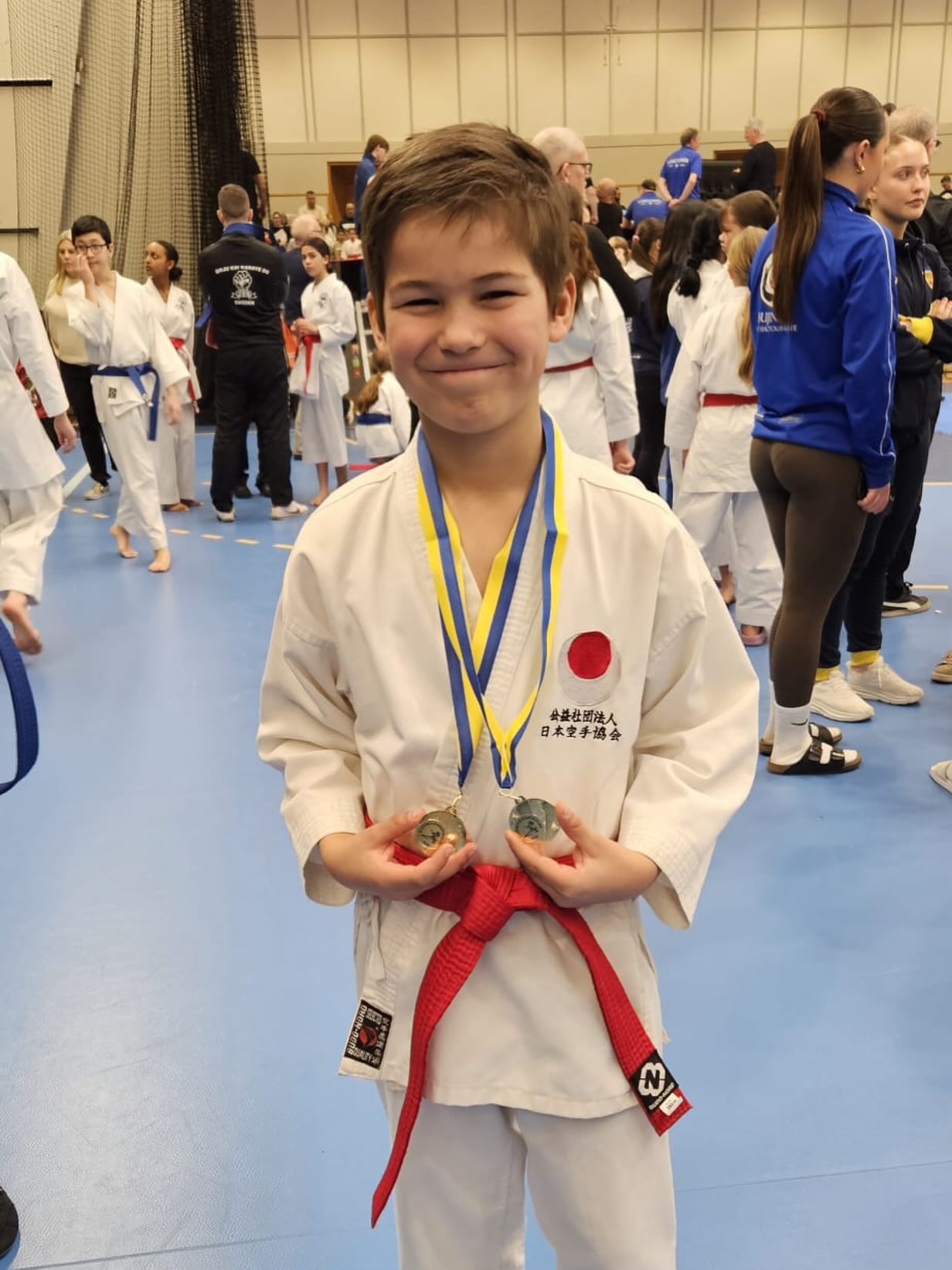
That history matters. In a sport where many tournaments come and go, Swedish Kata Trophy has endured because it fills a specific role. It is not simply another date on the calendar. It is a reference point for clubs, coaches, judges and athletes who want to measure themselves in a setting where kata is the main story. The official Inoue-Ha information page describes the event as an annual international competition in Stockholm for children, cadets, juniors, seniors and masters, typically drawing around 650 participants from ten countries. The broader public-facing material around the event also highlights its long-standing international pull, noting that competitors travel not only from Scandinavia and Europe but sometimes from as far away as Japan.
This spring’s edition seemed to confirm that status once again. According to the organiser information you provided, the 2026 event featured 590 entries and athletes from 15 countries, giving the day both scale and genuine international depth. While Sportdata’s detailed competition page was blocked behind a bot verification page during verification, the official federation listing, organiser pages and public social media traces all support the picture of a major international kata gathering in Stockholm on March 29.
A specialist tournament with unusual weight
What makes Swedish Kata Trophy distinctive is not only size. It is also focus. In many karate competitions, kata must share space with kumite, scheduling compromises and mixed priorities. Here, kata is the entire ecosystem. That changes the atmosphere. It changes how coaches prepare, how athletes build their day and how spectators read the performances. The rhythm is different when every tatami is devoted to form, precision, timing, balance, expression and interpretation.
That specialist identity has helped the event become important for multiple layers of the sport at once. For children and younger athletes, it offers exposure to a larger competitive environment than most domestic events can provide. For established seniors, it gives meaningful match volume and international comparison. For clubs, it offers a testing ground for the quality of their technical culture. For national team athletes, it provides a home platform in front of the next generation. That combination is rare, and it is one reason the tournament has lasted.
The event also fits into a wider Swedish karate tradition of strong volunteer-led organisation. The official federation calendar identifies Minakami Karate Dojo and Lidingö Karate Dojo as organisers for the 2026 edition, while the Inoue-Ha competition page lists Minakami Karate Dojo as organiser and Eriksdalshallen as the venue. Those details may look administrative, but they point to something bigger: this is not a temporary project. It is a tournament carried by institutions and people who have built long-term trust within Swedish karate.
Stockholm as a meeting place for kata
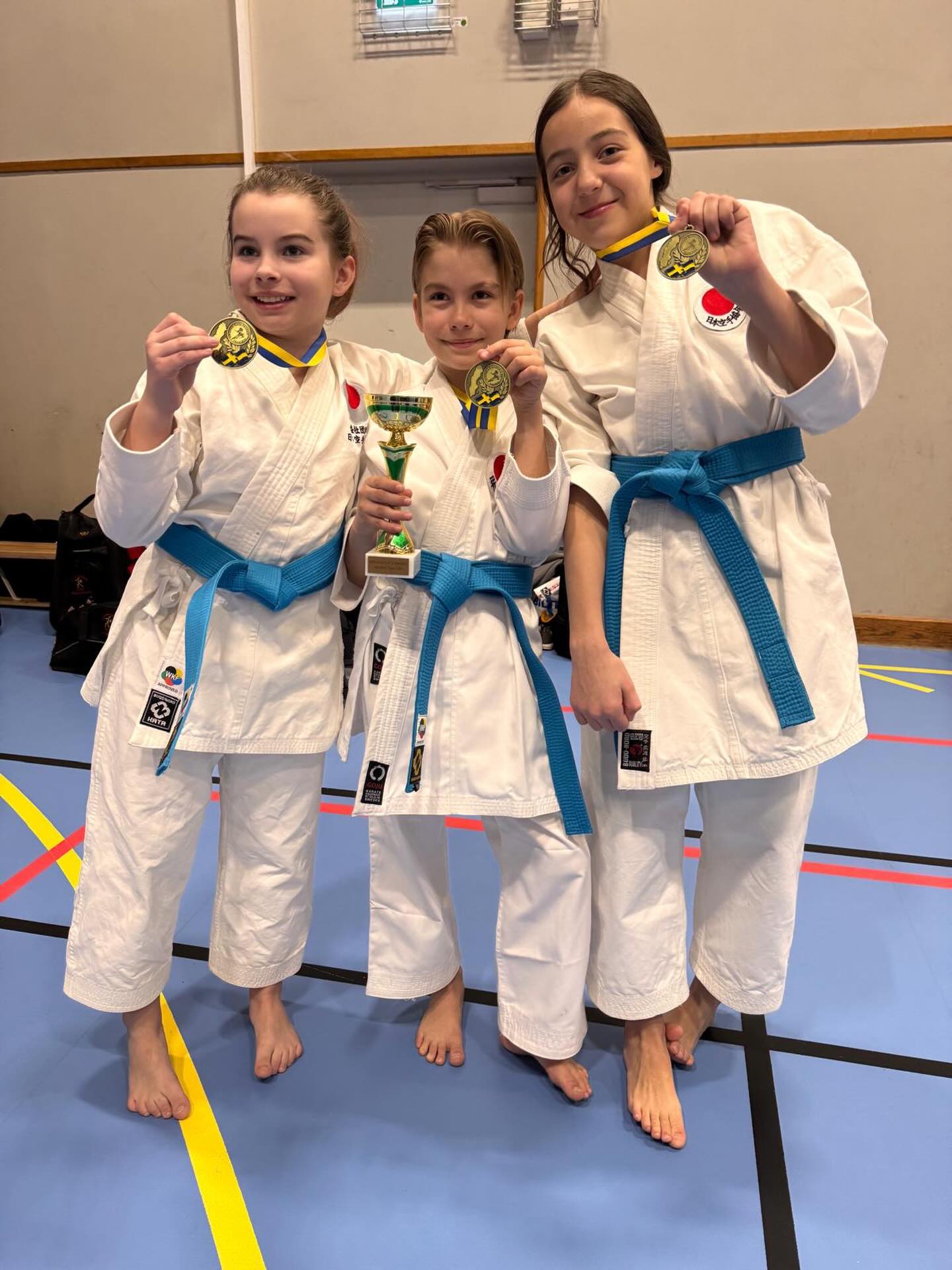
Eriksdalshallen has become a familiar setting for major karate activity in Sweden, and once again it proved a fitting stage. Its location in Stockholm makes it accessible for domestic clubs while also helping international delegations travel in and out efficiently. The official event information places the venue at Ringvägen 70 in Stockholm, near the Skanstull metro station. That kind of accessibility matters for a one-day competition with hundreds of starts, coaches managing multiple categories and families moving between warm-up, stands and competition areas.
But venue logistics are only one part of the story. Stockholm also gives Swedish Kata Trophy symbolic value. This is the capital, and when a kata-only tournament of this size takes place there, it becomes more than a club event. It becomes a visible statement about karate’s technical culture in Sweden. Not all countries have a dedicated kata event with this kind of staying power. Fewer still have one that can function simultaneously as a grassroots festival, an elite checkpoint and an international meeting point.
That international aspect was visible again in 2026. Social media traces around the event point to participation and interest from athletes and clubs across the Nordic region and beyond. Danish club Amager Karate promoted and reflected on Swedish Kata Trophy around the event period, Norwegian karate posts highlighted their athletes’ efforts in Stockholm, and the event’s own public-facing channels continue to market the competition as a recurring international destination.
The Swedish national team on home tatami
One of the most important dimensions of this year’s edition was the visible presence of the Swedish kata national team. That matters for two reasons. First, it raises the sporting standard of the event. Second, it creates a rare and valuable bridge between elite and developmental karate.
Public Instagram snippets from Sweden’s kata environment describe the weekend as a successful one for the Swedish kata national team, with eight kata athletes winning a total of 12 medals at Swedish Kata Trophy. National coach Emilio Merayo’s public profile also references the event and the strong work of everyone involved, reinforcing the sense that this was not a peripheral outing for Swedish kata but a meaningful appearance on home soil.
For young competitors, seeing the national team compete live is different from following results online. Kata can sometimes feel remote when viewed only through highlight clips or international broadcasts. In person, the details become real: the tempo changes, the body control, the discipline in transitions, the sharpness of kime, the quality of breathing and the mental composure before the opening move. That educational value is part of what makes a tournament like this so important domestically.
Sweden enters 2026 with strong reason to believe in its kata future. Anthony Vu’s World U21 male kata gold from late 2025 remains one of the landmark results in Swedish karate, and the wider national team environment has clearly carried momentum into the new season. A home competition such as Swedish Kata Trophy cannot replace WKF championship experience, but it can reinforce standards, sharpen competitive habits and help younger athletes imagine themselves into the same pathway.
The meaning of breadth
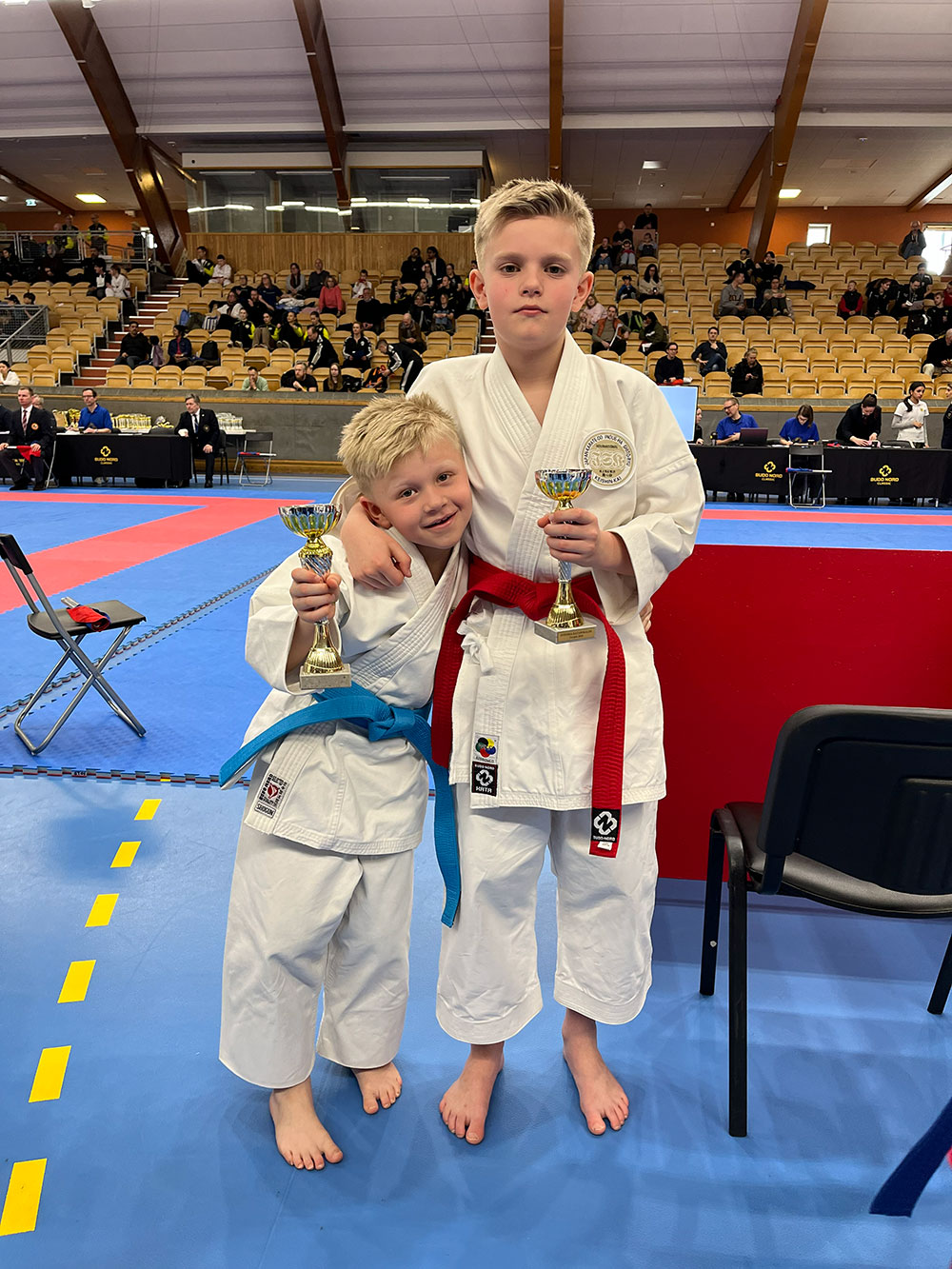
 A strong kata event is not defined only by its headline athletes. Its real strength lies in range. Swedish Kata Trophy has long been valuable because it gathers multiple age groups and levels in one shared environment. The organiser page describes categories spanning children, younger juniors, juniors, seniors and masters. That matters because kata development is long-term. The sport’s best technicians are built through years of repetition, correction, competition and refinement. A tournament that allows young athletes to compete in the same event ecosystem as seniors and masters creates continuity.
This continuity may be one of the event’s greatest hidden strengths. A seven-year-old stepping onto the tatami for the first time is not just participating in a children’s activity. They are entering the same annual tradition that, decades earlier, hosted athletes who later became senior competitors, coaches, referees and role models. When an event has been running since 1986, it does not only organise matches. It preserves lineage.
That is especially meaningful in kata, where technical inheritance is central. Styles, interpretations, rhythm patterns, emphasis in transitions and finishing expressions are all shaped by teaching traditions. Swedish Kata Trophy becomes a place where those traditions meet, compare and influence one another. It is competitive, certainly, but it is also cultural. The event says something about how karate is transmitted.
Forty years of continuity
The 2026 edition carried special historical significance because public event messaging referred to this year as the 40th anniversary of the competition, which began in 1986. That milestone is more than a marketing line. Longevity at that level requires organisational competence, trust among clubs, sustained interest and an ability to adapt without losing identity.
There is also a wider Scandinavian and Northern European context here. A dedicated kata tournament surviving for four decades suggests that the regional karate scene values technical competition enough to sustain it year after year. Public references from older club archives and historical result pages confirm that Swedish Kata Trophy and Svenska Katapokalen have been part of the competitive vocabulary for many years, with past medalists and clubs across Sweden and neighboring countries treating it as a prestigious stop.
That history gives today’s edition extra texture. A modern athlete entering Swedish Kata Trophy 2026 is not arriving at a new event trying to invent prestige. They are entering a competition that already carries collective memory. That changes the feel of the day. It changes how medals are understood. It changes what it means to perform well there.
Why Swedish Kata Trophy matters for Swedish karate
At national level, the value of Swedish Kata Trophy can be understood in three ways.
The first is performance. Athletes need quality competition at home, especially in disciplines where technical comparison across countries is essential. A deep field in Stockholm allows Swedish karateka to test timing, sharpness and composure against a broader standard than a local club event can offer.
The second is inspiration. Young athletes do not stay in the sport only because they win. They stay because they experience meaningful environments. A hall full of kata, international uniforms, serious judging, national team athletes and strong volunteer organisation tells them that what they are doing matters.
The third is system-building. Karate improves nationally when clubs, referees, organisers and coaches all operate in stronger environments. Events like this train the whole structure, not only the competitors. Judges sharpen consistency, organisers manage complexity, coaches adapt tactics and clubs learn what is required to compete internationally.
That is why the event’s significance extends beyond one Sunday in March. It acts as a seasonal checkpoint and a confidence marker for the Swedish kata scene. If the standard is high, Swedish karate knows something about where it stands. If the international field is strong, the lessons are immediate.
A tournament that still feels alive
One danger for long-running competitions is becoming routine. Swedish Kata Trophy does not appear to have fallen into that trap. The public signals around the 2026 edition point instead to an event that remains alive, relevant and emotionally connected to its community. It still attracts national team athletes. It still draws foreign interest. It still gives younger karateka a stage worth aiming for. And it still seems able to combine prestige with openness.
That may be the clearest measure of success. A tournament can be large without being meaningful. It can be old without being influential. Swedish Kata Trophy appears to remain both meaningful and influential because it understands its role. It is not trying to be everything. It is trying to be one thing exceptionally well: a serious, enduring, international home for kata in Stockholm.
In 2026, that role felt as important as ever. With a 40-year legacy behind it, strong Swedish national team presence, international participation and the familiar intensity of Eriksdalshallen, Swedish Kata Trophy once again showed why it holds such a respected place in Northern European karate. For some athletes, it was a medal opportunity. For others, it was a learning day. For Swedish karate as a whole, it was another reminder that technical tradition, when properly organised and continuously renewed, can remain powerful across generations.
Swedish Kata Trophy (Svenska Katapokalen) | Facebook
Visa detta inlägg på Instagram
Visa detta inlägg på Instagram
Visa detta inlägg på Instagram