



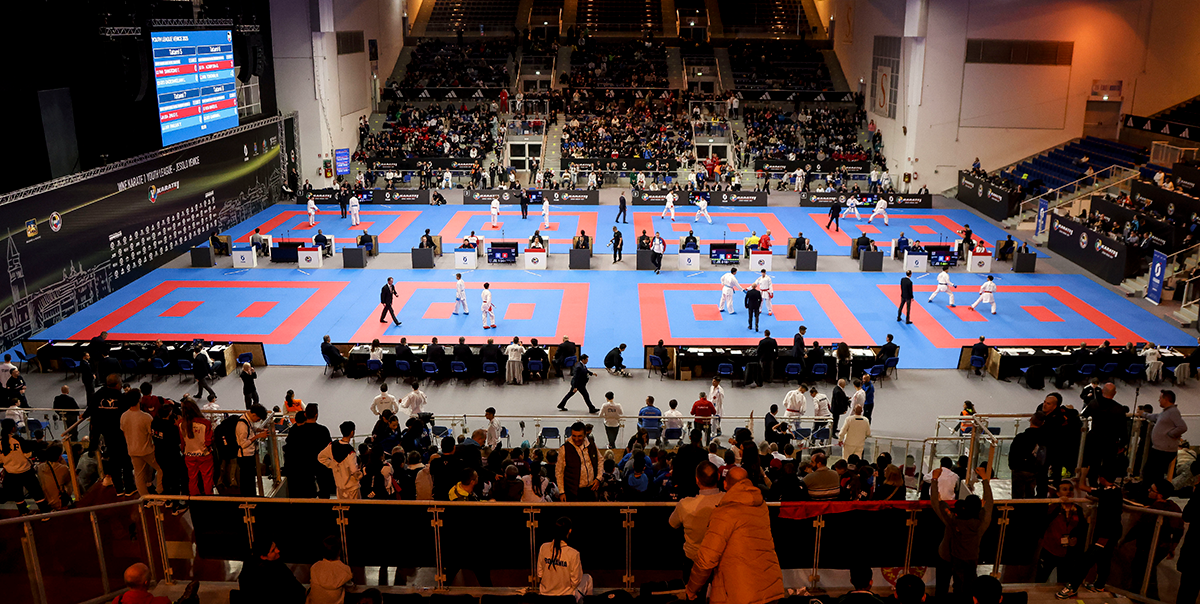
The 2025 edition of the Karate 1–Youth League Venice reaffirmed its reputation as one of the most significant youth tournaments in the global WKF calendar. Over four days, thousands of young athletes, coaches and supporters transformed the Venetian venue into a vibrant arena of ambition, precision and future promise. What unfolded was not only a world-class competitive showcase, but also a celebration of the rising generation that will soon define the sport at senior level.
With over 70 nations represented, Venice 2025 delivered its strongest field to date. Emerging kata specialists, tactical kumite strategists and all-round prodigies filled the tatami with performances that signalled a dramatic rise in global youth standards. From the opening exchanges to the emotional final medal ceremonies, this event demonstrated why Venice has become the jewel of the Youth League circuit.
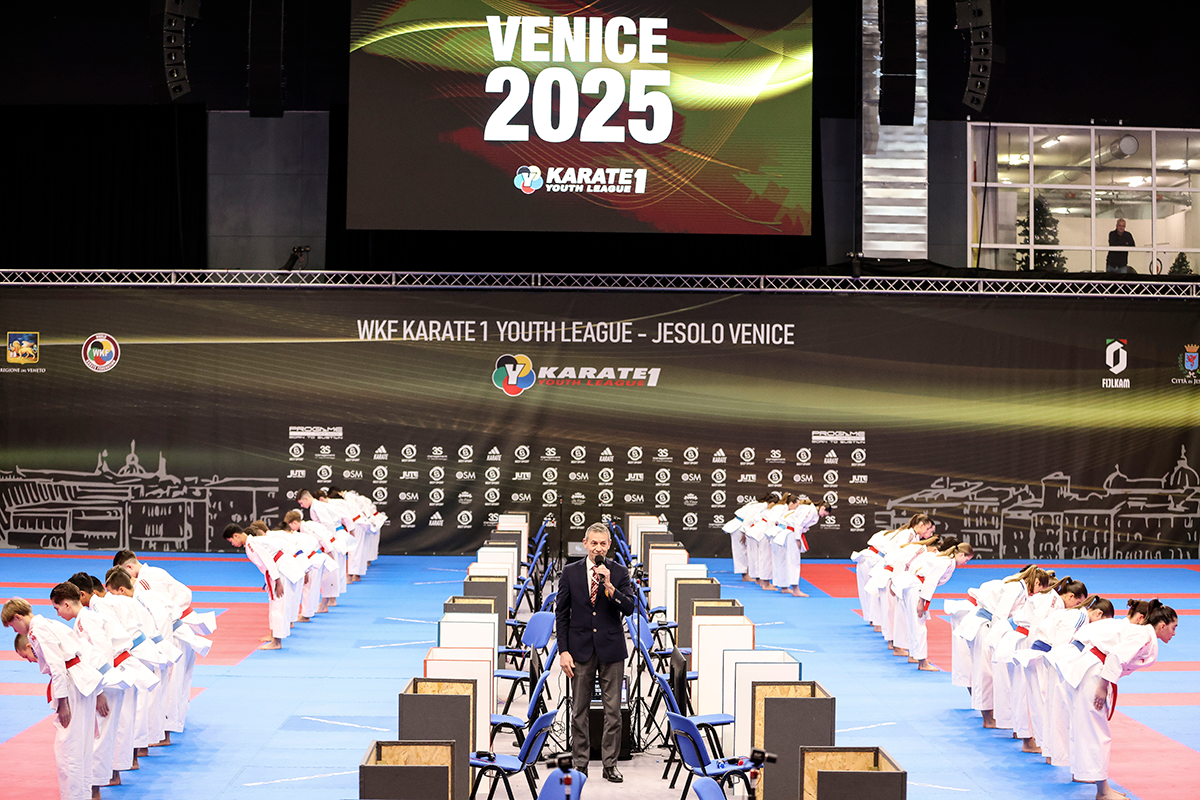
A Global Gathering in the Heart of Venice
The geographical spread of competing nations emphasized karate’s expanding global reach. Europe, Asia, Africa, Oceania and the Americas all fielded strong delegations. Traditional powerhouses — Japan, Spain, Italy, Egypt, France and Turkey — arrived with robust youth programs, but so too did many emerging nations whose athletes pushed into medal rounds with surprising maturity.
WKF officials praised the record-level participation and highlighted the event as a model platform for nurturing the next generation of champions. But above all, they pointed to the athletes: teenagers demonstrating tactical awareness, emotional control and technical refinement on par with senior contenders.
Day 1: Youth Karate Shines in a Fast-Paced Opening
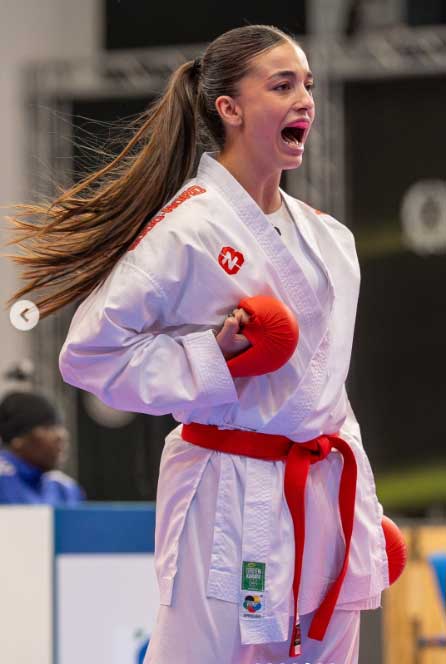
The tournament opened with cadet divisions, instantly setting the tone for what would be a fiercely competitive event. Instagram posts from athletes, clubs and parents showcased the energy inside the venue: sharp gyaku-zukis, rapid-fire exchanges and kata performances executed with stunning composure.
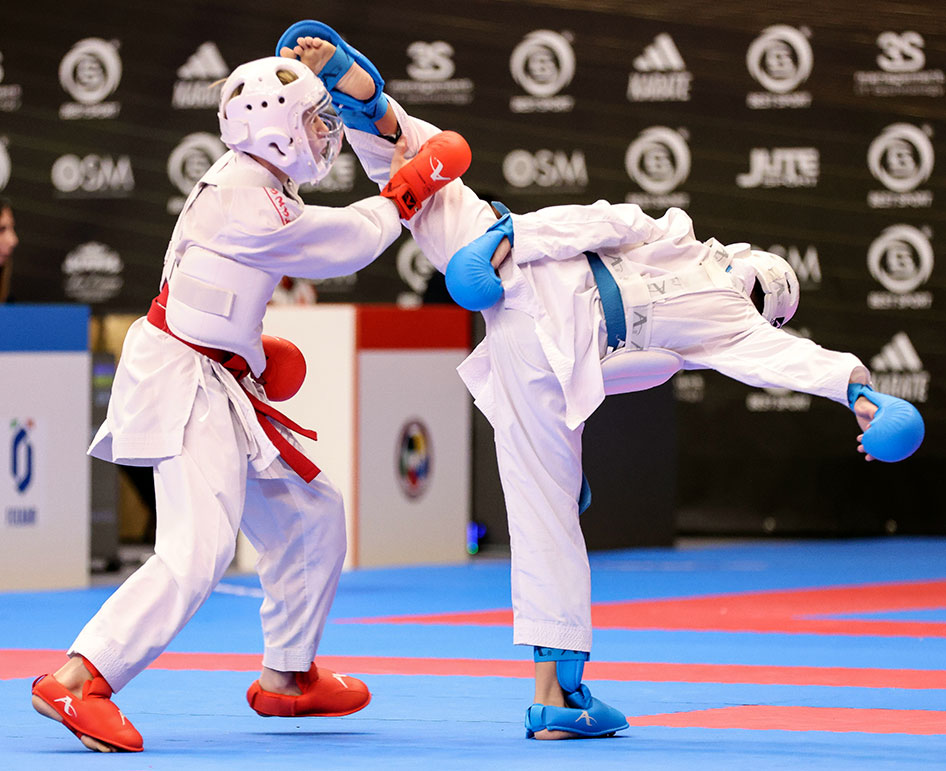
Cadet kumite divisions were particularly intense — bouts were fast and decisive, with several young athletes showing exceptional timing and distance control. Early gold medalists revealed a level of preparation far beyond their years, and the general sentiment across the tatami was clear: the youth field is stronger than ever.
Day 2: Junior Champions Crowned in Masterful Fashion
If Day 1 revealed the depth of rising talent, Day 2 showcased the refinement and maturity of the junior divisions. WKF described the day as “a showcase of precision,” and indeed many kata performances displayed senior-level control, contrast and kime. Japan and Spain delivered especially striking routines, earning multiple podium spots.
Junior kumite electrified the arena. Tactical battles unfolded across all weight categories, often decided in the last seconds through brilliant counterattacks. France, Turkey, Egypt and Kazakhstan stood out with disciplined, high-scoring fighters. By the end of the day, it was clear that several new names had emerged as future contenders on the Premier League circuit.
Day 3: Young Talents Illuminate the Tatami
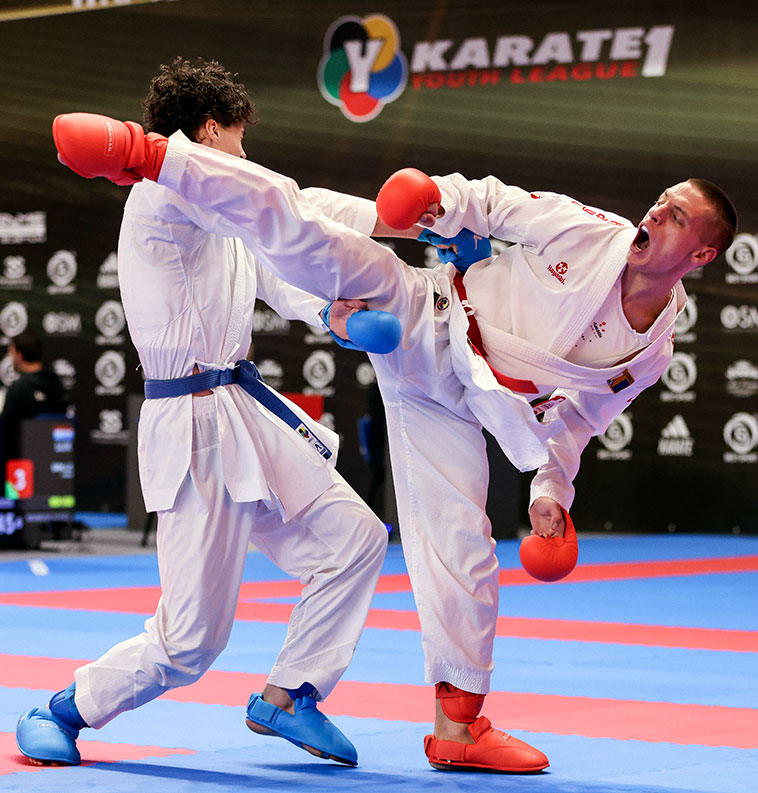
The third day delivered some of the event’s most memorable matches. Athletes who arrived without major international reputations suddenly surged into medal contention, demonstrating how quickly skill and confidence can accelerate in youth development.
Social media exploded with content: slow-motion replays, emotional celebrations and tactical breakdowns. Reels showing spectacular ura-mawashi-geris, last-second counters and razor-sharp kata lines trended widely among karate communities. As the day progressed, the tournament narrative shifted from individual performances to broader themes: depth, diversity and globalisation of excellence.
Day 4: A Showcase of the Sport’s Future
The final day brought an atmosphere more reminiscent of a senior continental championship than a youth event. Packed stands, flag-waving supporters and relentless tension created a stage that tested the psychological strength of even the most gifted competitors.
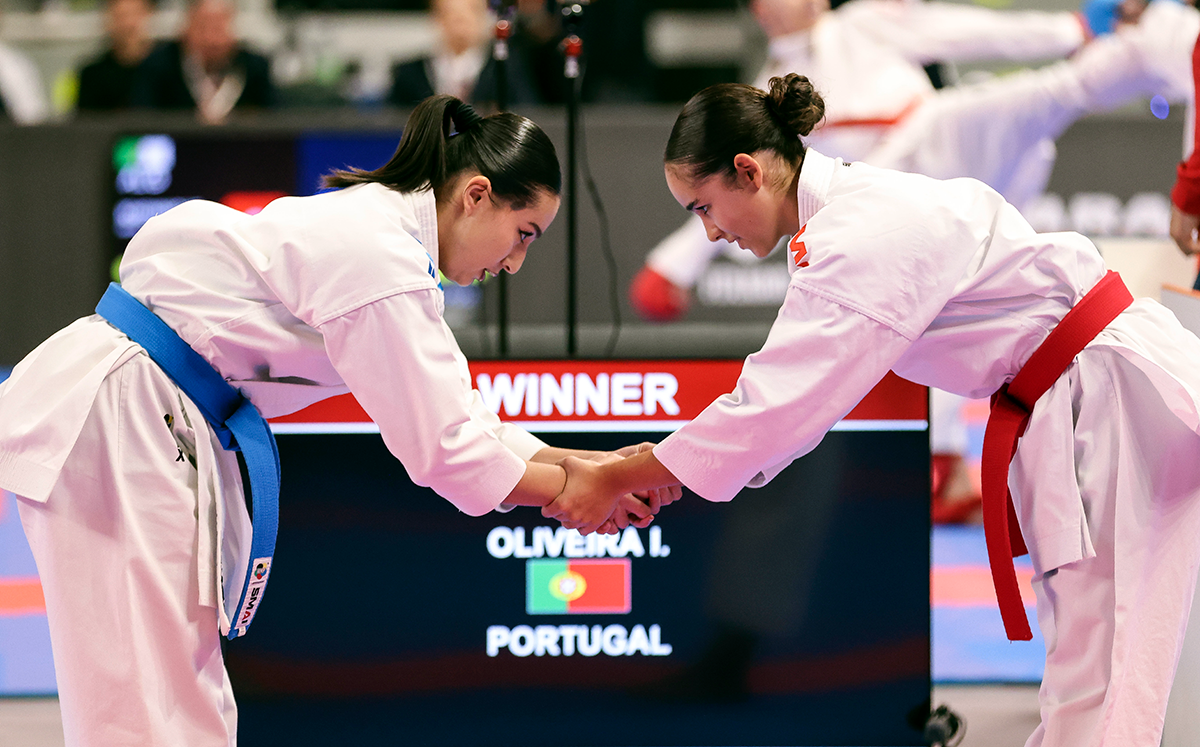
Kata finals displayed elegance and precision. Kumite finals delivered speed, bravery and tactical discipline. WKF praised not only the athletic quality but the exemplary sportsmanship shown throughout the day — athletes bowing deeply, consoling opponents, and embodying the highest values of karate-do.
The Sensation of the Tournament: Yatoji’s Historic Double Gold
While Venice 2025 overflowed with remarkable performances, the story that captivated the entire karate world was the extraordinary achievement of Japan’s Yatoji, who secured double gold in kata and kumite. Such dual victories are exceptionally rare at this level, and Yatoji delivered them with dominant precision.
His kata performances were textbook examples of Japanese technical purity. Deep, steady stances, perfect rhythm, unwavering focus — every aspect drew unanimous praise.
His kumite run was equally astonishing. Blending tactical patience with lightning acceleration, he controlled every match from start to finish. The seamless transition between kata and kumite mastery positioned Yatoji as perhaps the most complete youth athlete of his generation.
Coaches from multiple nations described his achievement as “historic,” a benchmark that future youth athletes will measure themselves against.
Individual Breakthroughs: Standout Athletes Who Defined Venice 2025
While national team success played a large role in the competitive drama of Venice 2025, the tournament’s emotional core came from the standout performances of individual athletes whose breakthroughs defined the event.
Spain’s Rising Kata Prodigy: Julia Hernández
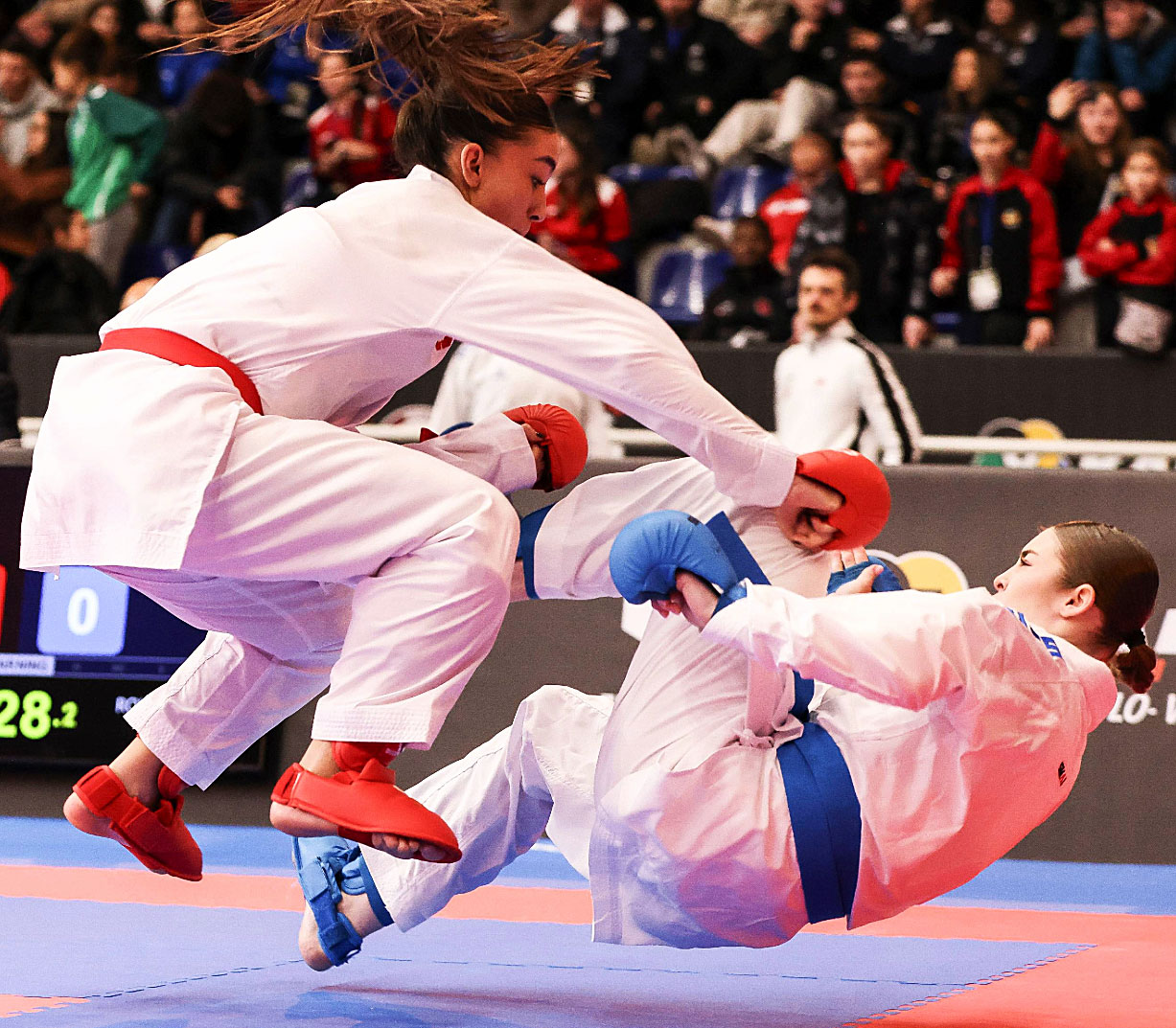
Among the most celebrated performers of the entire tournament was Julia Hernández, a Spanish kata talent whose Instagram highlights (@juliia.hdez) gained substantial traction across the karate community. Her performances combined grace, stability and explosive contrast — hallmarks of elite kata technique.
Her semifinal performance, widely shared on social media, demonstrated near-perfect control. In the final, under intense pressure, she delivered another exceptionally composed routine, securing a well-earned medal and solidifying her status as one of Europe’s fastest-rising kata stars.
Granada’s Nokachi Powerhouse: A Kumite Force
From Nokachi Granada, one of Spain’s rising kumite athletes delivered a dazzling campaign. Featured extensively on @nokachigranada’s channels, she advanced through the rounds using exceptional distancing, tactical feints and aggressive but precise scoring.
Her semifinal ura-mawashi-geri — captured in multiple viral reels — was considered one of the techniques of the tournament. Her podium finish was a triumph not only for her club but for Spain’s expanding youth kumite program.
Italy’s Homegrown Star: A Venice Crowd Favourite

Competing in front of passionate home supporters, one of Italy’s emerging female kumite athletes produced a memorable run to the final. Her disciplined defence, sharp gyaku-zuki timing and unwavering composure earned her multiple decisive victories.
Her semifinal match, carried into the stands with football-style cheering, became one of the defining emotional moments for Italian fans. Though she narrowly missed gold, her silver represented one of the home nation’s proudest achievements.
The Turkish Counterattacker: Tactical Perfection
Turkey showcased yet another rising star — a tactical genius in kumite whose counterattacking strategy mesmerised spectators. His kizami-zuki counters were delivered with surgical timing, and he repeatedly turned tense, low-scoring matches in his favour with last-second strikes.
His bronze medal victory, secured in dramatic fashion, became a widely shared clip among Turkish karate communities.
Egypt’s Emerging Kata Innovator
Egypt’s growth in kata was highlighted by a young athlete whose performances blended power with fluidity. His advanced sense of contrast and control suggested a deep technical foundation. His podium success underlined Egypt’s growing influence in global youth kata and hinted at strong future results on the world stage.
Japan Beyond Yatoji: Depth and Discipline
Although Yatoji dominated the headlines, Japan’s depth was evident across categories. Several Japanese athletes reached medal rounds, particularly in kata, where their exemplary form — precise angles, disciplined breathing and unwavering focus — reaffirmed Japan as the sport’s technical benchmark.
International Highlights and Standout Nations
In addition to individual breakthroughs, several countries delivered remarkable overall performances:
-
Japan: Continued its dynasty in kata with unmatched technical purity.
-
Spain: Strong in both kata and kumite, boosted by club-driven development.
-
Italy: Enjoyed home-field momentum and a deep youth roster.
-
France: Displayed tactical brilliance in junior kumite divisions.
-
Egypt & Turkey: Reinforced their rising status with multiple podium finishes.
These nations not only performed well but showcased styles and philosophies that enrich the global diversity of karate.
Social Media: The Event Beyond the Arena
Karate 1–Youth League Venice 2025 was not confined to the tournament hall. It unfolded simultaneously across Instagram, Facebook and TikTok, where athletes and clubs shared insights into preparation routines, medal celebrations and emotional behind-the-scenes moments.
Spectacular reels of knockout techniques, kata slow-motions and post-medal ceremonies reached thousands of viewers, underscoring the massive cultural footprint of the Youth League. The hashtags #YouthLeagueVenice2025 and #WKFYouthLeague surged across martial arts communities, expanding the event’s audience far beyond Italy.
Venice 2025 in Perspective: A Generation Ready for the World Stage
What Venice 2025 made abundantly clear is that the next wave of karate champions is arriving at full speed. The technical depth, strategic intelligence and emotional maturity displayed by these young athletes indicate that senior-level karate is about to undergo a generational shift.
For many competitors, Venice was more than a tournament — it was a defining milestone, a moment of self-discovery and a springboard toward international futures.
Conclusion
Karate 1–Youth League Venice 2025 was a landmark event, blending elite-level competition with youth-driven passion and global unity. From Yatoji’s historic double gold to the emotional breakthroughs of young athletes across continents, the tournament delivered unforgettable narratives that showcased the sport’s bright future.
As the Youth League continues to expand, Venice remains its symbolic heart — a place where dreams are tested, champions are born, and the future of karate steps confidently into the spotlight.
All You Need to Know About 2025 Karate 1-Youth League Venice – WKF
Youth Karate Shines on Opening Day of Karate 1-Youth League in Venice – WKF
Junior Champions Crowned on Day 2 of the Karate 1-Youth League Venice 2025 – WKF
Bright Young Talents Shine on Day Three of Karate 1-Youth League in Venice – WKF
Guadalajara records with 80 countries in the Karate 1-Youth League 2025
Visa detta inlägg på Instagram
Visa detta inlägg på Instagram
Visa detta inlägg på Instagram
Visa detta inlägg på Instagram
Visa detta inlägg på Instagram
Visa detta inlägg på Instagram
Visa detta inlägg på Instagram
Visa detta inlägg på Instagram
Visa detta inlägg på Instagram
Visa detta inlägg på Instagram
Visa detta inlägg på Instagram
Visa detta inlägg på Instagram
Visa detta inlägg på Instagram
Visa detta inlägg på Instagram
Visa detta inlägg på Instagram