
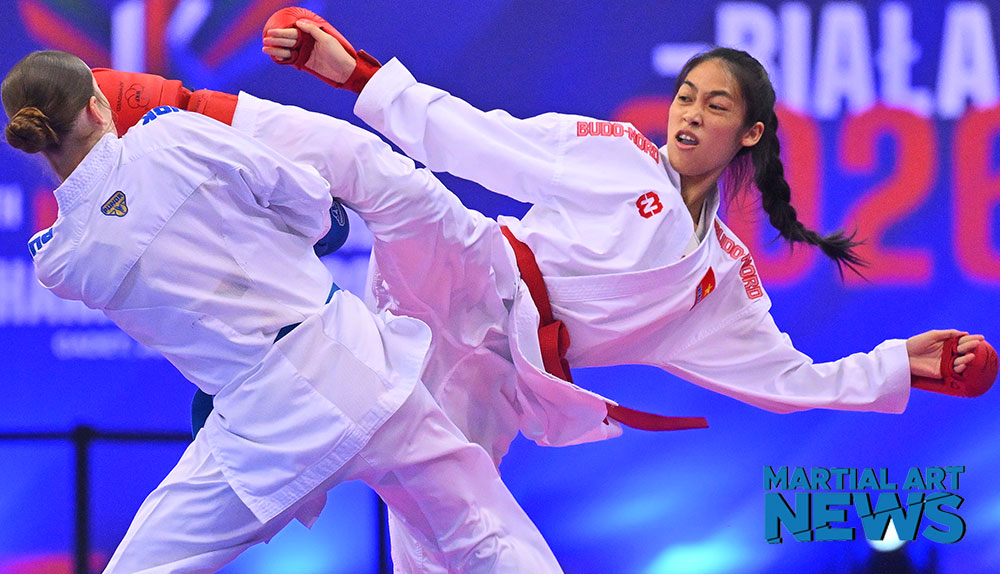

More than 2,000 young karate athletes representing 114 countries gathered in Bielsko-Biała, Poland, from 14 to 18 October for the 2026 World Cadet, Junior & U21 Championships. With world titles at stake, established favourites defending their reputations and emerging talents announcing themselves on the international stage, the five-day event offered a compelling picture of karate’s future. Japan, Egypt and the United States were among the leading nations, while Vietnam and Ukraine celebrated important silver medals. The championships also marked a significant moment for the World Karate Federation, with elections, commission meetings and discussions about the sport’s international development taking place alongside the competition.
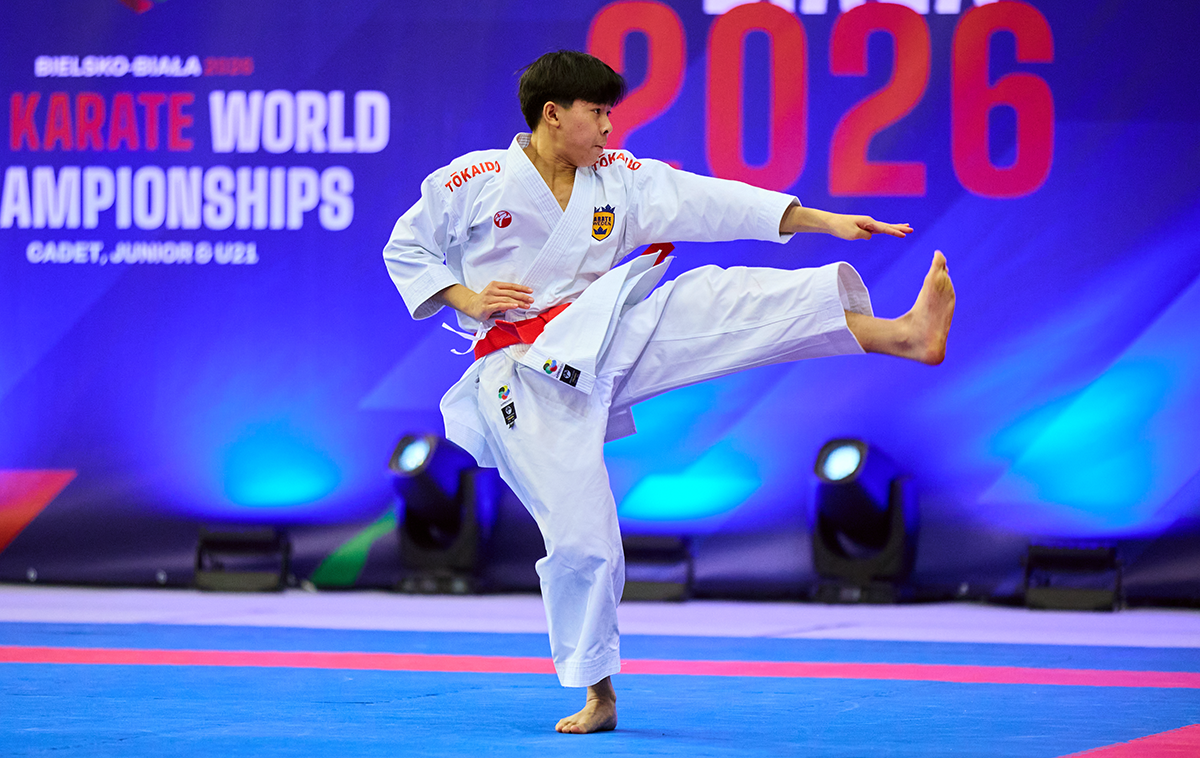
Bielsko-Biała welcomes the future of world karate
For five days in October, the Polish city of Bielsko-Biała became the centre of international youth karate. The World Cadet, Junior & U21 Championships brought together competitors aged 14 to 20, representing a remarkable diversity of countries, sporting traditions and competitive backgrounds.
Organised under the authority of the World Karate Federation (WKF), the championships represented the highest level of international competition for athletes in the cadet, junior and under-21 age groups. For some competitors, the event was another opportunity to build on continental titles and previous international success. For others, it was their first experience of competing against the world’s best in an environment where every mistake could determine the outcome of a championship campaign.
The scale of participation was particularly significant. More than 2,000 registered athletes from 114 countries across five continents demonstrated the continuing international appeal of karate and the importance of youth development within the sport. The competition also offered national federations an opportunity to assess the progress of their younger generations against the strongest international opposition.
The programme included individual kata and kumite competitions across the three age divisions. Kata athletes were judged on technical execution, athletic performance, precision and presentation, while kumite competitors faced the tactical challenges of direct competition, where speed, timing, distance management and decision-making frequently separated victory from defeat.
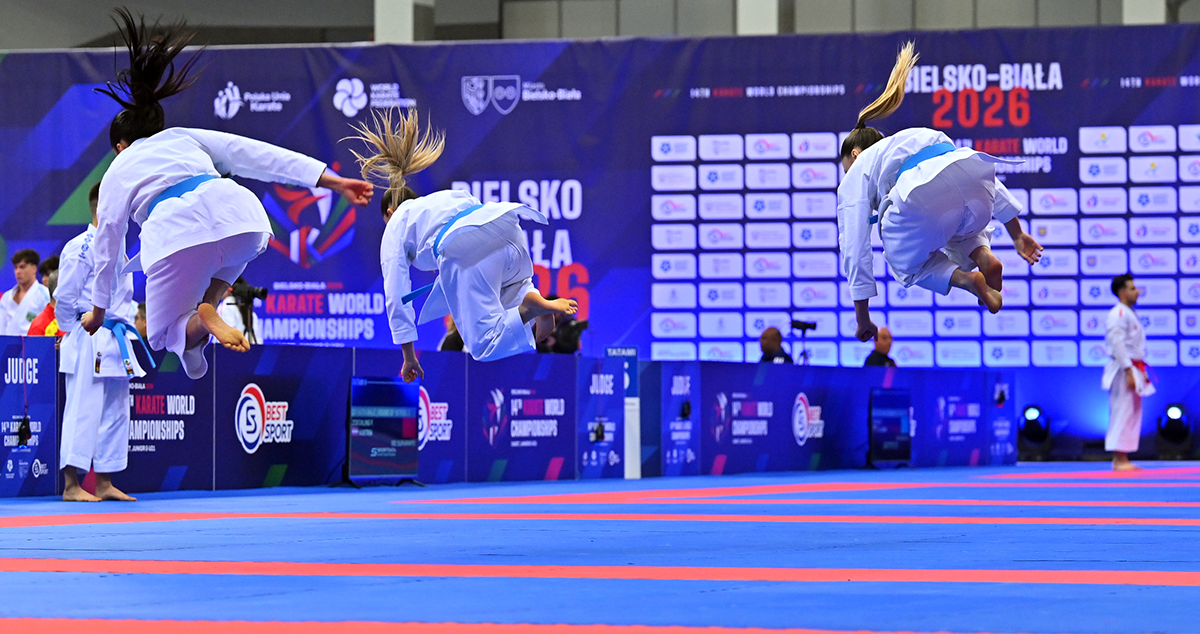
The championships were held at the Hala Widowiskowo-Sportowa im. Zbigniewa Pietrzykowskiego, providing a major international setting for an event that attracted attention from karate communities around the world. Bielsko-Biała had already established a connection with international karate through other competitions, including the Polish Open, making the city a familiar destination for many athletes and coaches.
One of the most important developments surrounding the 2026 championships was the decision to broadcast the entire competition live and free of charge through the official WKF YouTube channel. For the first time in the organisation’s history, supporters could follow the action across all eight tatamis, from the opening elimination rounds through to the medal contests.
This development represented more than a technical improvement. For athletes from countries with limited international media coverage, the broadcasts offered an opportunity for families, clubs and supporters to follow their performances directly. It also increased the visibility of young competitors whose achievements might otherwise receive attention primarily within their national karate communities.
Japan demonstrates its strength across generations
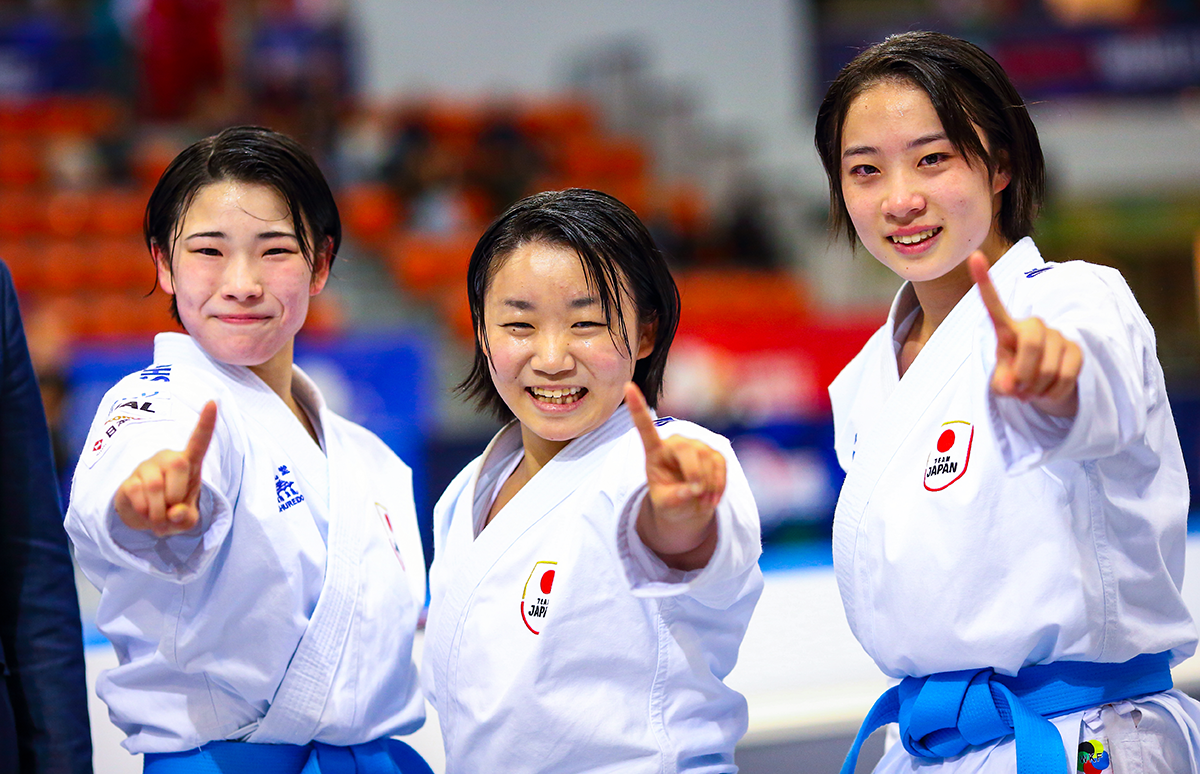
Japan once again demonstrated why it remains one of the most influential nations in international karate. The Japanese team combined the technical excellence traditionally associated with its kata programme with impressive performances in kumite, particularly in the junior divisions.
Two of the most significant victories came through Wakana Ito and Takeru Hamazawa, who continued their progression from successful cadet competitors to junior world champions. Both had previously won cadet world titles at the 2024 championships in Venice-Jesolo, Italy, and their achievements in Poland provided further evidence of Japan’s ability to develop talented athletes through successive age categories.
Ito secured the Junior Female Kata world title with a 4–1 victory over Austria’s Tamara Lehner. Her performance added another major international achievement to a record that already included continental success. Throughout the competition, she displayed the technical consistency and composure that have made her one of the leading young kata athletes in the world.
Hamazawa followed with victory in Junior Male Kata, defeating Portugal’s Vasco Mateus 4–1. His success reinforced Japan’s position at the forefront of international kata and demonstrated how effectively the country’s development system prepares athletes for the transition between age groups.
Japan’s strength was not limited to kata. Jun Mitsuie claimed gold in Junior Male Kumite -55 kg after defeating Azerbaijan’s Vusal Ganbarov 3–0, while Takamasa Yatoji won the Junior Male Kumite -61 kg title with a 2–0 victory against Morocco’s Souhaib Azibou.
These four junior gold medals illustrated the depth of Japan’s programme and its ability to produce internationally competitive athletes across different disciplines. The country’s achievements also highlighted the importance of continuity in coaching, competition experience and long-term athlete development.
Egypt, the United States and Poland make their mark
Egypt continued to demonstrate the strength of its youth karate programme, producing outstanding performances across several categories. One of its most emphatic victories came from Abdelrahim Elzourkany, who defeated Ukraine’s Mark Dorosh 9–0 in the Cadet Male Kumite -52 kg final.
The Egyptian athlete’s commanding performance reflected the aggressive yet controlled competitive style that has become associated with many of the country’s leading kumite athletes. Egypt also celebrated gold through Mouaz Mostafa in Junior Male Kumite -68 kg, where he defeated Japan’s Maari Maeda after a closely contested bout that finished 2–2.
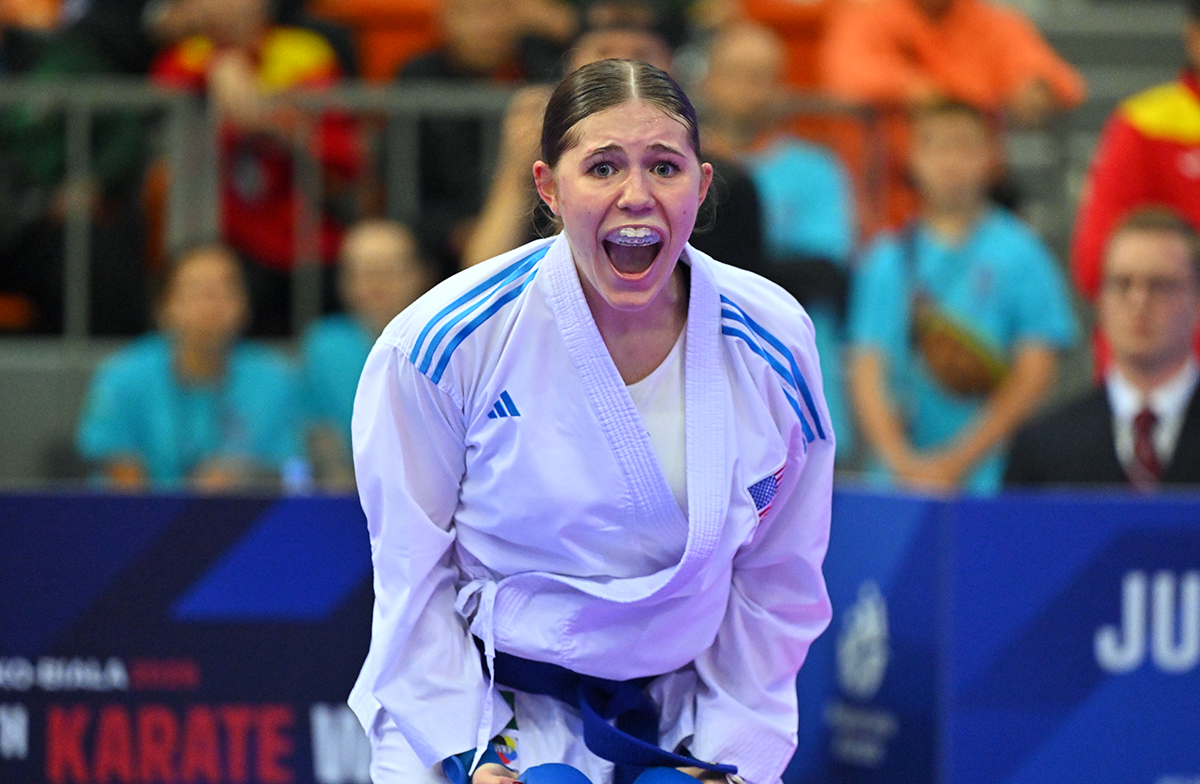
The United States enjoyed a particularly successful cadet competition. Victoria Jacoby won the Cadet Female Kumite -47 kg title after defeating Spain’s Celia Cofrades del Castillo 3–1, while Mihaela Arcalean secured gold in the -61 kg division with a narrow 1–0 victory over Türkiye’s Ela Su Yildirim.
For the American team, the victories demonstrated the growing competitiveness of its younger athletes on the world stage. The contrasting nature of the two finals also illustrated the tactical diversity required to succeed at championship level, from decisive scoring exchanges to disciplined management of a narrow advantage.
Host nation Poland experienced one of the most emotional moments of the championships when Natalia Balut claimed gold in Junior Female Kumite +66 kg. Competing in front of family, friends and home supporters, Balut defeated Egypt’s Roaa Eltaher 4–2 to secure Poland’s first gold medal of the tournament and its first world title at this event since 2017.
Her achievement was particularly meaningful for the hosts, providing a memorable sporting highlight and demonstrating the value of bringing major international championships to countries where karate continues to develop.
Sweden celebrates world gold and bronze as Agnes Nyman and Anthony Vu shine in Bielsko-Biała
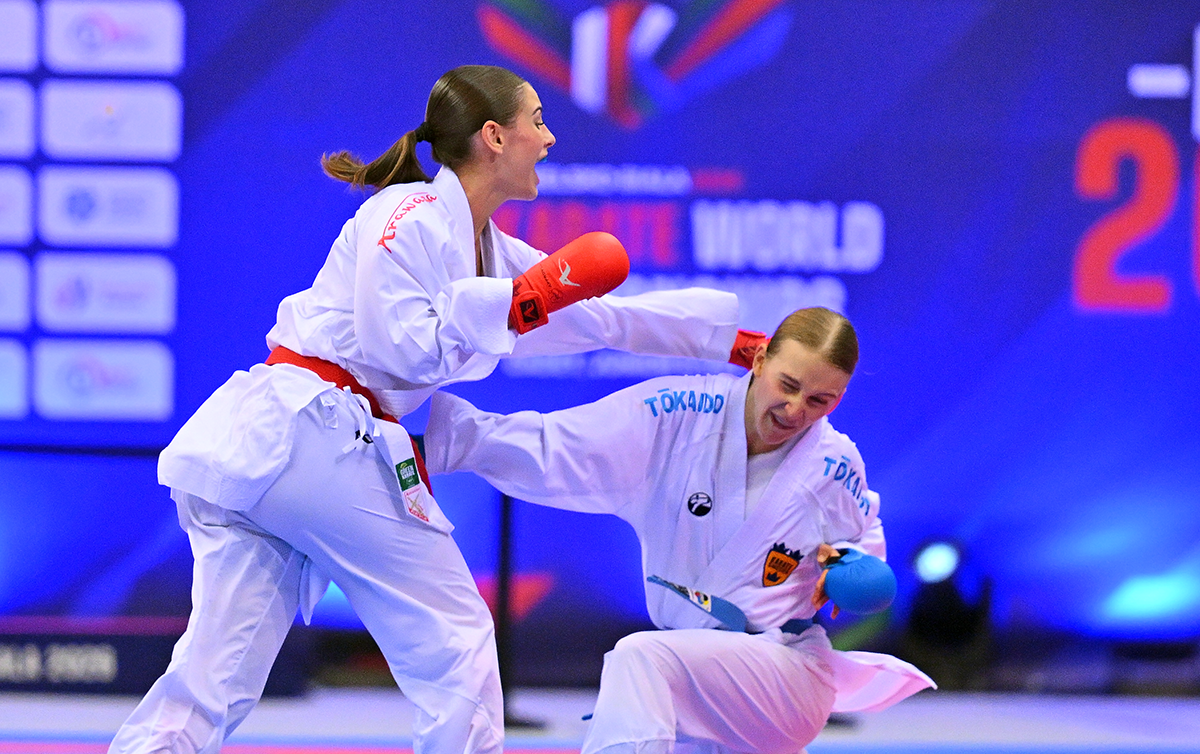
Sweden enjoyed an outstanding World Cadet, Junior & U21 Championships in Bielsko-Biała, returning home with two world championship medals following impressive performances by Agnes Nyman and Anthony Vu. Nyman captured gold in U21 Female Kumite -50 kg, while Vu secured bronze in U21 Male Kata, confirming Sweden’s growing international competitiveness in both kumite and kata. Alongside these established international performers, the Swedish delegation also featured younger talents, including 14-year-old Johnny Vu, who made his World Championship debut in Cadet Male Kata.
Agnes Nyman delivered one of the defining Swedish performances of the championships when she defeated Greece’s Christina Triada Pappa 4–2 in the U21 Female Kumite -50 kg final. Her victory represented another major milestone in an already impressive international career and confirmed her position among the world’s leading young kumite athletes. Reaching the final required both tactical discipline and composure, qualities Nyman demonstrated throughout the competition before completing her championship campaign with a convincing gold-medal performance.
The world title followed several important international achievements. Nyman had previously claimed silver at the 2024 Junior World Championships in Venice, demonstrating her potential against the strongest competitors of her generation. She subsequently continued her development through the U21 ranks, collecting continental success while increasingly establishing herself at senior level. Earlier in 2026, she achieved a significant breakthrough by winning the Karate One Premier League tournament in Istanbul, where she competed against experienced senior international opponents. Her ability to combine success in youth championships with strong performances on the senior circuit underlines her potential for the coming years.
Sweden’s second medal came through Anthony Vu, who secured bronze in U21 Male Kata. Vu faced Australia’s Kento Oiwa in the bronze-medal contest and added another prestigious international podium finish to an already remarkable collection of achievements. His performance was especially significant considering the extremely high technical standards in international kata, where Japanese competitors and athletes from several other established karate nations regularly dominate the podium positions.
For Vu, the bronze medal represented another important step in a career that has already included success at both youth and senior levels. In 2024, he captured the Junior World Championship title, establishing himself among the most promising young kata specialists internationally. He followed that achievement by winning the U21 European Championship in Bielsko-Biała in 2025, defeating Italy’s Guido Polsinelli in a closely contested final with a score of 41.5 against 41.2. Returning to the same Polish city one year later and securing another world championship medal added further significance to his achievement.
Vu’s competitive record also extends beyond age-group championships. He has previously won bronze at the senior European Championships and secured a podium finish in the prestigious Karate One Premier League. At the 2025 World Games, he finished fifth, further demonstrating his ability to challenge established international kata competitors. During 2026, he continued gaining valuable senior-level experience through appearances at Premier League events in Istanbul, Rome and Rabat, as well as the European Championships in Frankfurt.
His bronze medal in Bielsko-Biała therefore confirmed a remarkable level of consistency across several international competitions. Kata at this level demands exceptional technical precision, explosive movement, balance, rhythm and concentration, with even small details capable of determining the outcome of a contest. Vu’s continued success illustrates not only his individual qualities but also the progress being made within Swedish competitive kata. His achievements have helped establish Sweden as a country capable of producing athletes who can challenge the strongest international opposition in a discipline with exceptionally high technical demands.
The Swedish delegation also included an exciting representative of the next generation in Johnny Vu from Västbo Karate in Gislaved. At just 14 years of age, Johnny made his World Championship debut in Cadet Male Kata, marking an important milestone in his young sporting career. His selection for the national team attracted attention in Swedish regional media, with Sveriges Radio P4 Jönköping highlighting his preparations ahead of the championships. Both Johnny and his father expressed pride in the opportunity to represent Sweden, while emphasising the importance of enjoying the experience and approaching the competition without unnecessary pressure.
For a young athlete competing at this level for the first time, the experience of a world championship can be just as important as the immediate result. Facing competitors from countries with strong kata traditions provides valuable lessons in technical execution, competitive preparation and the psychological demands of major international events. Johnny’s participation also demonstrated the importance of creating opportunities for talented young athletes to develop within a structured national team environment.
Sweden was represented by a delegation of 17 athletes across the cadet, junior and U21 categories, with competitors participating in both kata and kumite. The squad reflected the breadth of Swedish karate and included athletes at different stages of their international careers. While Nyman and Anthony Vu arrived with extensive experience from major competitions, several younger team members gained important exposure to the demands of world championship competition.
With Agnes Nyman claiming gold and Anthony Vu securing bronze, Sweden concluded the championships with two world medals and further confirmation of its ability to compete successfully on the global stage. Their achievements provided important recognition for Swedish karate, its athletes, coaches and development structures. Combined with the experience gained by younger competitors such as Johnny Vu, the results in Bielsko-Biała offered an encouraging outlook for the future of Swedish karate and demonstrated that the country continues to develop talent capable of reaching the highest international level.
Ukraine’s young athletes deliver outstanding results
Ukraine was another nation to enjoy a particularly successful championship, with several athletes reaching world finals and demonstrating the strength of the country’s emerging generation.
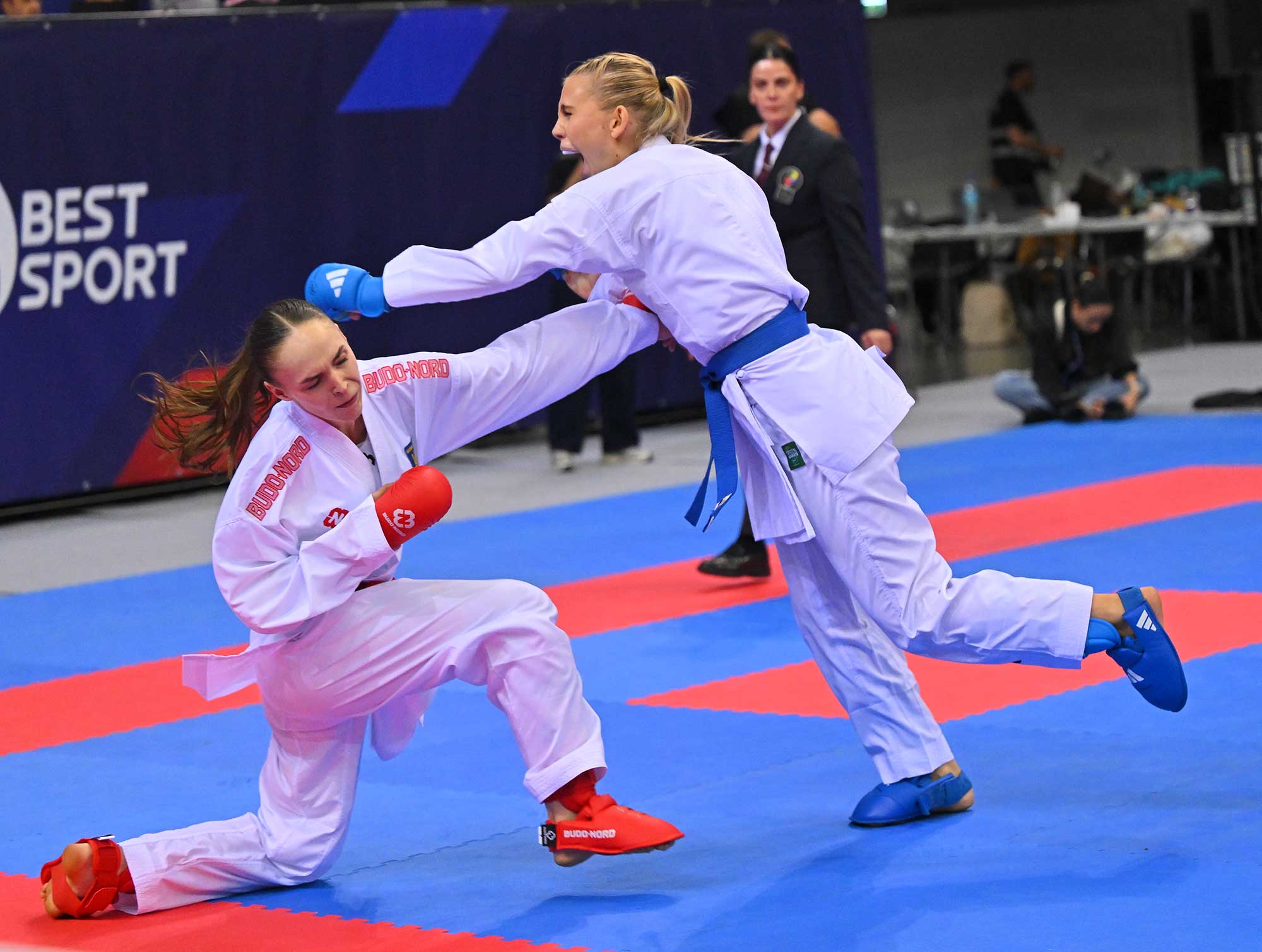
The most significant Ukrainian achievement came on the final day when Uliana Baranova won the U21 Female Kumite -68 kg world title. Baranova defeated Greece’s Eirini-Grigoria Katsika 3–1, securing her first international gold medal.
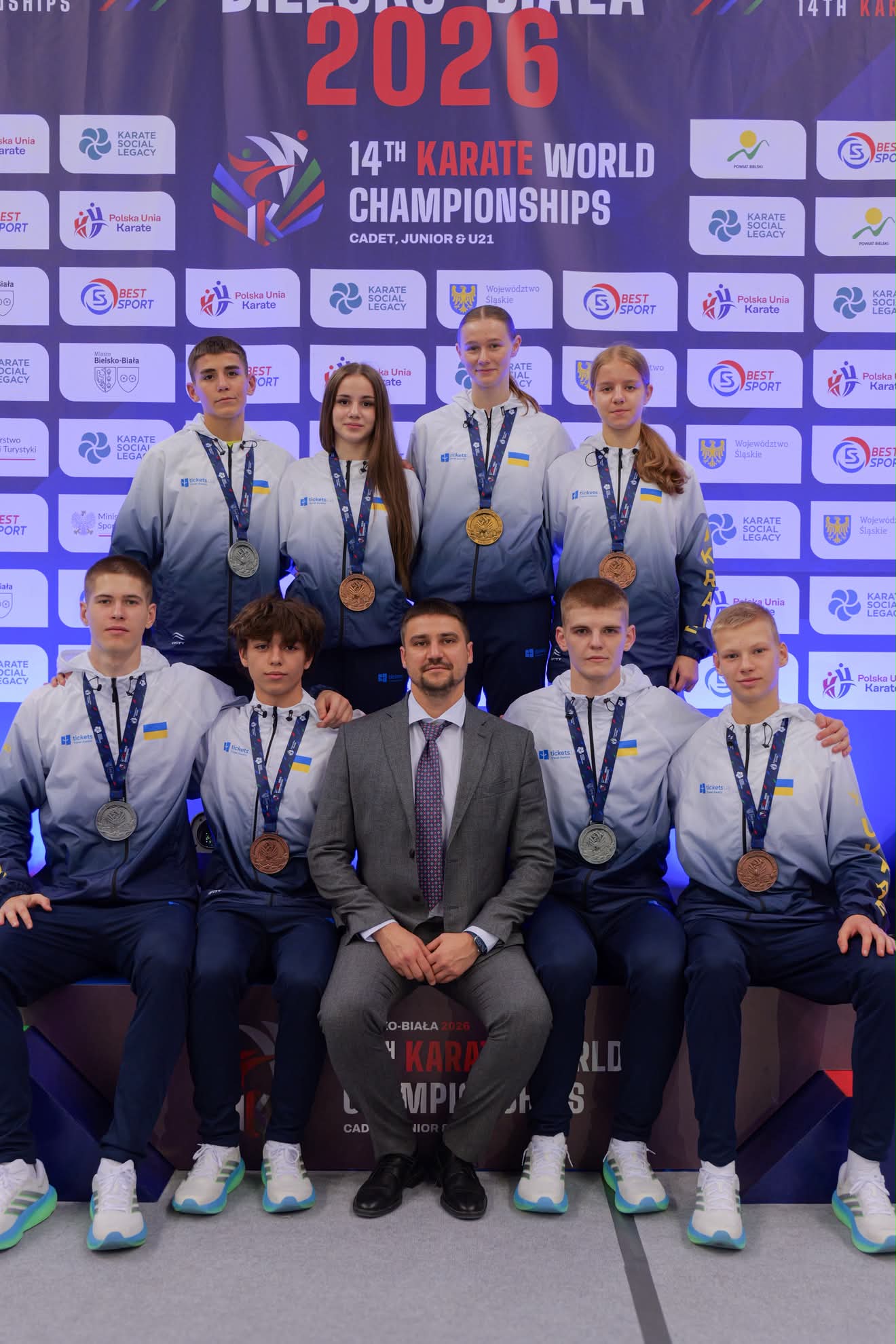
Her victory marked an important step forward after previously winning silver at the 2026 junior continental championships. The transition from junior competition to U21 represents a demanding stage in an athlete’s development, making her ability to succeed at world level particularly noteworthy.
Ukraine also claimed silver in U21 Male Kumite -84 kg through Nikita Dmytrenko, who faced Egypt’s Omar Osman in the final. Osman, already an established international competitor with significant senior-level achievements, won the contest 5–3 to claim his second consecutive U21 world title.
For Dmytrenko, reaching the final against such an accomplished opponent was an achievement in itself. His performance demonstrated that Ukraine continues to produce athletes capable of competing against the strongest international opposition.
In the junior divisions, Vladyslav Rudenko reached the final of Male Kumite +76 kg after defeating Poland’s Michal Przasnyski 1–0 in the semifinals. Rudenko subsequently faced Montenegro’s Vuk Vucinic in a high-scoring final, eventually taking silver after a 7–4 defeat.
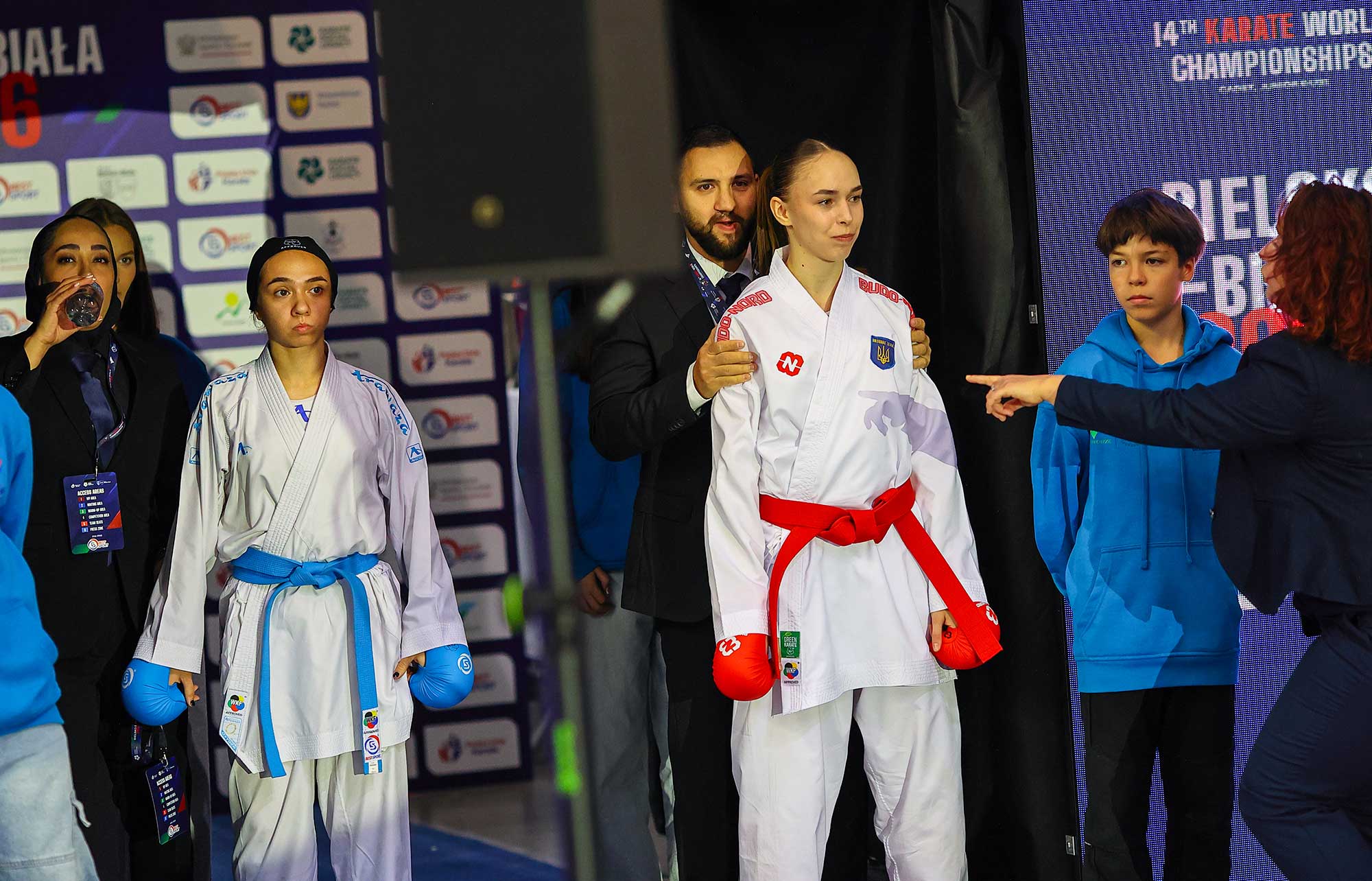
The match provided one of the more dynamic junior medal contests, with both athletes demonstrating their attacking abilities. Although Rudenko was unable to secure the world title, his silver medal added another important result to Ukraine’s championship campaign.
Ukraine also celebrated a cadet silver medal through Mark Dorosh in Male Kumite -52 kg. Dorosh reached the final against Egypt’s Abdelrahim Elzourkany, who ultimately secured gold with a decisive 9–0 victory.
Taken together, these performances gave Ukraine a strong presence across all three age groups. With gold in U21 and silver medals in cadet, junior and U21 kumite, the team demonstrated both competitive depth and the ability to develop athletes across successive stages of their careers.
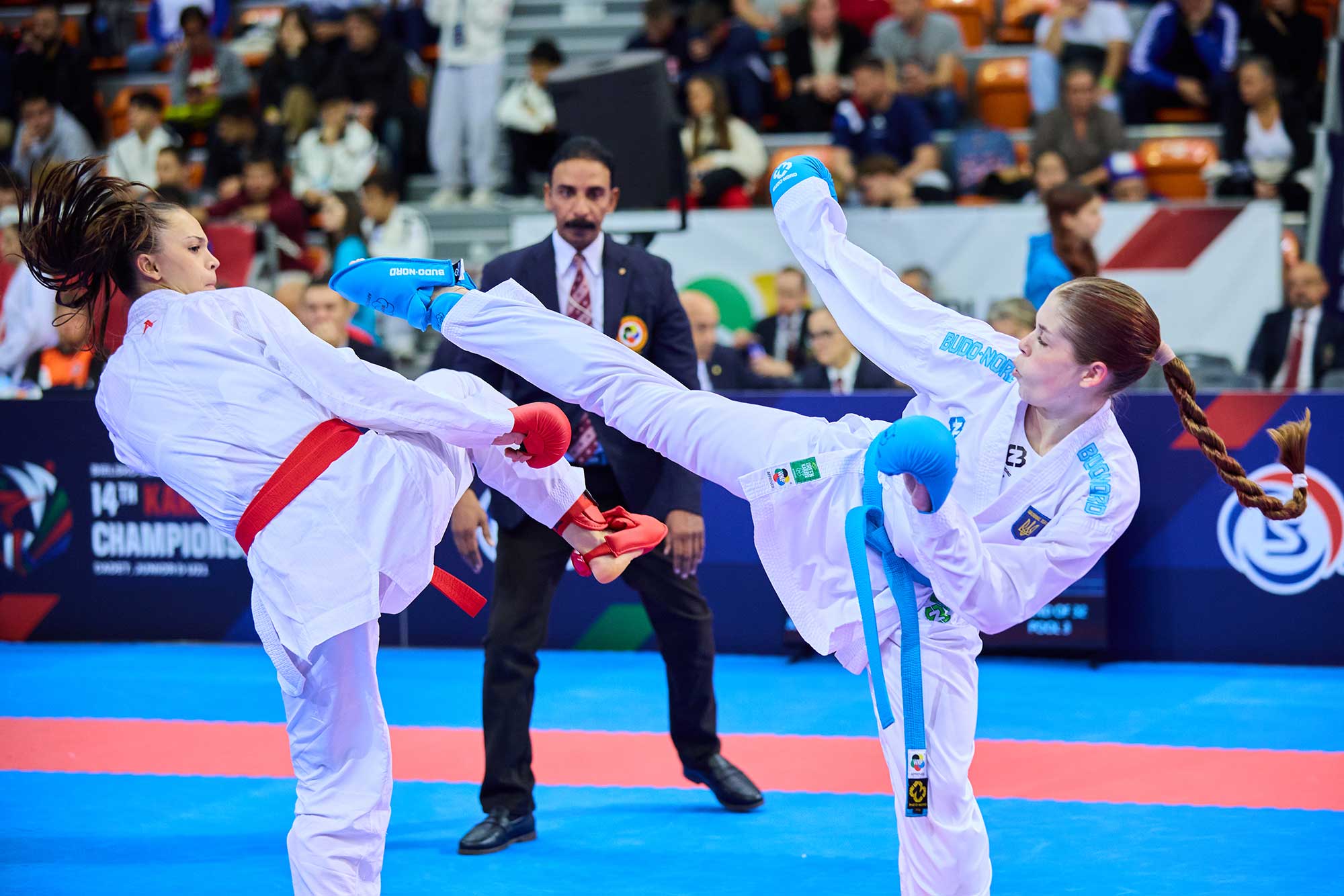
The achievements carry additional significance given the difficulties Ukrainian sport has faced during the continuing war. Maintaining training opportunities, international participation and competitive development under such circumstances presents considerable challenges for athletes, clubs and national sporting organisations.
The results in Bielsko-Biała nevertheless demonstrated that Ukrainian karate continues to produce internationally competitive athletes, with Baranova’s world title providing the most prominent success of the campaign.
Vietnam celebrates a world silver medal through Tran Thi Cam Tu
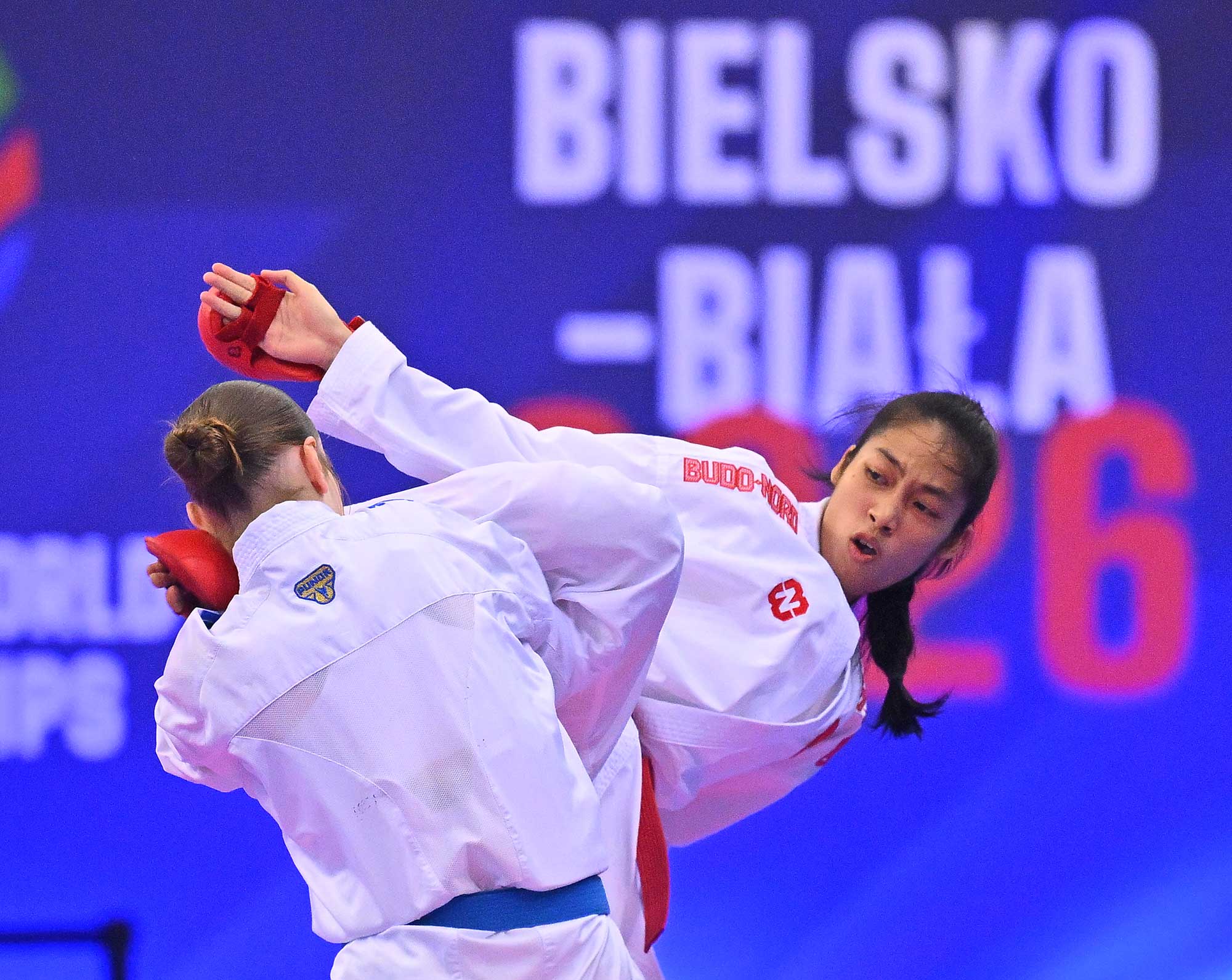
Vietnam produced one of the most significant performances of the junior competition when Tran Thi Cam Tu reached the final of Junior Female Kumite -59 kg.
The Vietnamese athlete secured her place in the gold-medal contest after a demanding semifinal against Colombia’s Maria Jose Rave Rendon. The bout ended 0–0, with Tran advancing through hantei, the judges’ decision.
Such contests require considerable tactical discipline. When neither athlete manages to establish a scoring advantage, the outcome can depend on the judges’ assessment of technical and tactical superiority, making composure and controlled aggression particularly important.
In the final, Tran faced France’s Morgane Scarfone, an experienced competitor who had already demonstrated her ability at major international events. Scarfone entered the championship with strong credentials, including a gold medal at the 2026 Karate One Youth League in Poreč and a continental silver medal.
The French athlete ultimately won the final 6–0, leaving Tran with the world silver medal. Although the result was decisive, the Vietnamese competitor’s journey to the final represented a major international achievement.
Her silver medal was also highlighted by Vietnamese media, reflecting the importance of the result for the country’s karate community. Vietnam has developed a competitive presence in international karate, particularly in kumite, and success at youth world championship level provides an important foundation for future senior achievements.
Tran’s performance demonstrated the potential of the next generation of Vietnamese athletes. Reaching a world final against competitors from established karate nations requires not only individual ability but also the support of coaches, clubs and national development structures.
The championship experience will provide valuable preparation for future international events. For an athlete still progressing through the junior ranks, exposure to different competitive styles and the pressure of a world final can play an important role in long-term development.
Vietnam’s silver medal also illustrated the increasingly international nature of youth karate. While traditional powerhouse nations continue to dominate many categories, competitors from a wider range of countries are regularly challenging for podium positions.
Australia arrives with a 33-athlete delegation and strong ambitions
Australia entered the championships with a delegation of 33 athletes, reflecting the country’s commitment to developing young competitors capable of challenging the strongest karate nations.
The Australian team’s arrival attracted particular attention ahead of the competition, with the WKF highlighting the enthusiasm and ambitions of several athletes preparing to represent their country in Poland.
Among them was April Sweeney, competing in U21 Female Kumite -68 kg. Sweeney had previously participated in the 2022 World Championships in Konya, Türkiye, making Bielsko-Biała an opportunity to return to the world stage after four years of further development.
Another returning competitor was Aidan McDougall in U21 Male Kumite +84 kg. Having competed at the 2024 World Championships in Venice, McDougall arrived with greater experience and a clearer understanding of the demands of international championship competition.
Jayda Gledhill, representing Australia in U21 Female Kumite -55 kg, also returned after participating in Venice. Her presence, alongside other experienced athletes, demonstrated Australia’s efforts to build continuity between successive international championships.
Thomas Kearns competed in U21 Male Kumite -67 kg, approaching the tournament as an opportunity to gain experience against elite international opposition.
For these athletes, the championships represented more than an individual competition. Travelling from Australia to Europe to compete against the world’s strongest young karatekas requires substantial preparation, financial commitment and coordination between athletes, families, clubs and national sporting organisations.
Karate Australia President Hani Zahra emphasised the significance of national representation ahead of the event, highlighting the dedication, resilience and commitment required of athletes competing in the Australian colours.
The Australian delegation’s size was itself an indication of the country’s investment in youth karate. With 33 athletes participating, the national federation provided a substantial group of competitors with the opportunity to gain experience at the highest age-group level.
Although Australia’s participation was not defined by a headline gold-medal result in the WKF championship reports reviewed, the event remained an important development opportunity. For athletes preparing to move into senior international competition, world championship experience provides a valuable understanding of the standards required to succeed.
Australia’s participation also underlined the importance of the Oceanian karate community within the wider international structure, particularly as attention continues to focus on karate’s ambitions for future Olympic inclusion.
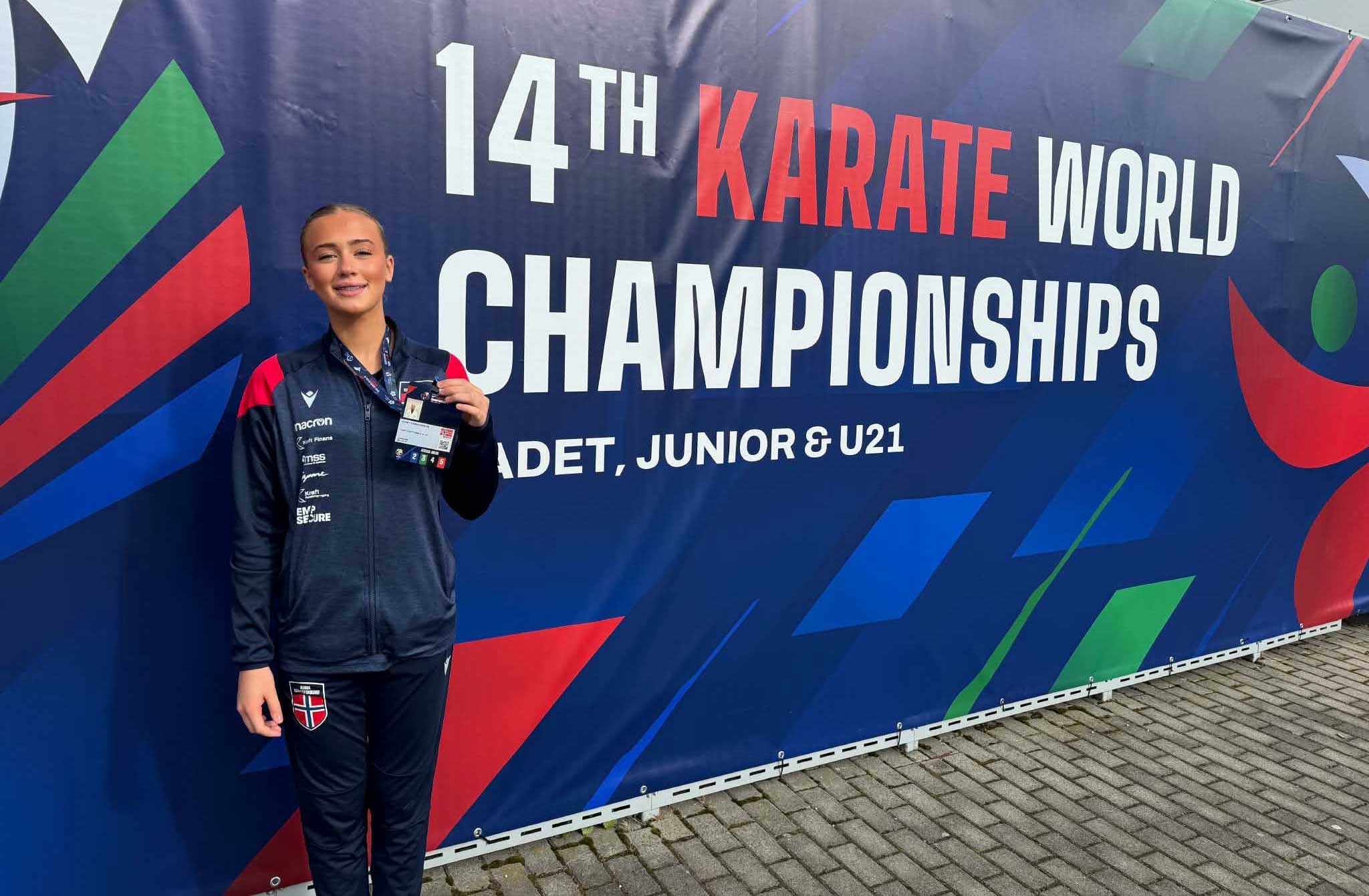
Norway continues its international development
Norway was among the Nordic nations represented at the championships, participating in an event that provided an important opportunity to measure the progress of its younger athletes against international opposition.
For Norwegian karate, competitions of this level play a significant role in athlete development. The transition from national and regional events to world championship competition presents considerable challenges, particularly in kumite categories where competitors must adapt quickly to different tactical approaches.
Norwegian athletes are part of a European competitive environment that includes some of the strongest karate nations in the world. Countries such as France, Italy, Spain, Türkiye and Croatia regularly produce medal contenders, making European tournaments valuable preparation for world-level competition.
The championships in Bielsko-Biała therefore offered Norwegian competitors an opportunity to gain experience beyond the continental circuit, facing athletes from Asia, Africa, the Americas and Oceania.
During the championships, the Norwegian squad gained valuable experience against top-tier global competition. The talented delegation—consisting of Fionah Dolve Husby, Ingrid Olseng, Lina V. Sales Olsen, Kristoffer Henriksen, and William Knudsen-Torp—faced tough challenges and bowed out in the early elimination rounds against strong international opponents. All five gained crucial mat time that showcased the high technical level required on the world stage and provided a benchmark for the team’s ongoing progression.
Even when a national delegation does not reach the medal podium, participation at this level can provide important information for coaches and federations. Technical performance, tactical decision-making, physical preparation and the ability to manage pressure are all areas that can be evaluated against international standards, says Stian Berglund, president of the Norwegian Karate Federation.
– The Norwegian Karate Federation has, for the past couple of years, worked purposefully and systematically on the development of our young, talented athletes. Competing at this level in Poland gave our young squad crucial global experience, which is essential for growth towards the senior circuit. Every match against opposition at top international level is a vital building block. We remain impressed by the dedication our young athletes show, and the effort they, and the clubs playing such an important part in their developement, put down every day. As an organisation, we remain dedicated to refining our long-term training culture to ensure future success on the global stage, says Berglund.
Norway also had a significant presence in the administrative activities surrounding the championships. Gunnar Nordahl was elected to the WKF Executive Committee as one of the representatives of the European Karate Federation.
His election provided Norway with a direct role in discussions concerning the future direction of international karate, including competition structures, organisational development and the sport’s long-term ambitions.
For a relatively small karate nation, representation at this level is significant. It provides an opportunity to contribute to international decision-making while maintaining connections with the wider European and global karate communities.
The combination of sporting participation and administrative representation made the championships relevant to Norwegian karate beyond the immediate results on the tatami.
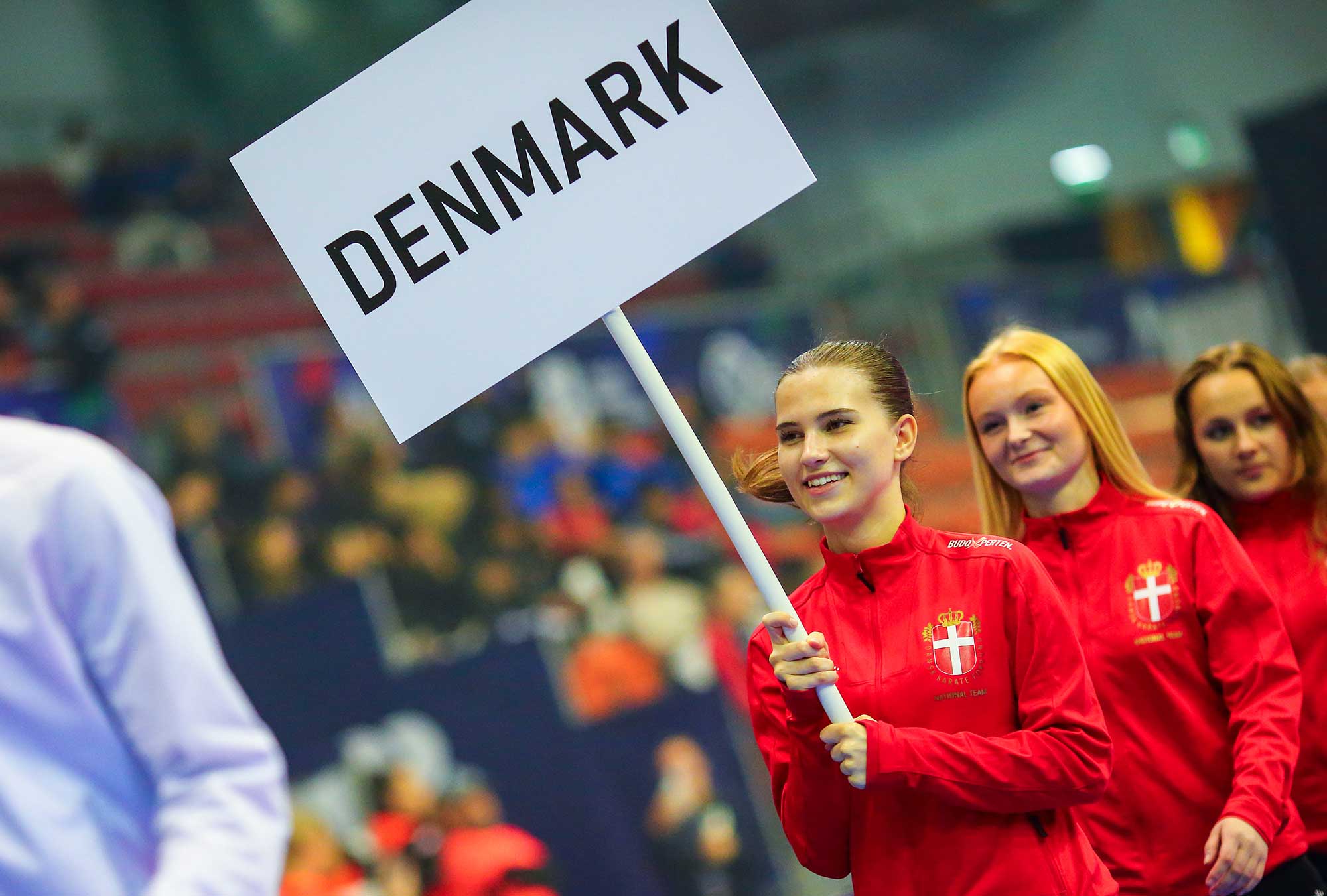
Denmark gains experience in a demanding international environment
Denmark’s participation in the World Cadet, Junior & U21 Championships formed part of the broader Nordic presence at the event.
Danish karate has a long tradition of involvement in European and international competition, and major age-group championships provide an important platform for athletes seeking to establish themselves beyond national and regional tournaments.
The competitive demands of a world championship are considerably different from those of smaller international events. Athletes must be prepared to face opponents with different technical backgrounds, varying tactical strategies and extensive experience from continental championships and the Karate One circuit.
For Danish competitors, exposure to this environment is particularly valuable during the cadet, junior and U21 stages, when technical development and competitive maturity are still progressing.
The international depth of the 2026 championships illustrated how difficult it has become to advance through a world championship draw. Even athletes with strong national and regional records can face highly accomplished opponents in the opening rounds.
This makes the evaluation of performances more complex than simply examining medal results. A closely contested defeat against a leading international athlete can still demonstrate progress, while experience gained from adapting to unfamiliar fighting styles may become important in future competitions.
For Denmark, continued participation in major international events remains a key element in maintaining connections with the strongest European karate environments and supporting the development of future senior competitors.
The championships also provided Danish coaches and federation representatives with an opportunity to observe international trends in both kata and kumite, including changes in tactical approaches, technical execution and the preparation of successful youth athletes.
While the available WKF championship reports do not identify a Danish medal winner, the event offered a valuable competitive reference point for the country’s developing athletes.
Finland shows promising progress as young athletes gain valuable World Championship experience
Finland arrived at the 2026 World Cadet, Junior & U21 Championships in Bielsko-Biała with a seven-athlete delegation competing across the cadet, junior and U21 categories. Although the Finnish team did not reach the medal rounds, several encouraging performances highlighted the progress being made within the country’s youth karate programme. With important bout victories, closely contested encounters against internationally accomplished opponents and a noticeably stronger competitive spirit, the championships provided positive indications for the future of Finnish karate.
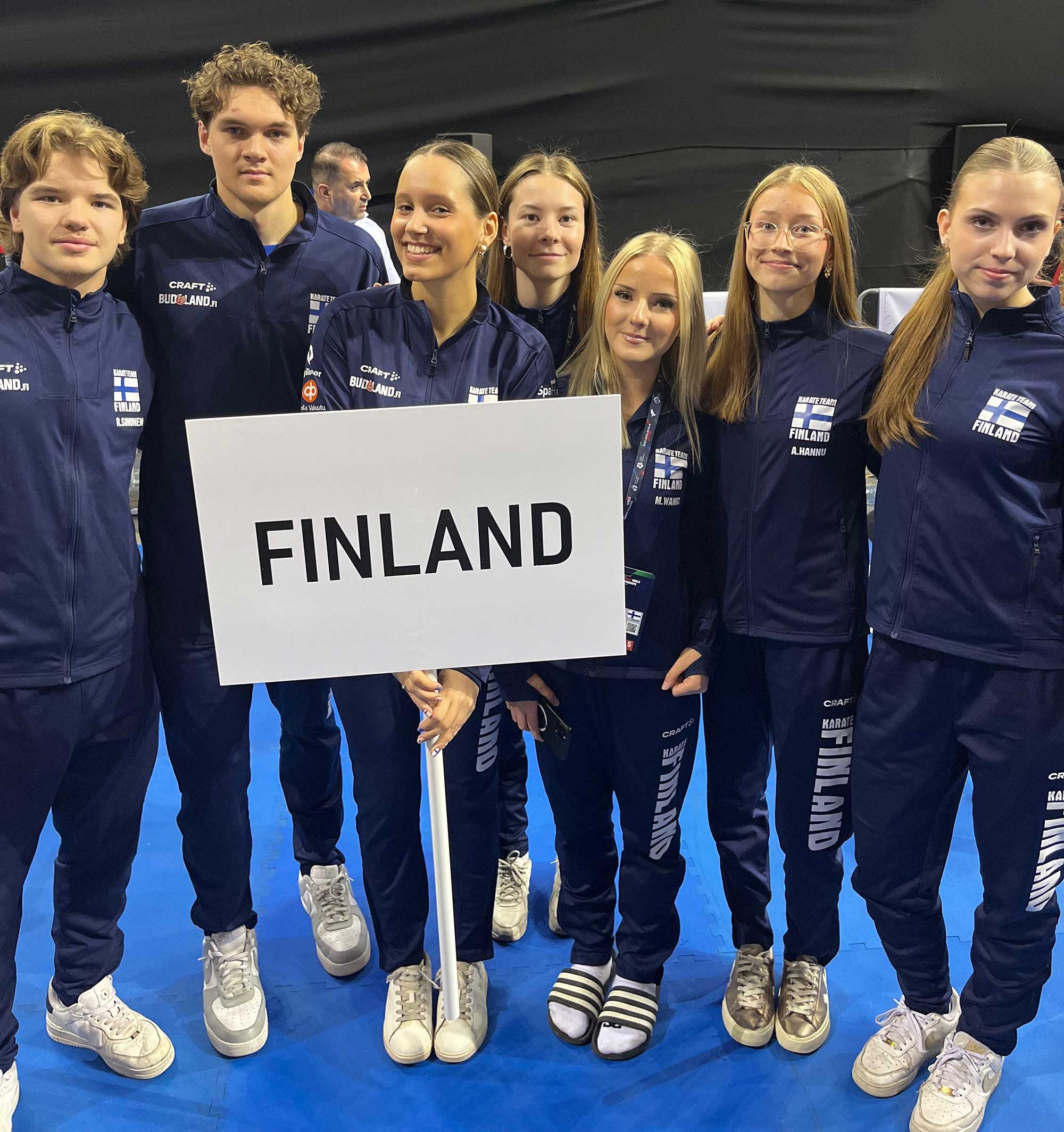
One of Finland’s strongest performances came from Jimi Mantere in U21 Male Kumite +84 kg. Mantere opened his campaign with a hard-fought 4–3 victory over Israel’s Ariel Gutierrez before defeating Serbia’s Ilija Milosevic 1–0 with a decisive technique in the closing seconds. His run ended in the third round against Egypt’s reigning African champion Elhassan Mohamed, who secured a 6–1 victory. Nevertheless, Mantere’s two consecutive wins represented an encouraging achievement against a demanding international field and demonstrated his ability to compete successfully at world championship level.
In Junior Female Kata, Marie Wanic also produced a promising performance after recently moving into a higher age category. Facing Macau’s Weng Kio Lei, a bronze medallist at the Asian Championships, Wanic advanced with a convincing performance of Chibana No Kusanku. Her next opponent was Egypt’s Hana Hani Tanib, a former African continental champion. Despite another determined performance, this time with Papuren, Wanic was eliminated following a 4–1 judges’ decision. Her opening victory nevertheless demonstrated the technical potential within Finland’s developing kata programme.
The junior kumite categories also brought several encouraging moments. Janika Itkonen opened her Female -53 kg campaign with a convincing 5–0 victory over Estonia’s Mari Aigro, an opponent familiar from previous national team training camps. In the following round, she faced Algeria’s Leticia Hocine, a continental bronze medallist, and narrowly lost 1–0. Rene Simonen, competing in Junior Male Kumite -68 kg, similarly began with victory, defeating Kazakhstan’s Almat Nurseiit 1–0. Nurseiit had previously won silver at the Asian Cadet Championships, making Simonen’s result particularly noteworthy. His campaign subsequently ended against New Zealand’s Milu Yoon, who won 7–0 in a contest that was more closely fought than the final score suggested.
Other Finnish competitors faced equally demanding opposition. Sonya Saadaoui narrowly lost 2–1 to Montenegro’s Una Rakovic, the reigning European junior champion, in U21 Female Kumite -68 kg. In Junior Female Kumite -48 kg, Alva Hannu was defeated 5–0 by Saudi Arabia’s Noor Alashi. Meanwhile, Vanessa Stefanski delivered a spirited performance in Cadet Female Kumite -61 kg against Kazakhstan’s Aiaru Kalysbek. The contest ended 3–3, with Kalysbek advancing through senshu, the first unopposed scoring advantage. Stefanski’s performance, including an impressive mawashi-geri scoring technique, illustrated the determination shown by Finland’s younger competitors.
Reflecting on the team’s performances, Finnish Karate Federation Secretary General Pirkko Heinonen expressed optimism about the progress demonstrated in Poland:
“Our team showed very promising and positive development in Bielsko -Biala. We got more bout wins than before, and a positive change was also seen in youngsters’ fighting spirit. I believe that our young fighters -also some of them in kata, have a very bright future ahead. Now we will need good sparring partners and more co-operation with other countries to achieve the highest tactical and athletic standards.”
Heinonen’s assessment highlights an important aspect of Finland’s long-term ambitions. While medals and final placements remain the ultimate objectives, an increase in bout victories and greater confidence against high-level international opposition can provide equally important evidence of progress. Her emphasis on stronger international cooperation and access to quality sparring partners also reflects the challenges facing smaller karate nations, where opportunities to train regularly against a wide variety of elite competitors can be limited.
For Finland, the championships in Bielsko-Biała offered both encouragement and a clearer understanding of the work still required to reach the international podium. Four of the seven Finnish competitors recorded at least one victory, while several others pushed accomplished opponents into closely contested encounters. With promising athletes developing in both kata and kumite, and an increased focus on international training opportunities, the Finnish Karate Federation has reasons to approach the coming years with optimism. The experience gained in Poland could prove an important step towards greater success at future European and World Championships.
Canada brings a strong 35-athlete delegation as Katrina Lee represents the next generation of kata talent
Canada arrived at the 2026 World Cadet, Junior & U21 Championships in Bielsko-Biała with a substantial delegation of 35 athletes, competing across all three age divisions in both kata and kumite. Representing clubs and provincial karate organisations from across the country, the Canadian team reflected the strength and diversity of its developing national programme. The delegation included several athletes with international experience and continental achievements, alongside emerging talents taking important steps in their competitive careers.
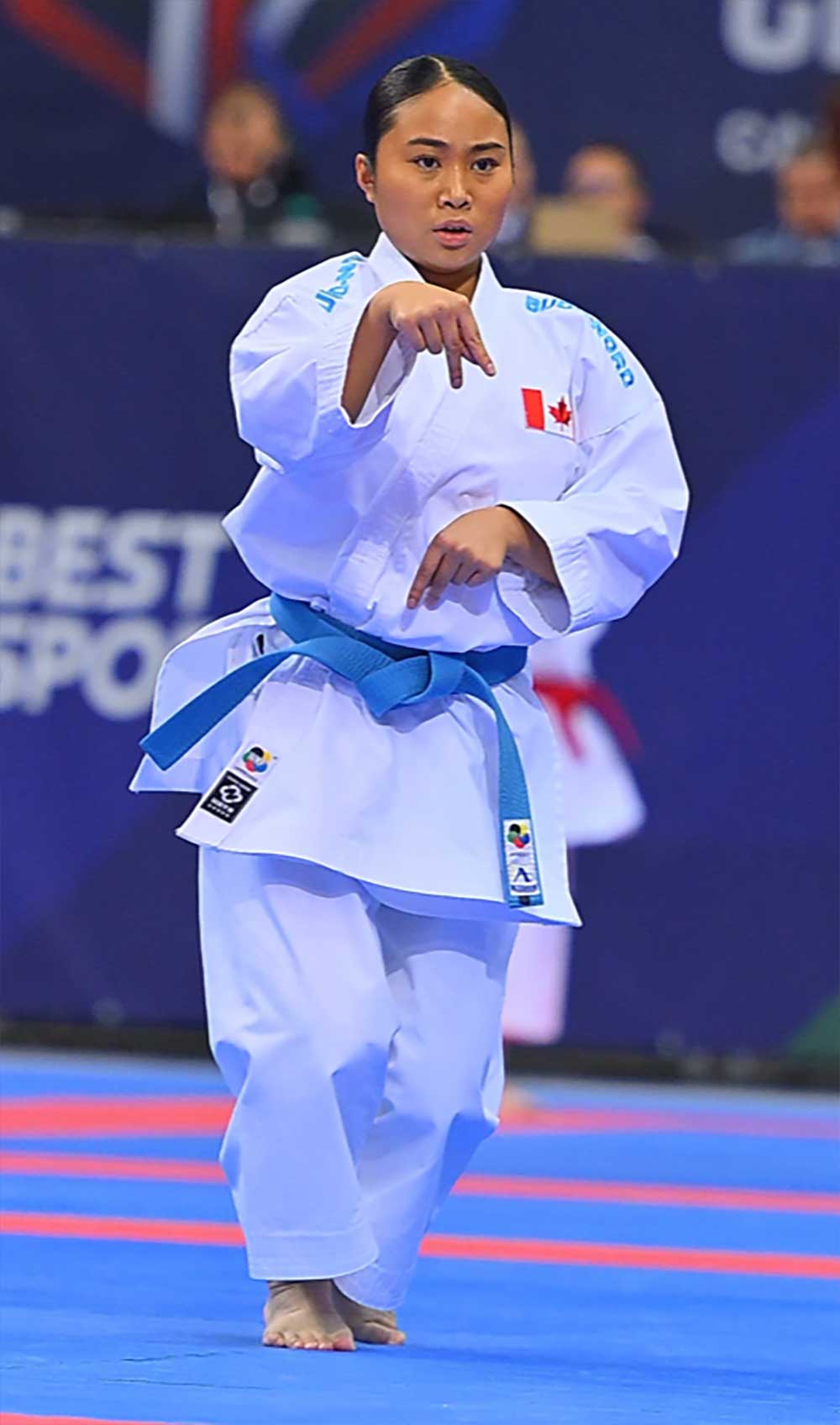
Among the Canadian athletes was 17-year-old Katrina Lee from West River Karate in British Columbia, who represented her country in Junior Female Kata. Her participation marked an important milestone in a karate journey that began when she was just four years old. Inspired by her two older sisters, Lee started training at an early age and has dedicated approximately 13 years to developing her skills, eventually earning her black belt. Her selection for the Canadian national team provided an opportunity to compete on one of the sport’s most prestigious international stages.
Lee’s World Championship appearance was also highlighted by Karate BC, which recognised her dedication and long-term commitment to the sport. Her instructor, Sensei Kenny Lim, praised her personality and development throughout her years of training at West River Karate. Combining her competitive ambitions with her education at Sir Winston Churchill Secondary School, Lee represents the commitment required of young athletes seeking to reach international level while balancing sporting and academic responsibilities.
Competing in Junior Female Kata at a world championship presents a demanding challenge. The category brings together technically accomplished athletes from countries with long-established kata traditions, including Japan, Spain, Italy and several emerging karate nations. Success requires exceptional precision, balance, athleticism and concentration, with even small technical differences potentially influencing the outcome. For Lee, the championships provided valuable exposure to this level of competition and an opportunity to measure her development against leading international athletes.
Canada’s kata representation extended across all three age groups. Charisma Toupin competed in Cadet Female Kata after previously securing a bronze medal at the 2026 Junior Pan American Championships in Costa Rica. In the junior male division, Quinton Damian represented Canada, while the U21 categories featured Manic Noel and Tiffany Jiloca. The latter, representing Reisky Martial Arts and Fitness in British Columbia, entered the championships with an impressive record that included two Canadian national kata titles, a bronze medal at the 2024 Junior Pan American Championships and a seventh-place finish at the 2025 Karate One Youth League in Venice.
The Canadian kumite delegation also included several promising athletes with recent international achievements. Ethan Richard competed in Cadet Male Kumite +70 kg following a bronze-medal performance at the 2026 Junior Pan American Championships. In the junior categories, Mariana Guerrero and Kaden Shen arrived with silver medals from the same continental championships, representing Canada in Female Kumite +66 kg and Male Kumite -76 kg respectively.
Among the U21 competitors were Indiana Carlyle-Byford in Female Kumite +68 kg and Emmi German in Female Kumite -50 kg. Carlyle-Byford, representing the Cochrane karate community in Alberta, had already established herself nationally and earned a Pan American bronze medal. German, from Halifax Ryuseikan Karate Club in Nova Scotia, brought extensive competitive experience as a three-time Canadian national champion and Pan American medallist. Their participation demonstrated the geographical breadth of Canada’s karate programme and the importance of clubs across the country in developing international competitors.
Although Canada did not feature among the medal-winning nations at the championships, the delegation’s extensive representation across kata and kumite provided an important opportunity for continued international development. Facing opponents from Europe, Asia, Africa and other parts of the world offered valuable competitive experience, particularly for athletes preparing to make the transition from youth championships to senior international competition.
The Canadian team was supported by an experienced group of coaches, officials and management personnel, including Karate Canada President Craig Vokey, Executive Director Chris Bright and Sport Technical Leader Rodney Hobson. Their presence, together with the federation’s coaching, medical and refereeing representatives, reflected the considerable organisational effort required to support a national delegation at a major world championship.
For Canada, the championships in Bielsko-Biała represented another important stage in the development of its next generation of karate athletes. The participation of competitors such as Katrina Lee, Charisma Toupin, Tiffany Jiloca, Ethan Richard, Mariana Guerrero and Emmi German highlighted the talent emerging from clubs across the country. While immediate medal success remains an important ambition, the experience gained against the world’s strongest young karatekas will also contribute to Canada’s long-term international competitiveness.
New Zealand gains valuable experience on the world stage in Bielsko-Biała
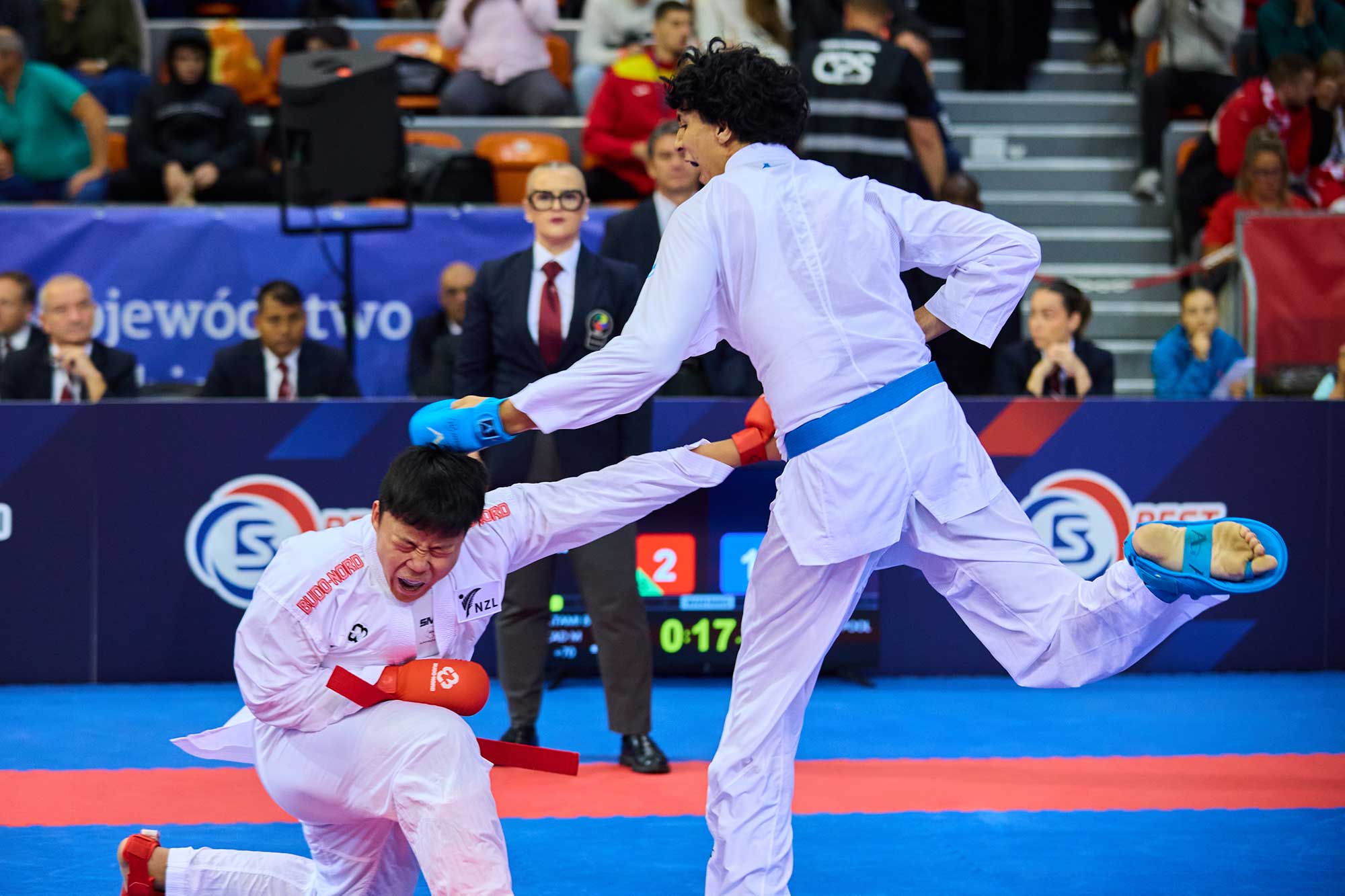
New Zealand was another Oceanian nation represented at the 2026 World Cadet, Junior & U21 Championships in Bielsko-Biała, with its young competitors facing some of the strongest emerging karate talents from around the world. For a country geographically distant from the major international competition circuits in Europe and Asia, participation at this level represents an important commitment to developing athletes capable of competing beyond the Oceania region.
Among the New Zealand athletes competing in Poland was Gemma Thomas, who represented her country in Junior Female Kumite +66 kg. Thomas faced a particularly demanding challenge against Poland’s Natalia Balut, who was competing in front of her home supporters and would eventually become world champion. Balut secured an 8–0 victory in their elimination-round encounter before continuing her successful championship campaign and defeating Egypt’s Roaa Eltaher in the final. Although Thomas was unable to progress, the experience of facing the eventual world champion illustrated the exceptionally high standard of competition awaiting athletes at this level.
New Zealand’s participation also highlighted the importance of its national development structures. Karate New Zealand organises national championships and other domestic competitions that provide young athletes with opportunities to gain experience and work towards international selection. The country’s competitive programme was particularly active during 2026, with Auckland hosting the Oceania Karate Federation Senior Championships in May and June, followed by the New Zealand National Karate Championships in August. These events form part of the competitive environment supporting the country’s developing karate athletes.
For New Zealand competitors, the transition from domestic and Oceania championships to a world championship presents a substantial challenge. The greater depth of international competition, combined with the different technical and tactical approaches of athletes from Europe, Asia, Africa and the Americas, makes every appearance an opportunity for development. In particular, exposure to the speed, precision and intensity of world-level kumite can provide important lessons for younger competitors preparing for future international events.
The championships in Bielsko-Biała therefore represented more than an opportunity to pursue medals. They also provided valuable experience for athletes and coaches seeking to strengthen New Zealand’s international competitiveness. Alongside Australia, New Zealand’s presence reinforced the importance of Oceania within the wider karate community and the region’s continuing ambition to develop the next generation of internationally successful athletes.
A championship that highlights karate’s global development
Beyond the individual medal performances, the championships demonstrated how international youth karate continues to evolve. The distribution of world titles across several continents reflected a competitive environment in which established karate nations face increasingly strong challenges from emerging programmes.
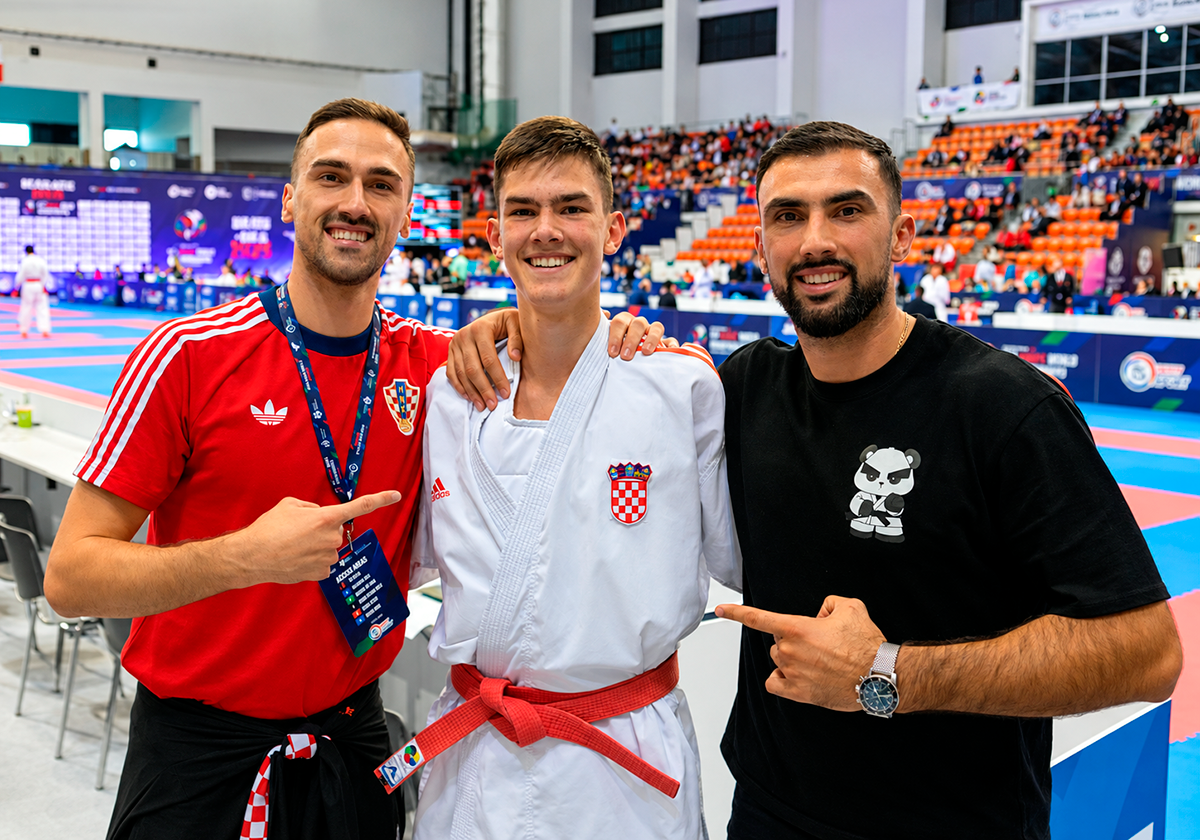
One of the most interesting stories came from Croatia, where 15-year-old Viktor Kvesić won the Cadet Male Kumite -70 kg title. Kvesić defeated Uzbekistan’s Shohjahon Atakhanov 1–0, following in the footsteps of his older brothers Anđelo and Ivan, both prominent figures in Croatian karate.
His achievement demonstrated how family traditions and established training environments can contribute to the development of new generations of successful athletes.
Other notable performances included Spain’s Candela Peña Garcia retaining her world title in Cadet Female Kata, Uzbekistan’s Javokhir Djakhangirov winning Cadet Male Kata, and Palestine’s Mariam Bsharat claiming the Junior Female Kumite -66 kg crown.
Bsharat defeated Spain’s Noa Lopez Gonzalez 3–1 in the final, adding another world championship success to a record that already included the 2024 cadet world title.
These results illustrated the growing competitive diversity of youth karate. While Japan continued to demonstrate its technical excellence, athletes from Europe, Asia, Africa and the Americas showed that world championship success is no longer confined to a small group of traditional leading nations.
The final medal table confirmed Japan as the most successful nation, with 12 medals, including six golds. Egypt finished second with 11 medals and four golds, while Spain completed the top three with eight medals, including three golds.
The final day also featured the cadet and junior team kata competitions. Japan won the female team title against Spain, extending its remarkable record in the category, while Italy defeated Türkiye 4–1 to secure the male team gold medal.
For the thousands of athletes who participated, the championships represented different stages in their sporting careers. Some returned home as world champions, others with medals or valuable international experience. All had the opportunity to compete within one of karate’s most demanding youth environments.
The next edition of the World Cadet, Junior & U21 Championships will take place in Guadalajara, Mexico, in 2028, where many of the athletes who competed in Poland will have progressed to new age categories or entered senior international competition.
WKF Congress, elections and commissions shape karate’s future
While the sporting action attracted most of the attention, Bielsko-Biała also hosted a series of important administrative meetings that will influence the future direction of international karate.
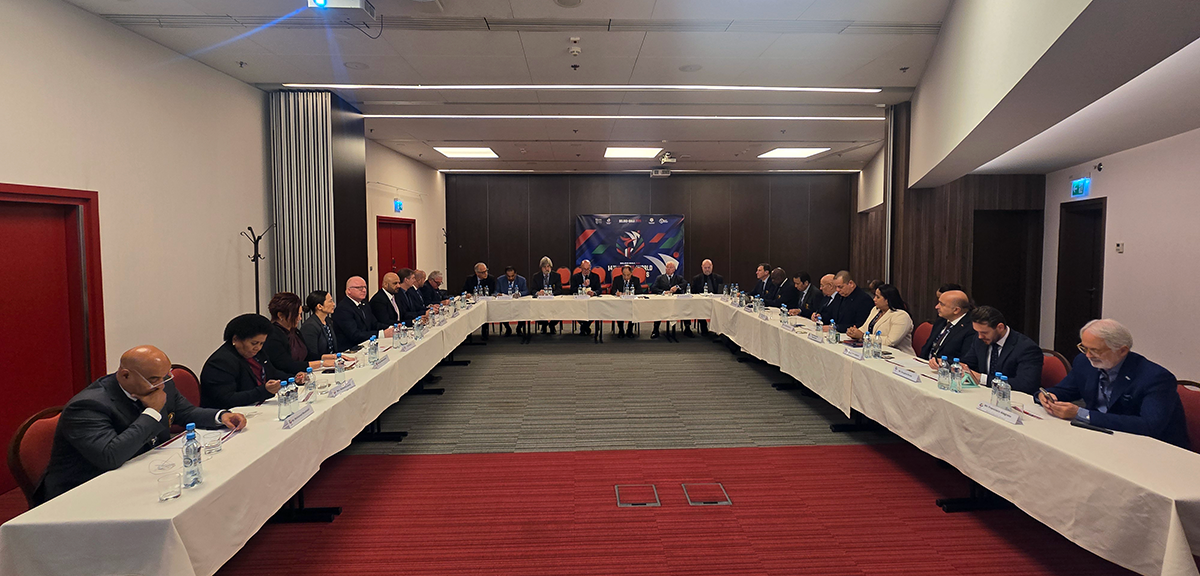
The WKF Congress took place on 13 October, bringing together representatives from more than 90 countries. One of its most significant decisions was the election of a new Executive Committee, with members chosen through an electronic voting process.
The elected representatives included Gunnar Nordahl of Norway, Michael Kassis of Australia, Davide Benetello of Italy, Davor Cipek of Croatia, Michael Dinsdale of Great Britain, Ercüment Taşdemir of Türkiye and Wolfgang Weigert of Germany, alongside representatives from Asia, Africa and the Americas.
The elections were followed by an Executive Committee meeting on 16 October, at which the federation reviewed its leadership structure and responsibilities. The changes represented an important stage in the organisation’s preparations for future international competitions and strategic development.
The Congress also ratified the host locations for several upcoming major events. Tangier, Morocco, will host the qualification phase of the 2027 World Karate Championships, while the final phase will take place in Milano-Bergamo, Italy. Guadalajara, Mexico, was confirmed as the host of the 2028 World Cadet, Junior & U21 Championships, and Tokyo, Japan, will host the 2028 World Cup.
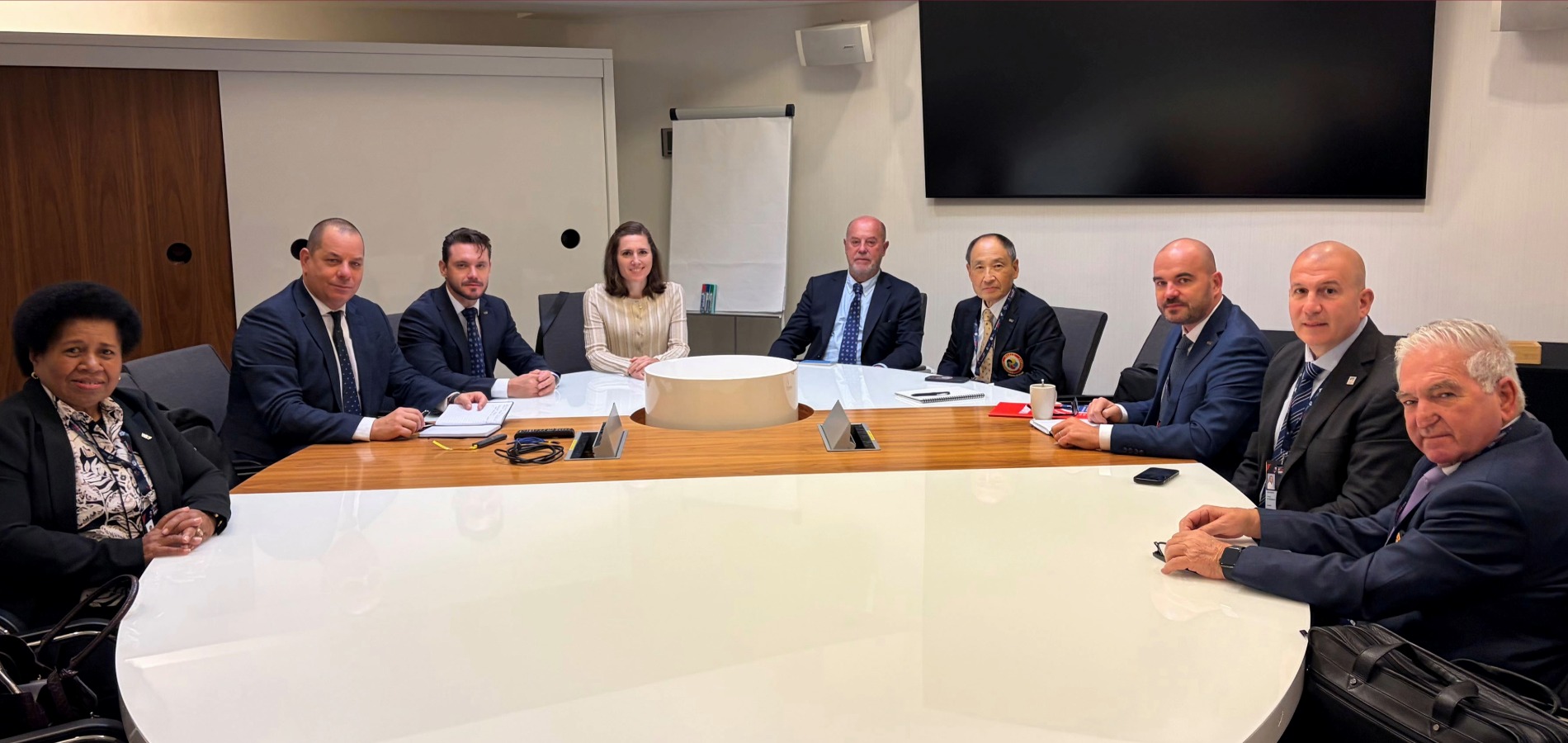
Another important development concerned the WKF Athletes’ Commission. Brazilian karate legend Douglas Brose was appointed its new chair, succeeding Davide Benetello after 16 years in the position.
Brose, a three-time world champion, brings extensive international competitive experience to the role. His appointment reinforces the importance of athlete representation in discussions concerning competition structures, welfare, sporting development and the broader future of karate.
The WKF Women’s Sport Commission also organised a conference entitled Beyond the Tatami: Women Shaping the Future of Karate. Coordinated by Swedish commission chair Sarah Wennerström, the event brought together representatives from different areas of karate to discuss women’s participation, professional development and opportunities for leadership within the sport.
The conference included contributions from officials and athletes with experience in different aspects of international karate, highlighting the importance of ensuring that women have opportunities not only as competitors but also as coaches, referees, administrators and decision-makers.
Education and officiating were also important elements of the championship programme. The WKF organised its coaches’ programme and meetings to reinforce knowledge of competition rules and coaching responsibilities. Referees attended a briefing coordinated by Referee Commission chair Javier Escalante, with an emphasis on consistency, fairness and accurate officiating throughout the event.
The federation’s wider strategic discussions included anti-doping, medical and scientific matters, Para Karate, athlete support and technical development. Particular attention was also given to karate’s ambitions concerning the Brisbane 2032 Olympic Games.
A dedicated supervisory board meeting reviewed the sport’s Olympic prospects and the work required to strengthen karate’s position within the international sporting movement. These discussions reflected the WKF’s continuing ambition to secure a place for karate in future Olympic programmes.
Taken together, the administrative activities demonstrated that the championships were not only a competition for the next generation of athletes but also a meeting point for the individuals and organisations responsible for shaping the future of international karate.
As the final medals were awarded in Bielsko-Biała, the championships left behind more than a collection of sporting results. They provided a picture of karate’s growing international reach, highlighted the emergence of new champions and reinforced the importance of continued investment in athletes, coaches, officials and national federations.
For Sweden, Agnes Nyman’s world title was a defining achievement. For Ukraine and Vietnam, the medals represented important international successes. For Australia and the other Nordic nations, the event provided opportunities to develop athletes and strengthen international experience.
With the next generation already challenging established competitors and the WKF preparing for another cycle of major international events, the 2026 World Cadet, Junior & U21 Championships offered a compelling indication of where the sport is heading.
2026 World Cadet, Junior & U21 Championships – WKF
All You Need to Know About 2026 World Cadet, Junior & U21 Championships – WKF
2026 World Cadet, Junior & U21 Championships to be Streamed LIVE and in Full on WKF YouTube – WKF
WKF Coaches’ Programme Prepares for 2026 World Cadet, Junior & U21 Championships – WKF
WKF Athletes’ Commission Meets in Bielsko-Biala and Appoints Douglas Brose as New Chair – WKF
Follow 2026 World Cadet, Junior & U21 Championships LIVE on WKF YouTube – WKF
Natalia Balut: “My Focus Is Not Done Yet” as Polish Star Reaches World Final – WKF
WKF Women’s Sport Commission Conference Highlights Women Shaping the Future of Karate – WKF
Viktor Kvesić Wins World Gold at 15 to Continue Croatia’s Karate Legacy – WKF
Japan’s Kata Stars Ito Wakana and Hamazawa Takeru Strike Gold Again – WKF
Tran Thi Cam Tu vinner silvermedalj vid ungdoms-VM i karate.
Visa detta inlägg på Instagram
Visa detta inlägg på Instagram
Visa detta inlägg på Instagram
Visa detta inlägg på Instagram
Visa detta inlägg på Instagram
Visa detta inlägg på Instagram
Visa detta inlägg på Instagram
Visa detta inlägg på Instagram
Visa detta inlägg på Instagram
Visa detta inlägg på Instagram
Visa detta inlägg på Instagram
Visa detta inlägg på Instagram
Visa detta inlägg på Instagram